How to Clean a Moissanite Ring at Home: The Five-Minute Method
Moissanite is one of the easiest gemstones to care for, but it is not self-cleaning. After a few weeks of hand cream, soap, lotion, and cooking grease, a film builds up on the surface and the fire starts to look muted. You do not need a professional ultrasonic to bring the sparkle back. Warm water, a drop of dish soap, and a soft brush will do it in five minutes. Here is the method, and the small mistakes that actually cause damage.
Why Moissanite Gets Dull
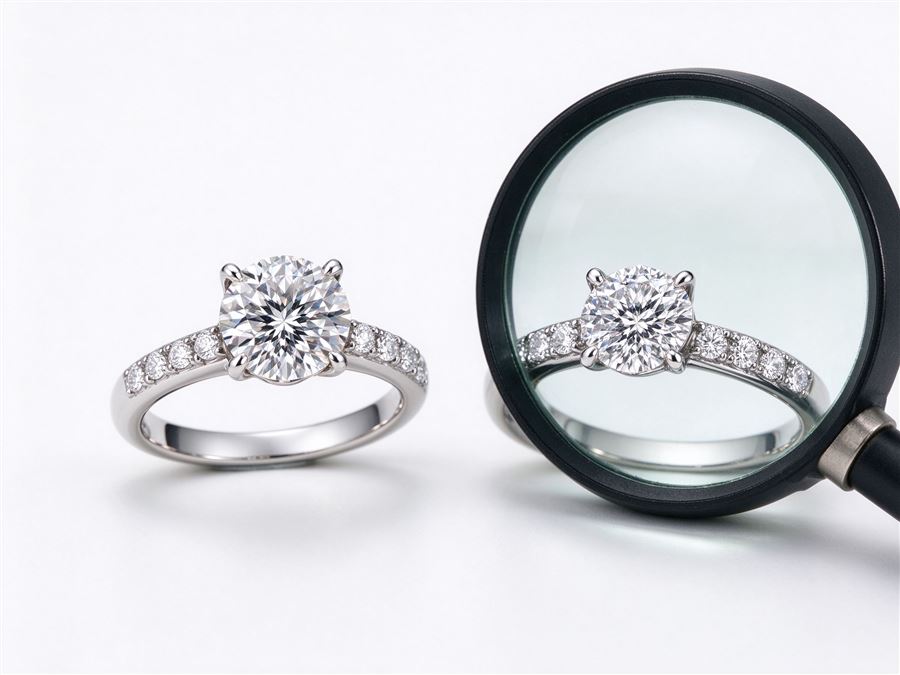
Moissanite ranks 9.25 on the Mohs scale, second only to diamond among common jewelry stones. That means the surface itself does not scratch easily. What scratches the look is not the stone but the gunk on top. Oils from your skin transfer to the table of the stone. Hand soap leaves a thin film. Cooking grease bonds to the prongs. Foundation and powder settle into the pavé holes. None of this damages the stone, but it blocks light and turns a brilliant ring into a dull one.
The Five-Minute Home Clean
You need a small bowl, warm water, a drop of mild dish soap, a soft toothbrush or a jewelry brush, and a lint-free cloth. Avoid antibacterial soaps with moisturisers, because the lotions leave a film of their own. Plain clear dish soap is best.
- Fill the bowl with warm, not hot, water and add the drop of soap.
- Drop the ring in and let it soak for two to three minutes. This softens the oils.
- Gently brush under the stone, around the prongs, and along the band. Do not scrub hard.
- Rinse under warm running water. Close the drain first, just in case.
- Pat dry with a lint-free cloth. A paper towel can leave tiny fibers, so use cotton or a polishing cloth.
That is the whole routine. Do it once every two weeks for a daily-worn engagement ring, and the stone will keep its fire. Do it once a month for rings that spend more time in a box.
What Not to Use
Toothpaste
Toothpaste is an abrasive. It will scratch the gold or platinum band over time and can leave micro-scratches on the facet edges. It is a common home-cleaning myth, and it does more harm than good.
Baking Soda
Baking soda is also abrasive, and it is alkaline. On plated white gold it can speed up wear on the rhodium. Skip it.
Boiling Water
Boiling water can thermal-shock a setting, especially if there are small accent stones. It can also loosen prongs. Warm tap water is fine. Boiling water is not.
Household Cleaners
Bleach, window spray, and bathroom cleaners are harsh on both the metal and the stones. Chlorine in particular can pit gold over long exposure. None of these belong near a ring.
Ultrasonic Cleaners: Friend or Foe?
An ultrasonic cleaner uses high-frequency sound waves in a soapy bath to shake dirt loose. On a plain solitaire with a well-set moissanite, it is safe and fast. On a ring with pavé accents, a vintage setting, or loose prongs, it can loosen stones and push them out. If your ring has side stones, skip the ultrasonic at home and let a jeweller use it under supervision.
Getting Into the Pavé Holes
Small accent stones sit in tiny holes held by tiny beads. A soft brush gets most of the dirt, but a wooden toothpick or a floss threader can lift out the last bits of lotion in the corners. Do not poke hard, because the beads are delicate. A light nudge is enough.
When the Sparkle Does Not Come Back
If you have cleaned the ring thoroughly and it still looks dull, the problem is not surface grime. It is likely one of three things. The prongs have loosened and the stone is sitting at a slight angle, so light does not return the way it should. The metal has a thin layer of tarnish or wax from a polishing cloth, which can be buffed off. Or the stone itself has been scratched by something harder than it, which is rare but possible if the ring has been worn against concrete or sand.
Any of those needs a jeweller, not a deeper home clean.
Build It Into a Routine
The easiest way to keep a ring clean is to make the clean automatic. Leave the small bowl and the brush by the bathroom sink. Once every two weeks, when you are already washing your face, soak the ring while you do it. Five minutes, no extra mental effort. Rings that are cleaned on a schedule stay brighter than rings that are cleaned only when someone notices.
The Science Behind the Film
Moissanite has a high refractive index, which means it bends light sharply and throws fire. That fire depends on light entering and exiting cleanly. When an oily film covers the facets, light does not refract the way it should. It scatters. The stone looks gray instead of bright. The film is invisible to the eye, but the effect is obvious. A warm soapy wash removes the film and restores the refraction. The stone under it has not changed.
How Often to Actually Clean It
It depends on how the ring is worn. A ring worn to an office, washed with mild soap, and not exposed to lotion every day needs a clean every two weeks. A ring exposed to sunscreen, gym sweat, and cooking grease needs a weekly clean. A ring that lives in a box needs a clean once a month. When in doubt, clean it. A five-minute wash is never wasted.
The Brush That Does Not Scratch
Use a soft-bristled brush, not an old toothbrush with stiff nylon. A soft makeup brush or a dedicated jewelry brush is ideal. The goal is to lift grime from under the prongs, not to scrub the metal. Scrubbing hard with a stiff brush will scratch gold over time. A light, circular motion under the stone is enough.
Drying the Ring Properly
Water spots leave marks on the facets. Pat the ring dry with a lint-free cloth, then let it sit on the cloth for a minute before you put it back on. Do not air-dry it, because the evaporation leaves spots. A hair dryer on cool is fine, but a cloth is gentler on pavé stones.
What to Do After a Trip to the Beach
Saltwater leaves a fine salty film on the ring. Rinse it in fresh water as soon as you are off the beach, then give it the full soapy clean that evening. Salt will not damage the moissanite, but it can speed up tarnish on the band if left on for days.
The Science Behind the Film
Moissanite has a high refractive index, which means it bends light sharply and throws fire. That fire depends on light entering and exiting cleanly. When an oily film covers the facets, light does not refract the way it should. It scatters. The stone looks gray instead of bright. The film is invisible to the eye, but the effect is obvious. A warm soapy wash removes the film and restores the refraction.
How Often to Clean It
A ring worn to an office, washed with mild soap, and not exposed to lotion every day needs a clean every two weeks. A ring exposed to sunscreen, gym sweat, and cooking grease needs a weekly clean. A ring that lives in a box needs a clean once a month. When in doubt, clean it. A five-minute wash is never wasted.
The Brush That Does Not Scratch
Use a soft-bristled brush, not an old stiff toothbrush. A soft makeup brush or a dedicated jewelry brush is ideal. The goal is to lift grime from under the prongs, not to scrub the metal. Scrubbing hard with a stiff brush scratches gold over time. A light circular motion under the stone is enough.
Drying and Beach Care
Water spots leave marks on the facets. Pat the ring dry with a lint-free cloth, then let it sit for a minute before putting it back on. After a trip to the beach, rinse the ring in fresh water as soon as you are off the sand, then give it the full soapy clean that evening. Salt will not damage the moissanite, but it can speed up tarnish on the band if left on for days.
The Bottom Line
Warm water, mild soap, a soft brush, and a lint-free cloth. That is the whole recipe. Skip the abrasives, skip the boiling water, and skip the ultrasonic if your ring has pavé. Do it every two weeks. If the sparkle still does not return, book a jeweller visit, because the issue is structural, not dirty.