Storing Moissanite Rings Properly: Why the Jewelry Drawer Is Not Enough
Most people store their engagement ring the way they store their keys: in a dish on the dresser. That works for a week. Over years, tossing the ring into a shared drawer with other jewelry, a watch, and a loose set of keys scratches the band, dulls the polish, and can knock a prong. Moissanite itself is tough, but the metal around it is not, and small careless storage habits add up faster than you would think.
What Actually Damages a Ring in Storage
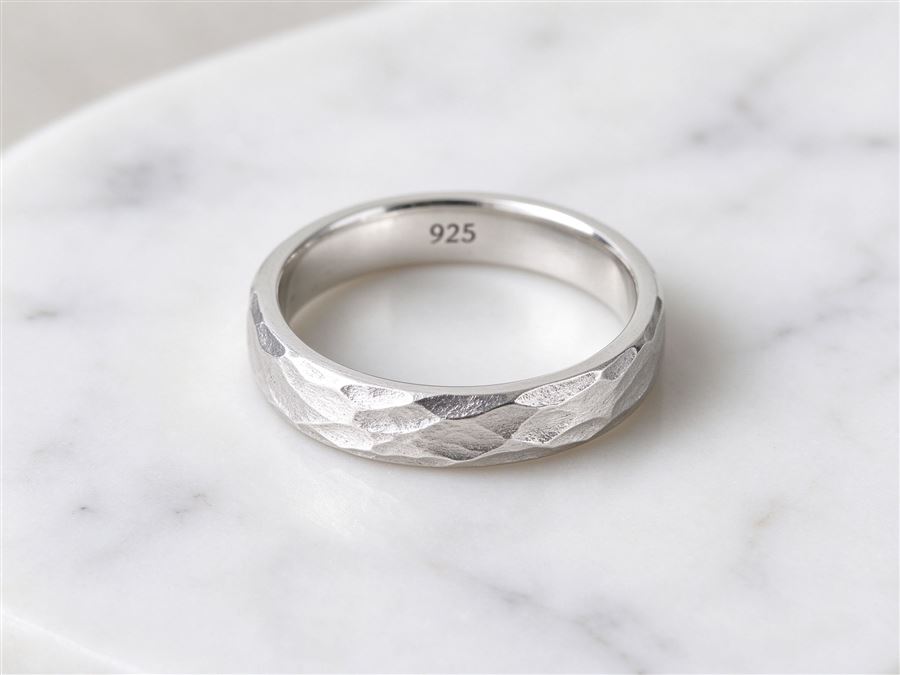
Rings do not break because they sit still. They break because they touch other things. A gold band rubbing against a steel watch bracelet micro-scratches every time the drawer closes. A prong catching on another ring bends a little further each time the pile jostles. A loose stone rattling in a shared box chips its girdle against a harder piece. None of this is dramatic. It is slow, silent wear.
The Rule: One Ring, One Compartment
The single most useful storage rule is that each ring gets its own padded compartment. Not a shared dish. Not a soft pouch where three rings tumble together. A lined slot, a small padded box, or a fabric roll where the ring sits alone. Moissanite is hard enough not to scratch other stones, but the gold band will scratch against anything, and a diamond will scratch the moissanite if they rub.
At Home: The Dresser Setup
For a daily-worn ring, you need a consistent spot you use every time you take it off. That spot should be a small, lined dish or a single ring box on the dresser, not the edge of the sink. Sinks are where rings get dropped, swept, or knocked into the drain. A dish on the dresser is where rings actually go when you are taking a shower, applying lotion, or cooking.
For rings you rotate, a multi-compartment jewelry box with soft lining is the standard. Look for compartments lined with anti-tarnish fabric, which slows the natural oxidation of silver and keeps gold looking brighter. Wood boxes are pretty but can contain acids in the finish that discolour jewelry over decades, so a fabric-lined interior matters.
When You Take the Ring Off at Night
Many people take the engagement ring off before bed, either because they sleep on their side or because the ring digs into the hand. If that is your habit, put the ring in the same small dish every night. Do not balance it on a book, do not set it on the nightstand near the alarm clock, and do not tuck it under a pillow. Rings that move around at night get lost.
In a Travel Case
Travel storage is a separate problem. A jewelry roll with individual slots is the right answer. It folds flat, it protects each piece, and it fits in a toiletry bag. Avoid the common travel mistake of packing the ring in a checked suitcase. If the bag is lost, the ring is gone. Wear the ring on your finger or keep it in your carry-on, in its own slot.
Long-Term Storage: The Safe
If you are putting a ring away for months, do not just drop it in a drawer. Clean it first, dry it completely, and wrap it in a soft cloth or put it in a padded box. Moisture trapped against gold can cause tarnish over time. A safe or a lockable drawer is the right place for long-term storage, both for protection and for peace of mind. Keep the GRA certificate and the purchase receipt in the same place.
What to Avoid
- Bathroom ledges. Steam, humidity, and a short drop to the tile.
- Kitchen counters near the sink. The most common place rings are lost.
- Shared jewelry dishes. Rings tumble and scratch.
- Purse bottom. Keys, loose change, and lipstick scratch everything.
- Direct sunlight on a windowsill. Heat and UV can fade some gemstones and dry out wood boxes.
Storage for a Stack
If you wear an engagement ring stacked with a wedding band, store them together in one compartment rather than separately. They are designed to sit against each other, and storing them as a pair keeps them from scratching other pieces. If the wedding band and engagement ring have been soldered together, they are one piece and store as one.
The Travel Dish Hack
When you are out, at a gym, at a restaurant, or at a friend's house, you will take the ring off to wash your hands or lift weights. Do not put it on a paper towel and walk away. Paper towels get thrown away. Keep a small foldable jewelry pouch in your bag, and the ring goes in the pouch, not on the table. This single habit prevents more lost rings than any other.
The Why Behind the Rule
Gold is soft. Even 14k gold micro-scratches when it rubs against a harder surface. A ring tossed into a drawer with a watch, a key, and a pair of earrings gets scratched every time the drawer jostles. The moissanite on top survives, but the band around it accumulates a fine network of marks. Over years those marks dull the polish. The fix is not a more careful ring wearer, it is a better storage system.
The Dresser Dish vs the Sink Dish
Most people lose rings at the sink. The ring comes off to wash hands, it sits on the edge of the basin, and it either falls in or gets knocked into a towel. The fix is to move the ring dish. Keep a small lined dish on the dresser, not the sink. The ring goes there when you wash your face, apply lotion, or shower. The sink stays ring-free.
Travel Storage Details
A jewelry roll folds flat and protects each piece. If you are traveling with only the engagement ring, a small hard-sided case in your carry-on is enough. Do not wrap the ring in a sweater or a sock in your suitcase. It will get lost in the laundry when you get home. A dedicated pouch is the only reliable method.
Long-Term Moisture Control
If you are storing a ring for months, put a small silica gel packet in the box. Moisture trapped against gold can cause tarnish over time. The silica absorbs the damp. This matters most in humid climates, where a closed box can become a small greenhouse. A dry box with a silica packet keeps the ring bright.
The Purse Rule
Never let the ring live loose in a purse. Keys, lipstick, and loose change scratch everything. If you take the ring off while you are out, it goes into the small foldable pouch in your bag, not into the bottom. That single habit prevents most lost-ring disasters on the road.
The Why Behind the Rule
Gold is soft. Even 14k gold micro-scratches when it rubs against a harder surface. A ring tossed into a drawer with a watch, a key, and a pair of earrings gets scratched every time the drawer jostles. The moissanite on top survives, but the band around it accumulates a fine network of marks. The fix is not a more careful ring wearer, it is a better storage system.
The Dresser Dish vs the Sink
Most people lose rings at the sink. The ring comes off to wash hands, it sits on the edge of the basin, and it either falls in or gets knocked into a towel. Keep a small lined dish on the dresser, not the sink. The ring goes there when you wash your face, apply lotion, or shower.
Travel and Long-Term Storage
A jewelry roll folds flat and protects each piece. Never wrap the ring in a sweater or a sock in your suitcase. For long-term storage, put a small silica gel packet in the box. Moisture trapped against gold can cause tarnish over time. Never let the ring live loose in a purse, where keys and lipstick scratch everything. A dedicated pouch in the bag is the only reliable method when you are out.
The Bottom Line
One ring, one padded spot. A consistent dish at home, a roll in the bag, a clean dry box for long-term storage. Never on the sink, never in a pile, never in a checked bag. Moissanite will outlast you, but the band around it will not if it spends ten years tumbling with keys and watches. Treat storage as part of wearing the ring, not an afterthought.