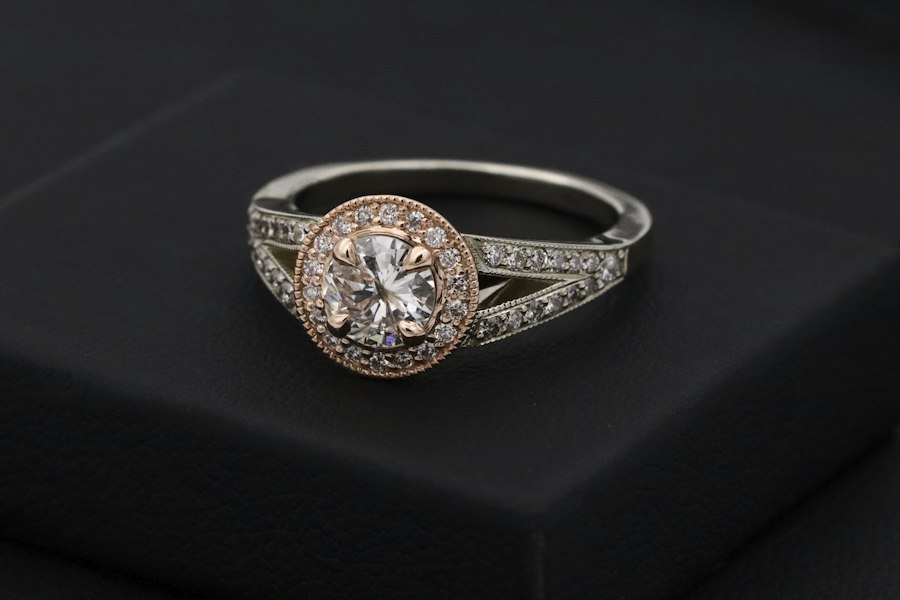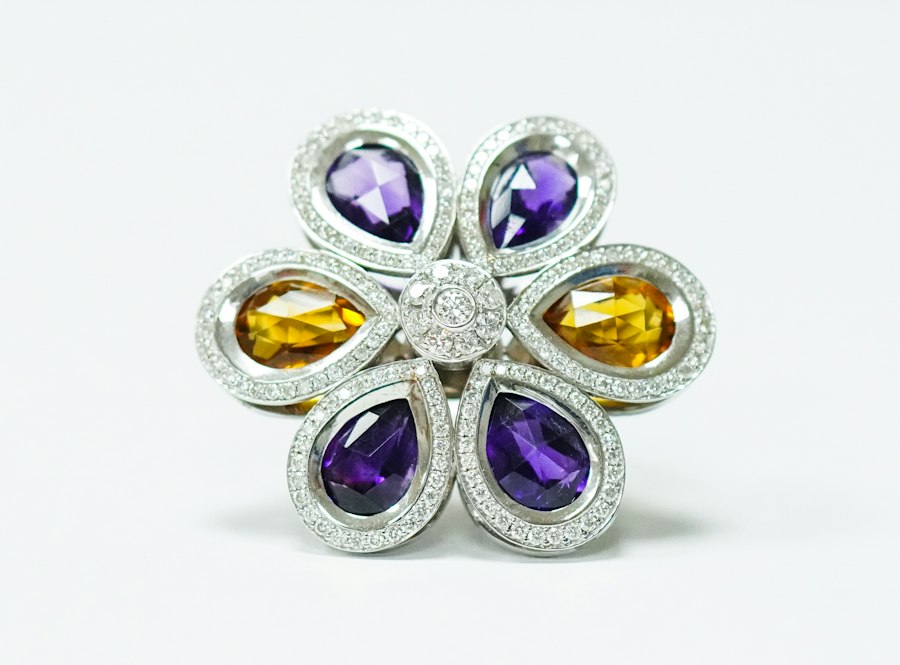
Most clients expect a custom ring to be designed in one sitting and worn a week later. In practice a commission runs 4 to 8 weeks from the first conversation to the final polish, and the long stages are not the dramatic ones. Drawing a flower motif takes an afternoon; waiting for a cast ring to cool, a stone to be sourced, and a prong to be tightened takes the rest. Knowing the order of operations removes the guesswork and the panic that a design has been forgotten.
Stage one: the brief and the sketch
The first meeting is rarely about drawings. It is about measurements, references, and budget. You leave a ring size, a maximum budget, three or four reference photos, and a short list of dislikes. Within 48 hours the designer returns two or three rough pencil sketches, usually front-on and slightly exaggerated so the proportions read. At this stage nothing is locked; a sketch costs the atelier roughly two hours of bench time and is where most of the direction changes happen. If you are still deciding between a solitaire and a halo, read our guide on designing a one-of-a-kind engagement ring before this meeting.
We also confirm metal here. The choice between 18k yellow, 18k rose, and platinum changes the whole downstream quote, so it is settled before CAD rather than after casting. The difference between 18k and 14k is not cosmetic: 18k contains 75 percent pure gold and 14k contains 58.3 percent, which affects color, hardness, and price by roughly 40 percent at current spot premiums.
Stage two: CAD and the printed model
Once a sketch is approved, a CAD operator rebuilds it as a three-dimensional file. This is where the design becomes measurable: wall thickness, prong width, seat depth, and ring shank diameter are all typed to fractions of a millimeter. The file is then resin-printed at a layer height of 25 to 30 microns, which is fine enough that casting loses almost no detail. A typical CAD revision round takes 24 to 48 hours, and most clients request two or three before they are happy.
The printed model is yours to inspect on a video call, and for local clients it can even be worn on a finger to check fit against existing bands. What customers see on screen is close to the finished piece, minus about 1.5 to 2 percent metal shrinkage during casting. We explain that gap in 3D printing jewelry: what customers see.
Stage three: casting and finishing
The printed model is encased in plaster investment, burned out in a kiln at around 700 degrees Celsius, and replaced with molten metal in a vacuum casting machine. When the flask cools, the ring is cut free, sprues are ground off, and the piece is tumble-polished before any stone is touched. At this point it looks like a plain, slightly rough band, and it will not look like the photo until the final two stages. Finishing, including filing, sanding through grits from 220 to 1200, and buffing, adds about four to six bench hours to a single ring.
Metal used in the US trade must be marked to state quality and carry a maker's mark, under the FTC's Guides for the Jewelry, Precious Metals, and Pewter Industries, which is the same marking rule codified at 16 CFR Part 23. Your finished piece should carry both a fineness stamp and the atelier's stamp inside the shank.
Stage four: stone setting and final polish
Stones are set after the ring is fully finished, not before, because polishing around a set stone risks scratching the pavilion. A prong setting for a single center stone takes about 45 minutes; a pav half-band with 20 small stones can take two to three hours. Each prong is push-fitted and then burnished so it sits flush against the crown. After setting, the ring gets a final ultrasonic clean, a steam, and a rhodium dip if it is white gold.
If the center stone is being sourced for you, expect an additional 3 to 10 days depending on whether it is in local inventory or pulled from a dealer's board. We cover the trade-offs in choosing a center stone for a custom design.
How long does the whole process take?
A straightforward solitaire with an in-stone center takes about 4 weeks. A piece requiring a sourced fancy stone, engraved detail, or a matched set of bands typically takes 6 to 8 weeks. Rush casting adds roughly 15 to 25 percent to the bench cost.
How many revisions are included before casting?
Two CAD revision rounds are standard and included in the quote. Additional rounds are billed at the designer's hourly rate, usually $60 to $120 per round, because each new file requires a fresh print and a fresh review.
Can I change the design after casting has started?
No. Once the model is invested and the torch is lit, the geometry is locked. Changes after that point mean starting over from CAD, which costs the entire cast again. This is why the printed model sign-off is a deliberate checkpoint, not a formality.
Do you keep the CAD file for future repairs?
Yes. We archive the approved CAD and a reference photo set, which makes a future prong re-tip, ring resize, or wedding-band matching far faster. Aftercare details are in caring for a handmade jewelry piece.
Ready to start your own commission? Book a 30-minute design call with our atelier. We will turn your reference photos and budget into two or three sketches within 48 hours, with no obligation to proceed. Start your bespoke piece today.