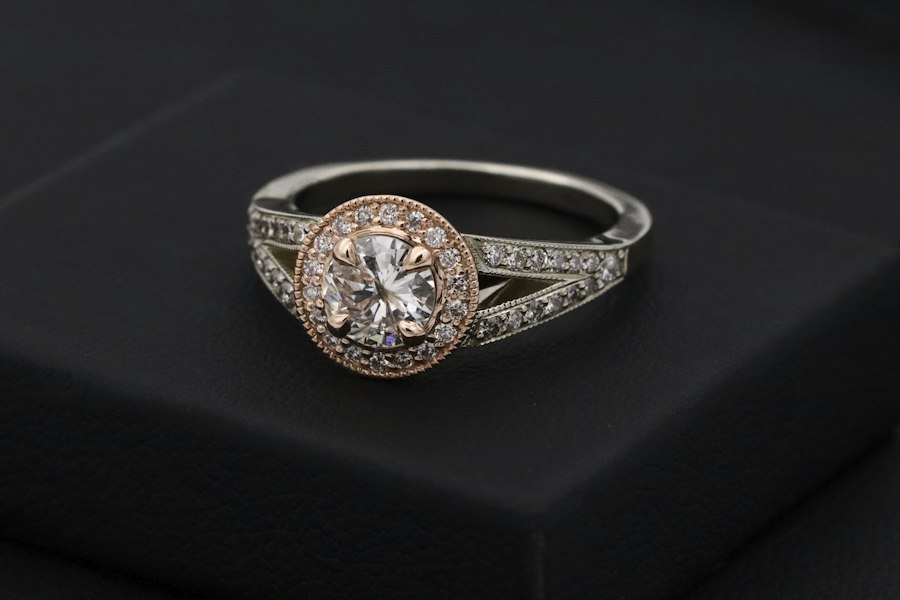
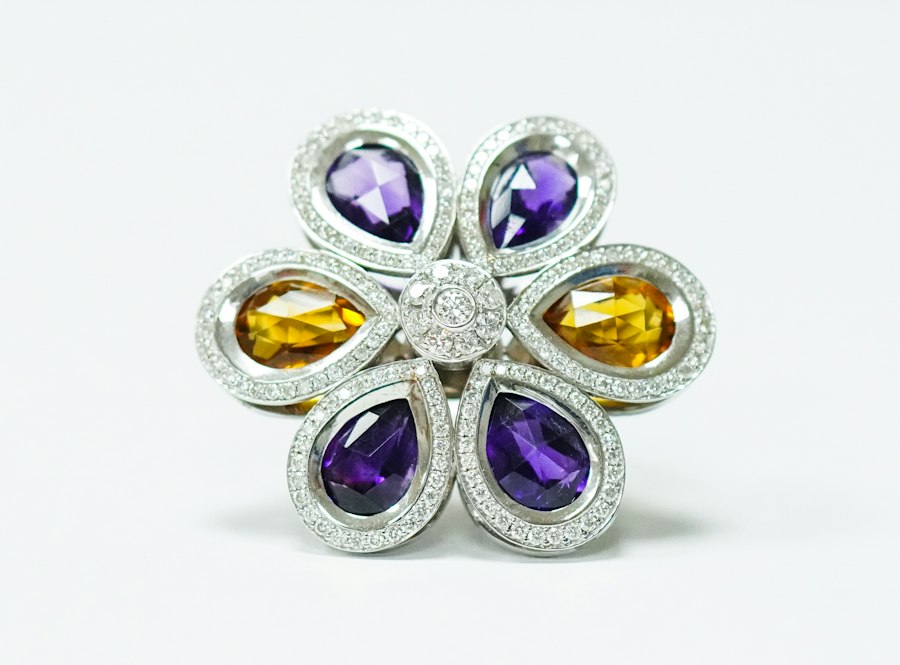
When a client sees a CAD render of their ring on a screen, most assume the render is the final product. It is not. It is a lighting simulation of a geometry that has not yet been cast, finished, or set. Understanding what the printed model accurately tells you, and what it cannot, prevents two disappointments: the "it looked bigger on screen" reaction and the "it sits tighter than expected" surprise on delivery.
What the screen render gets right
A modern jewelry CAD file is dimensionally exact. Wall thickness, prong width, ring diameter, stone seat depth, and filigree detail are typed to fractions of a millimeter. The render therefore gives you an accurate map of proportions: how wide the band is relative to the stone, how high the setting sits, how the light hits a pav row. If you approve the geometry, the geometry is what will be cast.
What the render also gets right is repeatability. A printed pair of matching bands is identical, not close. For clients commissioning a matched set, this is a genuine advantage over hand carving, where two "identical" bands are never quite the same. We compare the methods in matching wedding bands.
What the physical print adds
The resin print is where the design moves from screen to reality. Prints are built at layer heights of 25 to 30 microns, which is fine enough that detail survives casting cleanly. The print lets you see the band edge-on, feel the wall thickness, and hold the shank against a ruler. For local clients we ship the print so you can test the fit over your knuckle; for remote clients we do the same on video with calipers in hand.
The one thing the print shows that the screen cannot is weight perception. A ring that looks light on screen can feel substantial in the hand, and vice versa. Approving a print removes that ambiguity.
The gap between print and finished ring
There are three known differences, and you should expect them. First, metal shrinkage: cast gold shrinks about 1.5 to 2 percent as it cools, which means the finished ring is fractionally smaller and tighter than the print. Second, surface: a print is matte and slightly layered; the finished cast ring is polished high or satin, which changes how large and bright it reads. Third, stones: the CAD model uses a placeholder stone, and the real stone's actual dimensions may shift the final setting by a fraction of a millimeter.
Because the cast metal must meet fineness standards, the finished piece carries a stamped purity mark consistent with ISO 9202 fineness grading. Your approved print is the reference; the finish and stones are the final layer on top of it.
What to check at the model sign-off
Before the model is invested and burned, check four things. Ring size against a measured finger. Band width at the point it meets your knuckle. Setting height if you wear gloves or type daily. And the orientation of any engraved detail, which cannot be moved after casting. This sign-off is a deliberate checkpoint in the process; see the full process from sketch to setting.
Is a 3D-printed ring weaker than a hand-carved one?
No. The print is only a model, not the ring itself. The final ring is cast in solid gold or platinum regardless of whether the model was printed or carved.
How many times can I see a revision before casting?
Two CAD revision rounds are standard and included. Each round produces a new render and, if needed, a new print. Extra rounds are billed hourly.
Can I keep the printed model?
Sometimes, by request. The model is destroyed in burnout, so keeping it means printing a second one, which is a small additional charge.
Why does the finished ring look larger than the print?
Polish and a real faceted stone add brightness that a matte print cannot show. The geometry is the same; the surface finish is what changes the visual weight.
Why clients trust a printed model more than a render
A render is a photograph of a guess; a print is a thing you can hold. Many clients decide on the spot after fitting the print over their knuckle, because the fit question is the one a screen cannot answer. If you are pairing the ring with an existing engagement piece, the printed model can also be compared side by side, as we describe in matching wedding bands that echo but do not copy.
Approve the model with confidence, not guesswork. Book a video walkthrough of your CAD file; we will show you the caliper measurements and the exact gap between the print and the finished ring. You leave the call knowing the ring size, the band width, and the setting height before a single dollar goes to casting.