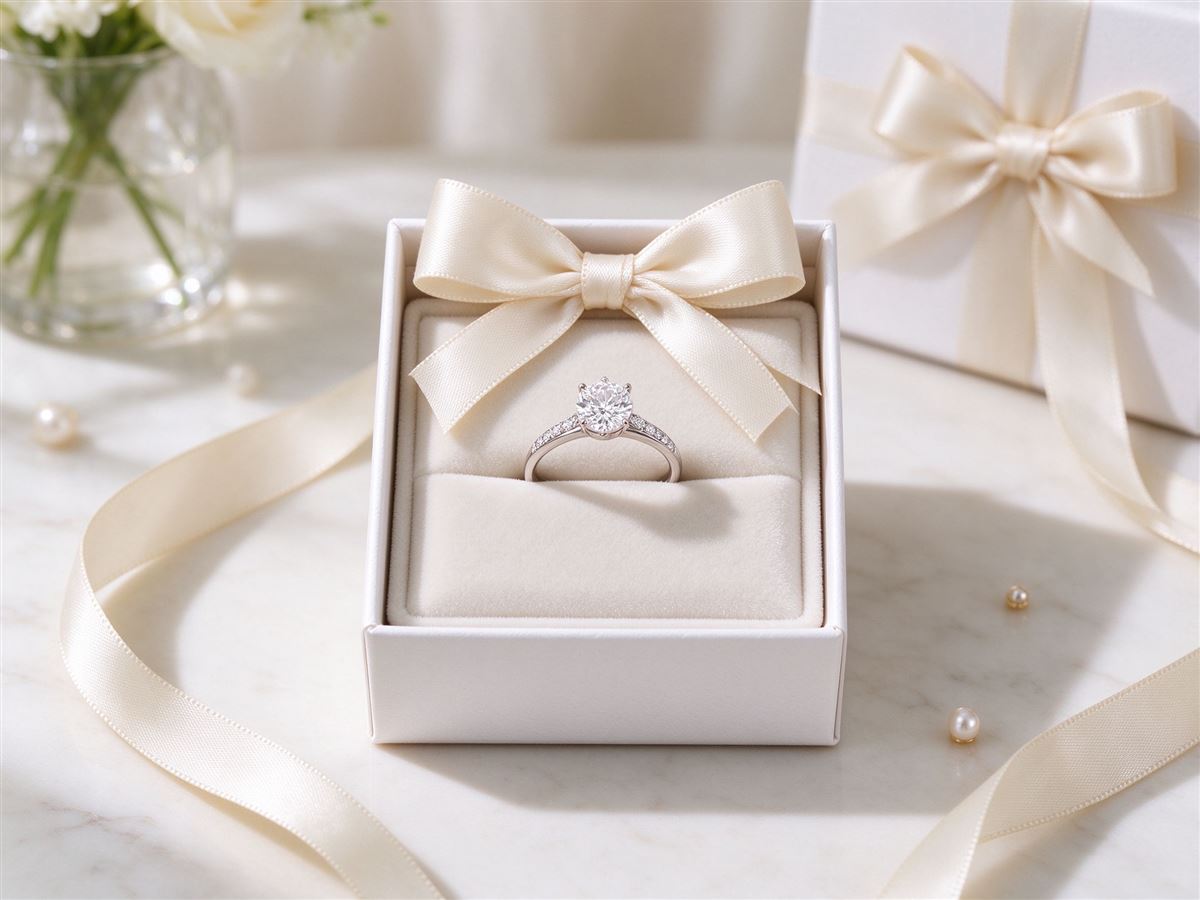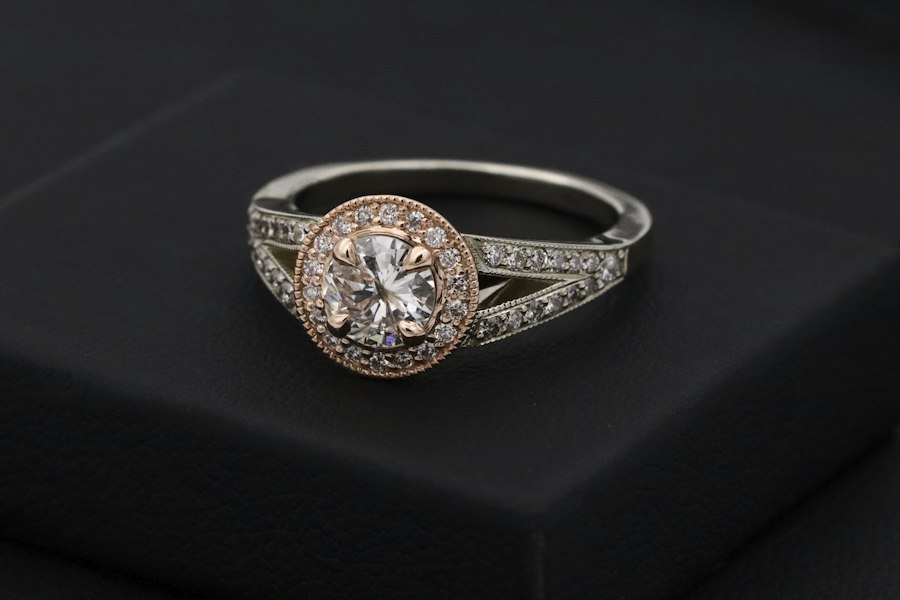
A client walked in with a screenshot of a 1.20 ct round brilliant solitaire and said, "I want this, but I do not want this." That sentence is the whole brief. She liked the proportions and the size on the finger, but she did not want the ring her colleague, her cousin and her college roommate all already wear. The round brilliant is the most studied cut in the trade; it is also the most copied. A bespoke commission is the one place you are allowed to leave it behind.
Why the round brilliant still wins on paper
The round brilliant survives because it is the only cut engineered to a specific optical target. The GIA 4Cs framework was built around it, and graders have a century of data on its light return. A well-cut 1.00 ct round returns roughly 95% of the light that enters it. That consistency is why chain stores stock round solitaires by the hundred and why a round of the same carat weight typically resells for more than any fancy shape.
The cost of that consistency is visual. On a size 6 finger, a round solitaire reads as a dot. It stacks, it photographs, and it says nothing specific about the wearer. When clients tell us they want "something different," we almost never change the setting first. We change the shape.
Five cuts that read as an engagement ring without looking off the shelf
Oval. The oval is the most popular departure from the round for a reason: it looks 10-15% larger on the finger at the same carat weight, and the elongated silhouette suits long hands. The trade-off is the "bow tie," a dark band across the center that appears on ovals cut too shallow. We ask suppliers for a depth between 60-63% to keep the bow tie subtle. Read more on choosing the center stone in our guide on choosing a center stone for a custom ring.
Emerald cut. A step-cut with open facets, the emerald cut reads as architecture rather than sparkle. It is forgiving of lower clarity grades because the steps hide inclusions that a round would show as a flash. Budget-wise, an emerald cut of 1.50 ct usually costs 20-30% less than a 1.00 ct round of equivalent color. It does, however, show color: a G/H emerald cut can look noticeably yellow where a G/H round would not.
Pear. A pear is a rounded half on one side and a point on the other. It lengthens the finger and stacks cleanly if you set it point-up. We usually size the pear at 0.90-1.20 ct because above 1.30 ct the point becomes a snag risk on gloves and sweaters.
Cushion. A rounded square with large facets, the cushion trades the round's fire for softer "halo" flashes. It pairs naturally with a pave shank and is the cut we most often see on clients over 30 who want a vintage feel without a vintage price. For the layout math behind the shank, see beyond the solitaire.
Asscher. A square emerald cut, the Asscher has a "window" down the center that either reads as modern or as a flaw depending on the viewer. We recommend it for clients who already wear geometric jewelry; it is not the cut for someone who wants a quiet classic.
What changes in the quote
Setting labour for a round solitaire head runs about $180-260. An oval or pear adds $60-120 because the prongs are asymmetric. An emerald or Asscher cut needs a "corner guard" on each of the four corners, which adds roughly $80 and is non-negotiable: step-cut corners chip on impact. The stone itself is still 60-75% of the invoice, which is why we lock budget on carat and color before we argue about shape. The same carat spent on an oval buys a visibly bigger ring than the same carat spent on a round, which is the single easiest way to stretch a budget.
If you are designing with a partner, the shape conversation is the one to have together before CAD. We walk through that in designing the engagement ring together with your partner, and the band pairing in wedding bands that match but not match.
FAQ
Does an oval or pear sparkle less than a round?
In measured light return, yes by about 10-15%. On the hand, most clients cannot tell, because the eye is reading the silhouette, not the facet math. A well-cut oval at 60-63% depth returns light close enough to a round that the difference is academic.
Which fancy shape holds value best if we resell?
The oval, by a small margin. It is the only fancy shape with a secondary market as liquid as the round. Emerald, pear and cushion trade at a 10-20% discount to rounds on resale, which is also why they cost less to buy in the first place.
Can an emerald cut be worn daily?
Yes, with corner guards. The step-cut surface is softer on light than a brilliant, so it shows scratches less, but the corners are fragile. We bezel or half-bezel emerald cuts for clients who type or garden.
How much bigger does an oval look than a round of the same carat?
About 10-15% on the finger, because the oval spreads weight across the surface rather than into depth. A 1.00 ct oval reads on the hand like a 1.10-1.15 ct round.
Want a shape that is not the one everyone else already owns? Book a 20-minute sitting with our design lead. Bring the finger size (we measure free) and two screenshots of cuts you are considering, even if you are unsure. We will sketch the oval, emerald and pear options side by side and quote all three in writing within 48 hours. Trade retail partners: our white-label shape-comparison one-pager gives your sales team the same depth and bow-tie numbers we use in-house.