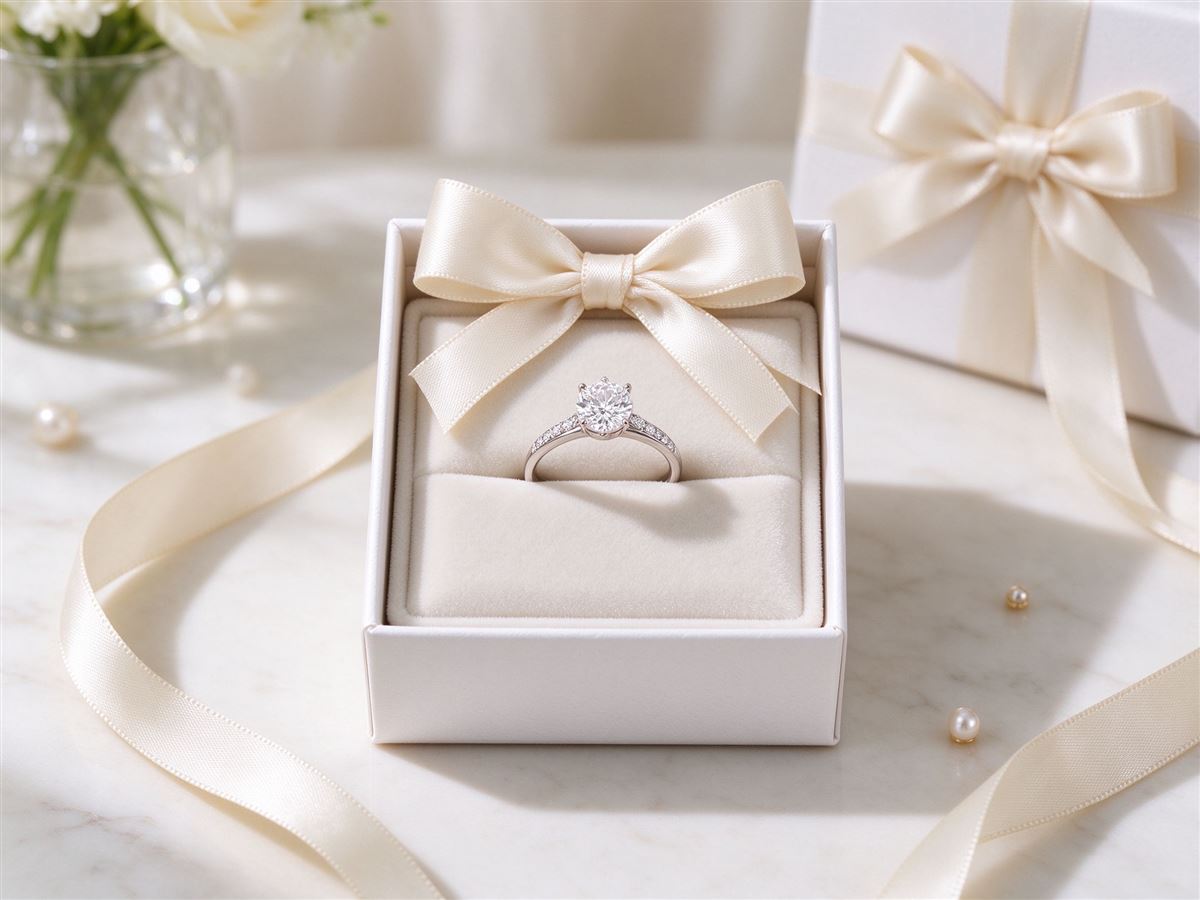
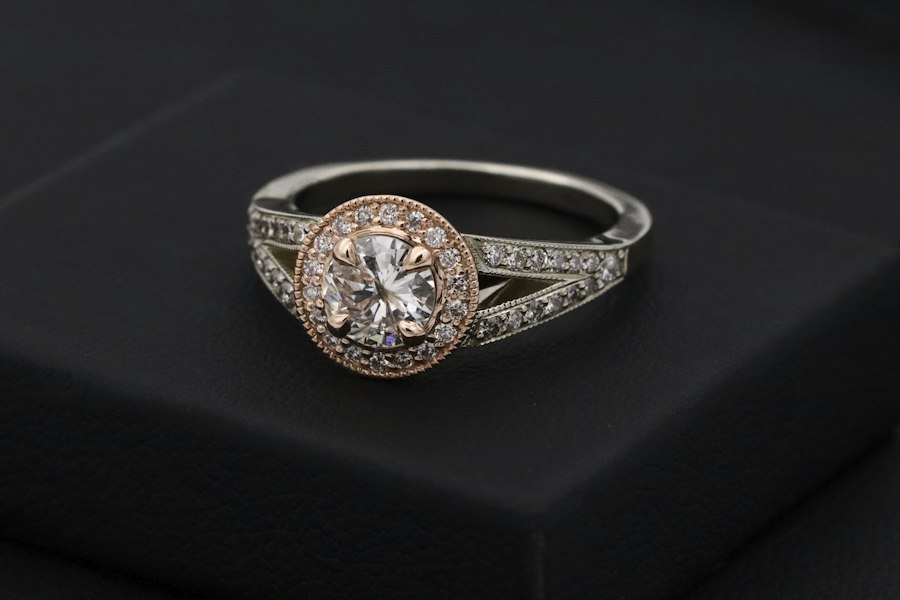
Two clients sat down within a month of each other with the same brief: "a 1.00 ct solitaire, 14k yellow gold, simple band." The first quote came back at $2,800. The second at $3,650. Same stone spec on paper, same metal, same setting. The 30% gap was not markup. It was the difference between the line items they chose without knowing it-the clarity grade they accepted, the milgrain detail they said yes to, the rush they did not need. A bespoke quote is a list of decisions. If you cannot read the list, you cannot see where the money goes.
The five line items in every quote
The stone. 45-65% of the invoice. This is where carat, color, clarity and cut compound. A 1.00 ct round at SI1/H is roughly $1,800-2,200; the same carat at VS1/D is $3,200-3,800. That single choice is the entire gap between the two clients above. The karat and weight definitions are public; the price moves on grade, not on size alone.
The metal. 15-25%. A 4mm 14k band uses about 4g of gold; an 18k band uses the same weight but at a higher alloy price. Platinum adds roughly 60-80% over 14k gold. Palladium cuts that to near-parity with 14k. For the metal comparison, see palladium versus platinum.
Setting labour. $180-450. A plain solitaire head is cheap. A tension setting, a tension-shank, or a micro-pave halo climbs to $350-450 because the bench time doubles.
Finishing. $60-200. Hand engraving, milgrain, a brushed finish, or a two-tone shank each add a line item. The "simple band" one client said yes to had a hidden milgrain edge that added $90.
Logistics. Rush fees, resizing after delivery, insurance appraisal, and shipping. Rush adds 15-25% and is optional.
Where the 30% gap actually comes from
Most quote gaps trace to three hidden decisions. First, the stone grade. Clients who say "1.00 ct" do not specify clarity, and the atelier defaults to what looks clean in a photo. Second, the finish. A "simple" ring with milgrain, a brushed interior, or engraved initials is no longer simple. Third, the lead time. A client who needs the ring in 3 weeks pays a rush fee that a client who can wait 8 weeks does not. The same math applies to broader cost questions, see cost factors breakdown and what the pricing includes.
How to lower a quote without downgrading
Three moves cut 15-25% without changing the look. Drop the stone half a carat (0.90 ct reads on the hand like 1.00 ct and costs 25-30% less). Switch from platinum to palladium for the shank while keeping a platinum head. Accept SI1 clarity instead of VS1-the eye cannot tell in a mounted stone, but the invoice drops 15-20%. And skip the rush. For the deposit and balance side, see deposit and balance terms. A transparent quote names every one of these choices, so you can trade them deliberately instead of discovering them in the total.
Reading a quote line by line
A quote that arrives as a single number is not a quote, it is a guess. The version we send lists the stone with its lab grade and carat weight, the metal with its alloy and weight in grams, the setting style, each optional finish, and the labour hours. If any of those lines is missing, the comparison between two ateliers is meaningless-you may be comparing a VS1 stone to a SI1 stone and never know it. We tell clients to ask for the missing lines before shopping on price alone. The cheapest quote is rarely the cheapest once the hidden line items surface mid-project.
FAQ
Why is one atelier's quote 30% higher than another's for the same brief?
Usually the stone grade, the finish details, and the rush fee. Ask for a line-item quote with the GIA or IGI grade on the stone and the hours of setting labour listed. The gap will explain itself.
Does a higher quote always mean better craftsmanship?
No. It often means a higher-default stone grade or a finish you did not ask for. Compare the line items, not the totals.
Can I change the quote after approving the CAD?
Yes, up to casting. Once the wax is cut and the gold is poured, changes mean a new wax and a new charge. We lock the quote at CAD approval for that reason.
What is a fair deposit?
30-50% on approval, the balance on delivery. A deposit above 50% before the stone is sourced is unusual. Our deposit terms note covers the structure in full.
Want a quote you can actually read line by line? Book a 20-minute sitting. We will quote the stone at three grade levels, the metal at two alloys, and the setting with and without the optional finish, so you see exactly where each dollar goes. Trade retail partners: our line-item quote template gives your customers the same transparency, with grade, labour hours and finish called out separately.