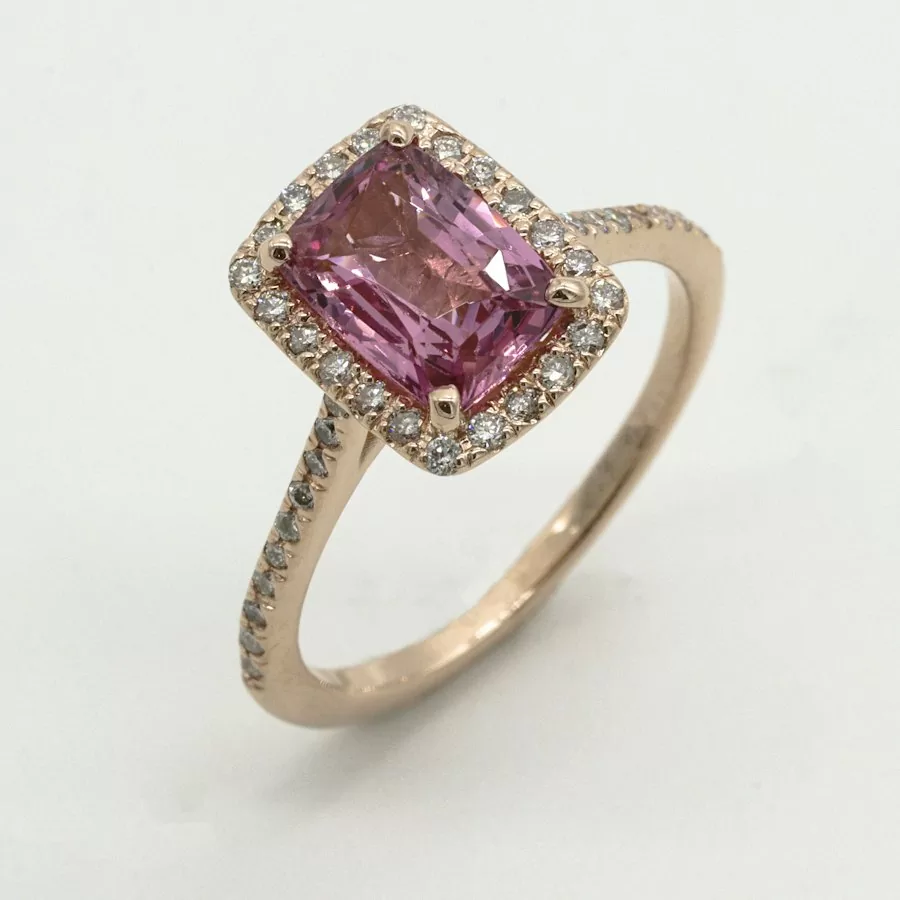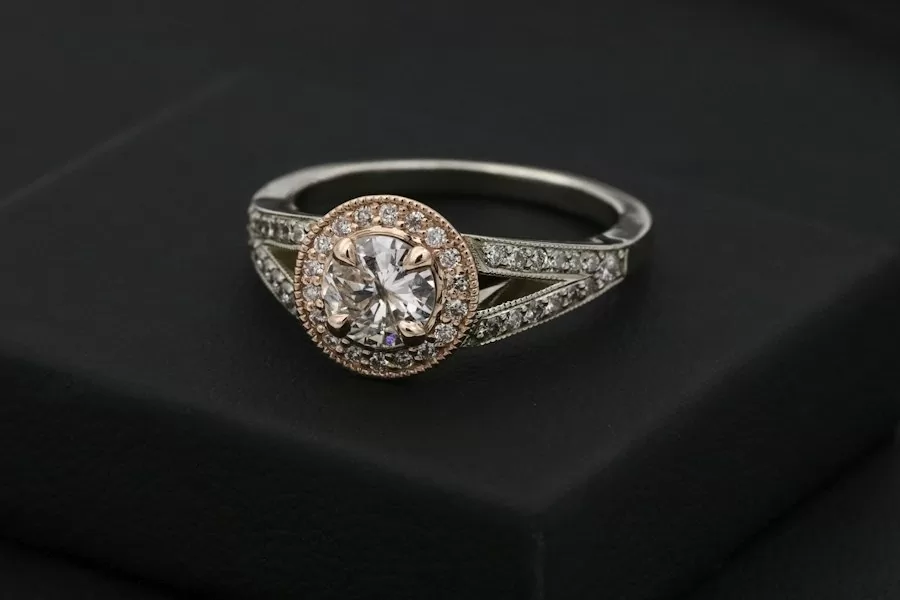
A client once sent us a competitor's quote and our own for what looked like the same solitaire: same stone weight, same metal color, same band width. The prices differed by $950. The render on both pages was nearly identical. The gap was not in the picture. It was in five line items that most customer-facing quotes collapse into a single number. Understanding those five items is the fastest way to compare bespoke quotes fairly.
I1. Metal weight at spot price
Gold and platinum are bought by the gram at the day's spot price, plus a refining spread. A 5 g 18k ring uses 3.75 g of fine gold; a 5 g platinum ring uses 4.75 g of fine platinum, and platinum trades at roughly twice the per-gram price of gold. That single difference explains why a platinum solitaire costs about 30-40% more than the same design in 18k yellow gold. The weight itself moves with the design: a comfort-fit 3 mm band uses more metal than a flat 1.5 mm band. We quote the projected weight on every commission so this line is visible. Compare metals in platinum weight and feel.
II2. Stone premium: the 4Cs move price more than you think
A diamond's price does not move linearly with carat weight. Jump from 0.90 ct to 1.00 ct and the price can rise 25-35% because the one-carat mark is a psychological and grading threshold. Color from G to F adds cost; clarity from VS2 to VVS1 adds more; cut grade is the one most clients underestimate. We narrow stones using the GIA 4Cs and show two options on each quote so the premium is visible. Colored stones move by rarity, not by weight; a fine sapphire can cost more per carat than a diamond of the same size.
III3. CAD and model-making
The first 3D render is bench time. A simple solitaire CAD runs $150-$250; a pavé band with 40 melee stones runs $300-$500 because every stone seat has to be placed in the model. Two revision rounds are usually included; further rounds are billed by the hour. If the commission starts from a hand sketch, the technical sketch work sits in this line too. See what the client actually sees in our 3D printing notes. This is the cheapest place to spend time up front, because every hour spent in CAD saves hours at the bench.
IV4. Casting and setup
Each order is priced individually and confirmed in a written quotation. Hand-carved wax adds more time but is rarely cheaper than 3D printing for a one-off. Small runs of five or more share the setup cost; a one-off ring carries the full casting charge. The sprue and offcuts are returned to the metal pool, which is why our recycled-gold percentage stays high; see recycled gold options.
V5. Setting, finishing, and hallmark
This is the line that separates a CAD render from a piece worn for twenty years. Hand-setting a center stone runs $80-$150; pavé setting 40 small stones runs $200-$400 because each stone is placed and tightened by hand. Polishing, rhodium flash on white pieces, hallmark striking, and the final 10x inspection add another $60-$120. Retail markup, packaging, and insurance sit on top of all five. For the structure of a finished quote, read our what bespoke pricing includes and the entry-level view in how much bespoke jewelry costs. Rush fees sit on top of these five lines when a date is fixed, so widen the lead time wherever you can.
FAQ
Why does the same design cost more at another atelier?
Usually one of five things: heavier projected metal weight, a tighter stone grade, hand setting instead of cast-in-place, a longer CAD brief, or a higher retail margin. Ask for the line-item breakdown.
Can I reduce the cost without changing the look?
Yes. Step the stone down from 1.00 ct to 0.90 ct, drop from platinum to 18k gold, simplify pavé to a hidden halo, or widen the lead time to skip rush fees. We will show three lower-cost directions on every quote.
Are prices fixed or do they move with gold?
Sampling and bulk lead times are confirmed in writing with your quotation. After that we re-quote the metal line at the current spot. The stone, CAD, and labor lines are fixed once agreed.
Do trade retail partners get a different structure?
Yes. White-label partners buy at cost-plus lines (metal, stone, labor, casting) and set their own retail margin. The five lines stay visible on every invoice.
Want a transparent quote? Send the design, the stone parameters, and the metal you want. Production timelines depend on the design and order size and are agreed before we start. Trade partners: request our wholesale price sheet and we will set up your white-label account.
VIFrequently Asked Questions
How is wholesale jewelry priced?
By metal weight plus stone cost plus labor and plating. Ask for a line-by-line quote so you can compare suppliers on the same basis.
Why do two suppliers quote very different prices?
Metal purity, plating thickness, stone grade and QC standard differ. A cheaper quote usually means thinner plating or lower stone clarity.
What volume discount should I expect?
Typically 5–12% from 500 to 2,000 pieces, and better terms on repeat programs. Ask for the tier table before you commit.
What are the payment terms?
The deposit and balance arrangement is written into your order agreement. Sample costs are credited against the bulk order.