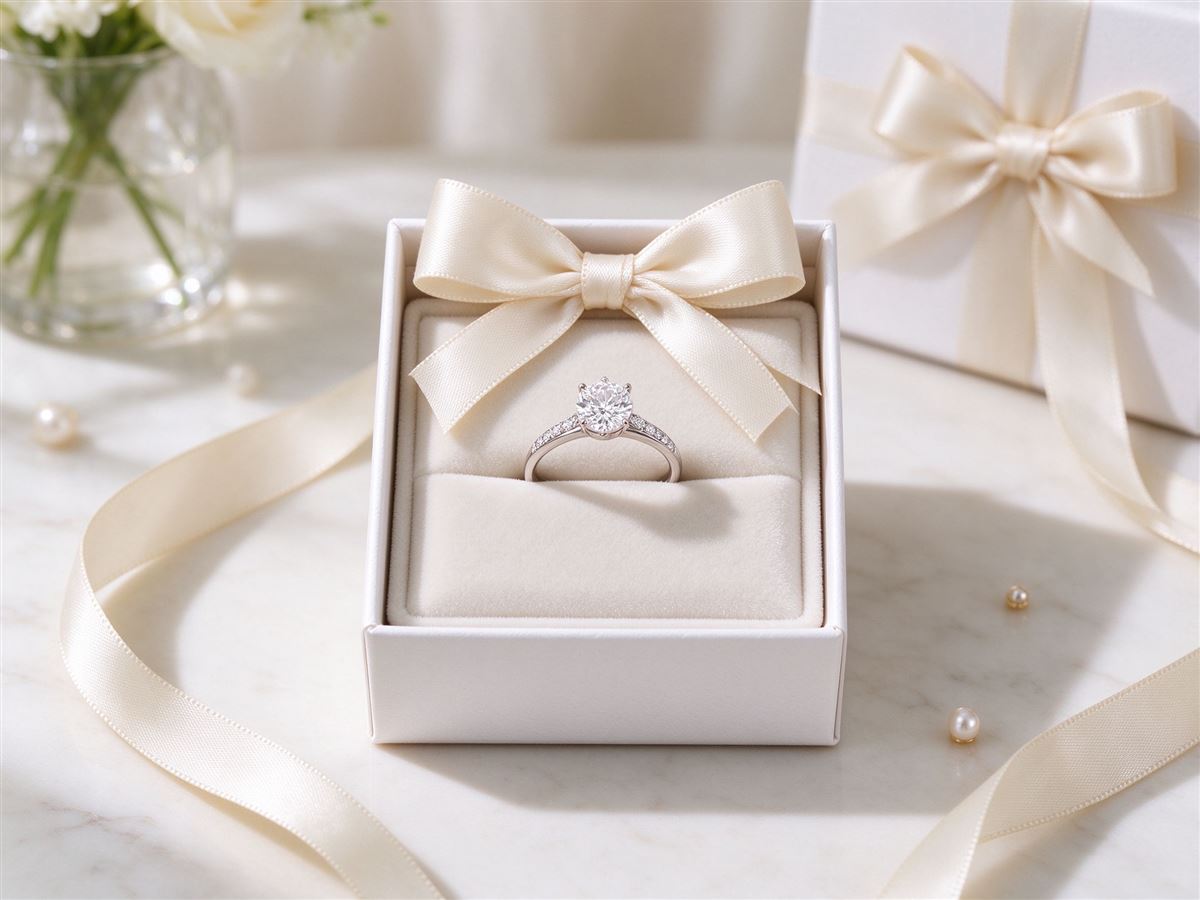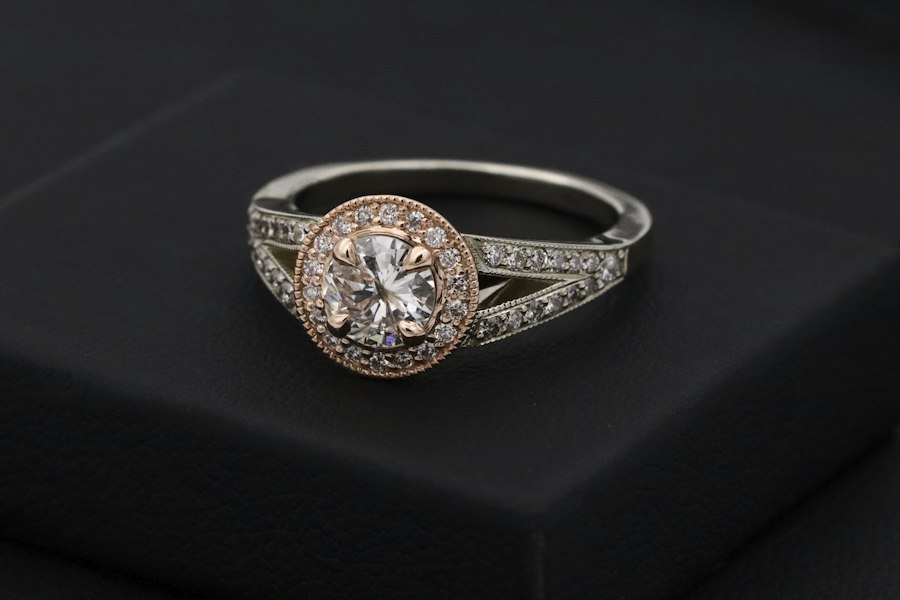
A client sat across from us last month and said what we hear every week: she likes diamonds, but she does not want the ring everyone at the office already owns. She had pinned ten solitaire halo images, then deleted all ten. That is the exact moment a bespoke brief gets interesting. The solitaire is not wrong, but it has become the default, and default is the opposite of what an engagement ring is supposed to say.
Why the solitaire became the default
The solitaire survived because it is honest: one stone, one setting, nothing to argue about. It also photographs well, stacks with most wedding bands, and suits a wide range of hand shapes. A 1.00 ct round brilliant on a 2 mm solitaire head is what most people picture when they picture an engagement ring. The trade-off is that it signals nothing about the wearer beyond budget. If that is fine, buy off the shelf. If the ring has to feel like a specific person, we start changing variables.
The first variable is the stone shape. A round brilliant solitaire is the conservative read; an oval, pear, emerald or cushion of the same carat weight changes the silhouette without changing the budget much. We cover the shape decision in our guide on choosing a center stone for a custom ring, and it is the fastest way to make a solitaire feel less generic.
Six layouts clients actually commission
Bezel set. A thin metal rim wraps the girdle. It is the most protective option for someone who types, gardens, or works with their hands. A bezel also reads modern and architectural, which is why it is the default for clients over 35 who do not want a "bridal" look.
East-west. Turn an oval, emerald or pear on its side. The same stone looks wider and shorter on the finger, and the ring stacks flush with a straight band. It costs about 5% more in setting labour because the prongs are asymmetrical, but it photographs distinctly.
Three-stone. Center stone plus two side stones of a contrasting shape. The side stones need only be 0.25-0.35 ct each, so the total carat feels generous while the center stays modest. We usually pair a round center with pear side stones for softness, or an emerald center with tapered baguettes for geometry.
Toi-et-moi. Two stones facing each other, usually of different shapes or colors. It has a 19th-century pedigree and reads as narrative rather than status. Budget-wise, two 0.70 ct stones often cost less than one 1.50 ct, because smaller stones trade at a lower per-carat rate.
Pavé shank. The center stays a solitaire, but the band carries 0.01-0.02 ct melee along both shoulders. It adds roughly $250-450 in stones and setting, and it is the smallest change that produces the biggest visual difference.
Tension or tension-style. The stone appears to float in a gap in the band. True tension setting requires hardened metal and a specific stone girdle; most commissions are tension-style, which uses hidden internal rails. It is dramatic but not recommended for stones under 0.50 ct, where the effect gets lost.
What changes in the quote
Setting labour ranges from about $180 for a basic solitaire head to $650 for a toi-et-moi with two different prong types. The stone itself is usually 60-75% of the invoice, which is why we lock the budget on stone weight and color before we argue about layout. Read more on that split in our cost factors breakdown. We also size the finger before CAD because an east-west ring on a size 7 hand reads very differently than on a size 5.5.
If you are still undecided, the GIA 4Cs guide is the neutral reference we send clients before the first sitting. It keeps the conversation about the stone honest, and it lines up with the FTC Jewelry Guides on disclosure of diamond treatment and origin.
Pairing the chosen ring with a wedding band is the next decision; we cover that in wedding bands that match but not match, and in designing the engagement ring together with your partner.
FAQ
Does a non-solitaire ring cost more than a solitaire?
Usually by $150-400 in setting labour, not by thousands. The stone remains the largest line. A toi-et-moi often costs less than a single larger solitaire because two smaller stones trade at a lower per-carat price.
Will a bezel or east-west ring be hard to resize later?
Bezels resize cleanly because the shank is solid. East-west rings are slightly more work because the shoulder symmetry has to be preserved, but it is a standard operation. True tension settings are the one layout we flag as harder to resize after the fact.
Can we mix diamond and colored stone in one ring?
Yes. A common commission is a diamond center with a sapphire or emerald accent on each shoulder, or a morganite center flanked by two small diamonds. We match hardness on the Mohs scale so the softer stone sits where it takes less impact.
How far in advance should we start?
Eight to ten weeks from approved sketch to hand delivery. Add two weeks if the center stone has to be sourced to spec. We walk through the full schedule in bespoke order lead times.
Want to sketch an engagement ring that is not the one everyone else has? Book a 20-minute sitting with our design lead. Bring the finger size (we can measure it free) and two images of rings you like even if they are not quite right. We will sketch two alternative layouts on the spot and quote both in writing within 48 hours. Trade retail partners: our white-label alternative-layout one-pager gives your sales team the same six options we use in-house.