Why Does My Moissanite Look Dull? How to Bring Back the Sparkle
You bought a ring that threw fire in the product photos. Six months later, on your finger, it looks a little gray. The panic is real. People assume the stone has lost its brilliance, that the moissanite is low quality, or that the factory sent a bad batch. Almost always, the problem is not the stone. It is a layer of invisible grime, a loose prong, or a plated band that has worn thin. Here is how to diagnose which one you have.
Reason One: It Is Just Dirty
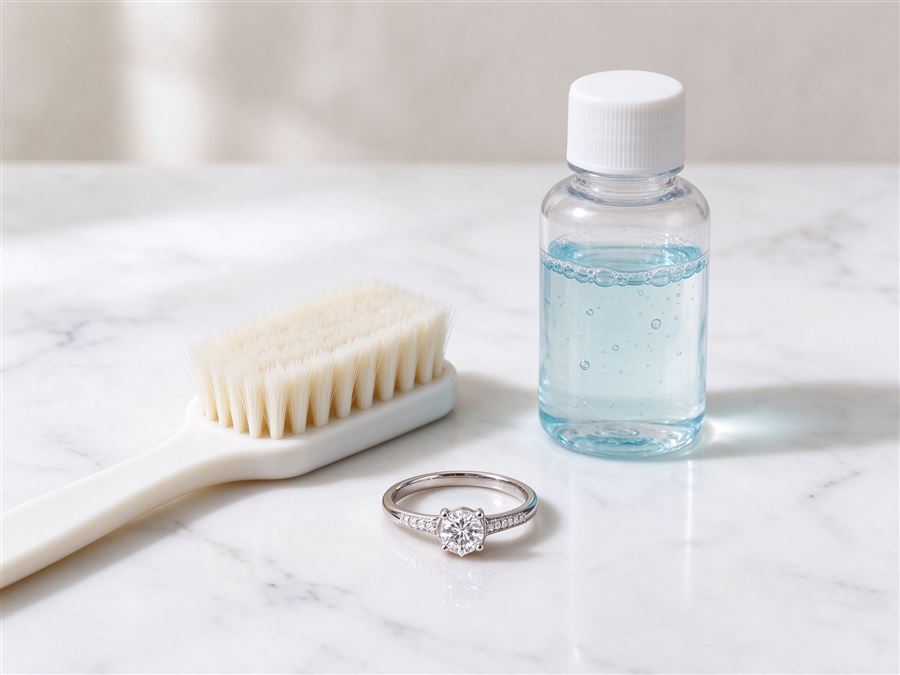
This is the cause nine times out of ten. Moissanite is hard, but its facets are not self-cleaning. Every time you wash your hands, apply lotion, cook, or touch your face, a thin layer of oil transfers to the stone. Over weeks that layer builds into a film that blocks light. The stone underneath is still brilliant. The film on top is what you see.
The fix is the five-minute warm-soap clean. Soak the ring in warm water with a drop of dish soap for three minutes, brush gently under the stone, rinse, dry. If the sparkle comes back, the problem was grime. If it does not, read on.
Reason Two: The Prongs Are Loose
When a prong lifts, the stone tilts slightly in its seat. Light that should return to the eye now shoots out sideways. The stone looks dark from the front. You may not see the tilt with the naked eye, but you will feel it if you run a fingernail across each prong. If one catches, if one looks shorter, or if the stone shifts when you nudge it, the prongs need a jeweller.
This is a five-minute repair. It is not expensive, and ignoring it is how stones fall out. Do this before you buy a new ring.
Reason Three: White Gold Plating Has Worn Thin
If your ring is white gold and the whole setting looks yellow or warm, the rhodium plating has worn through. The underlying gold is showing. This does not affect the moissanite directly, but it changes the reflection around the stone, and a warm-colored setting makes a near-colourless moissanite look slightly off. Re-plating fixes it.
If your ring is platinum or yellow gold, this reason does not apply.
Reason Four: The Stone Is at an Angle to the Light
Moissanite returns light best when light hits it from above. Under fluorescent office lighting, which comes from overhead panels at steep angles, the fire looks flatter than in natural daylight. In a restaurant with warm low light, the stone looks muted. This is not a defect, it is optics. Try the ring in natural daylight by a window. If it sparkles there, the stone is fine, and the office lighting is the issue.
Reason Five: A Real Scratch
Moissanite is hard, but it is not diamond. A real scratch is rare, but it happens if the ring has been rubbed against concrete, sandpaper, or another diamond. A scratch shows as a single line that catches the light from every angle. It cannot be cleaned away. It can be polished out by a lapidary, but this is a rare repair, not a routine one.
If your ring looks dull across the whole face rather than along a single line, this is not your problem.
Reason Six: You Have Gotten Used to It
This is the quiet one. When you wear a brilliant stone every day, your eye adjusts. The sparkle that took your breath away on the wedding day now feels normal, because your brain has stopped over-weighting it. This is not a defect in the ring, it is human perception. If you see the ring in a photograph, or on someone else, or after a few days away from it, the sparkle snaps back. The ring has not changed. Your perception has.
The Diagnostic Routine
Run through these steps in order:
- Clean the ring in warm soapy water for five minutes. Re-check in daylight.
- Run a fingernail across each prong. Feel for a catch.
- Check the setting colour. Is the white gold looking warm?
- Look at the ring by a window in natural daylight. Compare with indoor lighting.
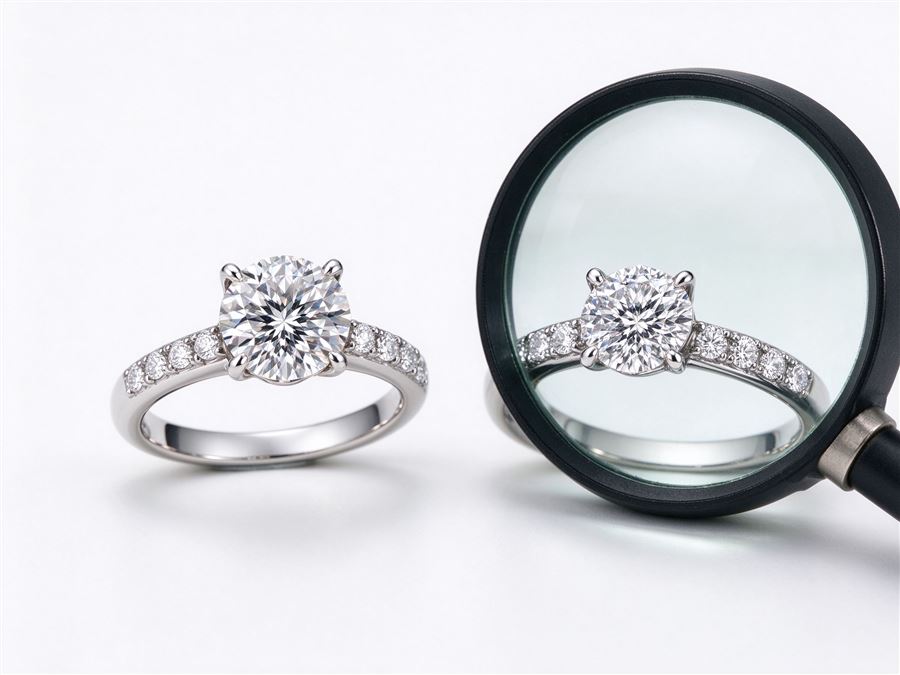
- Check for a single visible line under magnification.
- Take a break from the ring for a day, then look at it again.
Most people stop at step one. If you get to step six and the ring still looks dull, send us photos. We will tell you whether the stone needs a polish, the setting needs a prong check, or nothing is wrong at all.
Do Not Buy a New Ring Yet
The most expensive mistake here is replacing a perfectly good ring because it looked dull on a Tuesday. Before you commit to a new purchase, run the diagnostic. Nine out of ten rings come back to life with a clean, a prong check, or a re-plate. The tenth one is rare, and it is fixable too.
The Diagnostic Order
Run through these steps in order. First, clean the ring in warm soapy water for five minutes and re-check in daylight. Second, run a fingernail across each prong. Third, check whether the white gold has warmed. Fourth, look at the ring by a window in natural light. Fifth, check for a single visible line under magnification. Sixth, take a break from the ring for a day, then look at it again. Most people stop at step one.
The Prong Tilt
When a prong lifts, the stone tilts slightly in its seat. Light that should return to the eye now shoots out sideways. The stone looks dark from the front. You may not see the tilt with the naked eye, but you will feel it if you run a fingernail across each prong. This is a five-minute repair at a jeweller. Do it before you buy a new ring.
The Rhodium Wear
If your ring is white gold and the whole setting looks yellow, the rhodium plating has worn through. The underlying gold is showing. This does not affect the moissanite directly, but it changes the reflection around the stone. Re-plating fixes it. If the ring is platinum or yellow gold, this reason does not apply.
The Lighting Effect
Moissanite returns light best when light hits it from above. Under fluorescent office lighting, the fire looks flatter than in natural daylight. In a restaurant with warm low light, the stone looks muted. This is not a defect, it is optics. Try the ring by a window. If it sparkles there, the stone is fine.
The Perception Reset
When you wear a brilliant stone every day, your eye adjusts. The sparkle that took your breath away on the wedding day now feels normal. This is not a defect in the ring, it is human perception. If you see the ring in a photograph, on someone else, or after a few days away from it, the sparkle snaps back. The ring has not changed. Your eye has.
The Diagnostic Order
Run through these steps in order. First, clean the ring in warm soapy water for five minutes and re-check in daylight. Second, run a fingernail across each prong. Third, check whether the white gold has warmed. Fourth, look at the ring by a window in natural light. Fifth, check for a single visible line under magnification. Sixth, take a break from the ring for a day, then look at it again. Most people stop at step one.
The Prong Tilt
When a prong lifts, the stone tilts slightly in its seat. Light that should return to the eye now shoots out sideways. The stone looks dark from the front. You may not see the tilt with the naked eye, but you will feel it if you run a fingernail across each prong. This is a five-minute repair at a jeweller. Do it before you buy a new ring.
The Rhodium Wear and Lighting
If your ring is white gold and the whole setting looks yellow, the rhodium plating has worn through. Re-plating fixes it. Moissanite returns light best when light hits it from above. Under fluorescent office lighting, the fire looks flatter than in natural daylight. Try the ring by a window. If it sparkles there, the stone is fine.
The Perception Reset
When you wear a brilliant stone every day, your eye adjusts. The sparkle that took your breath away on the wedding day now feels normal. This is not a defect in the ring, it is human perception. If you see the ring in a photograph, on someone else, or after a few days away from it, the sparkle snaps back. The ring has not changed. Your eye has.
The Bottom Line
Dullness is almost always grime, not a dead stone. Clean the ring, check the prongs, look at it in daylight. If the sparkle returns, you are done. If it does not, a jeweller can fix the rest. The moissanite is not worn out. It is just waiting for a five-minute wash.