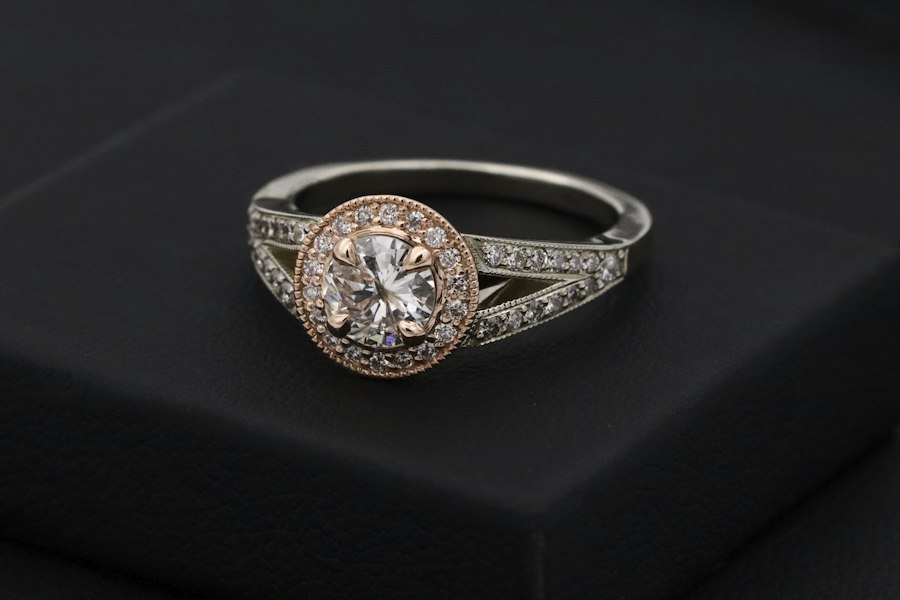
There is a reason couples keep returning to the language of the 1920s and 1930s. Art Deco jewelry reads as confident and architectural: crisp step-cut stones, symmetrical geometry, open galleries, and fine milgrain edges that catch the light like lace. The trouble is that many "vintage-style" rings sold today are stamped approximations that chip, tarnish, or look flat within a year. A bespoke atelier can do something a catalog cannot—rebuild those period motifs with modern structural logic so the ring survives fifty years of wear.
Start with the silhouette, not the era label
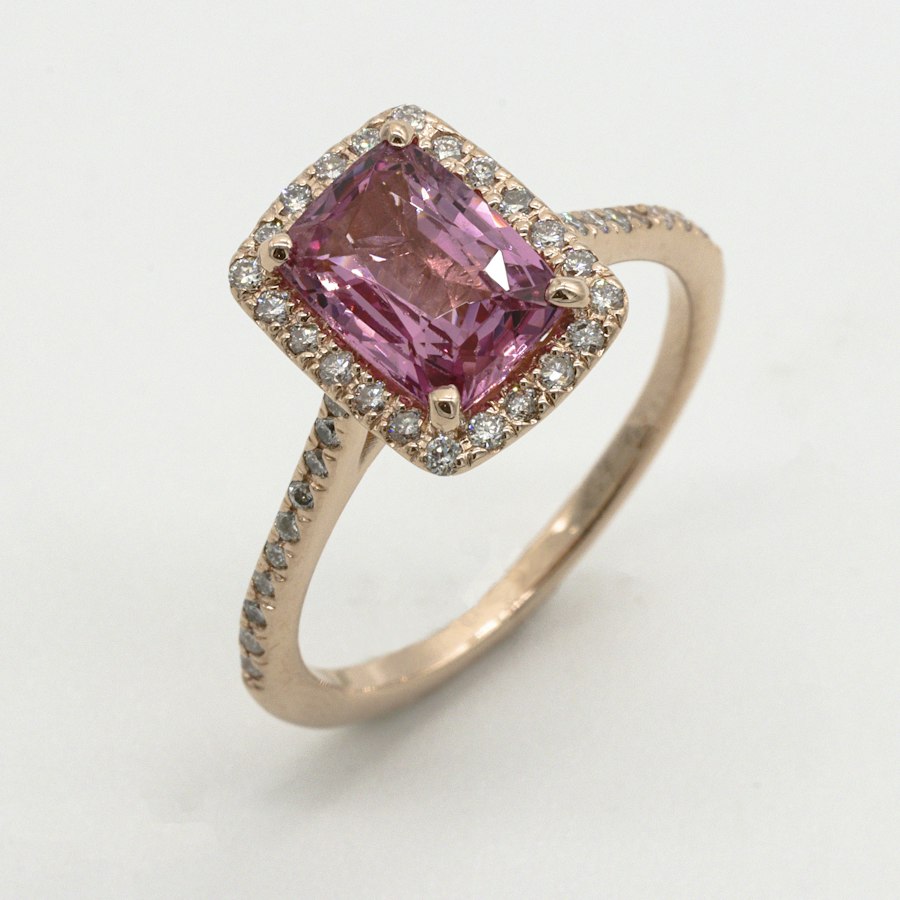
"I want something vintage" is a starting point, not a design brief. Our first job is to narrow which vintage. Art Deco favors strong horizontal lines, emerald- and Asscher-cut centers, and calibrated baguette side stones. Edwardian work is softer—delicate filigree, bow motifs, and milgrain on platinum. Victorian rings lean into colored stones, rose gold, and nature-inspired scrolls. Mixing two of these usually dilutes both, so we help you commit to one vocabulary before any metal is cut.
Bring reference images you genuinely love, even if they are torn from a magazine or saved on your phone. We will study what draws your eye—the stone shape, the low profile, the hidden engraving—and separate the details you actually want from the styling that surrounded them.
Period motifs, modern durability
Original Art Deco rings were built for a world of gloves and garden parties, not laptop keyboards and gym bags. Thin filigree that looked exquisite in 1925 can catch on sweaters today. So we keep the silhouette but reinforce the structure: we widen the gallery rails slightly, seat the center stone deeper, and use heavier prongs than a true antique would carry. From across a room it reads as a period piece. Up close, it is engineered for a contemporary hand.
Milgrain deserves a special mention. The tiny beaded edge that defines so many vintage rings is easy to fake with a rolling tool and hard to do well by hand. We roll ours by hand with a steel beader, one pass at a time, because machine milgrain wears smooth within a couple of years while hand-rolled beads hold their shape for decades.
Choosing stones that belong to the period
A round brilliant in a Deco setting can feel like a modern guest at an old party. To make the design feel authentic, we often pair the geometry with step-cut centers—emerald cut, Asscher, or old European cut moissanite—whose long, clean planes suit the straight lines. Calibrated baguettes on the shoulders complete the rhythm. If you love a round stone, we compensate by tightening the surrounding geometry so the contrast looks intentional rather than accidental.
Want the full story on center-stone shapes first? Read our guide to choosing your moissanite cut shape before you commit to a silhouette.
Metal choice changes the whole mood
Platinum is the historically correct choice for Deco work—it is strong enough to hold those fine prongs and takes a mirror polish. But yellow gold gives a vintage ring a warmer, more romantic tone, and rose gold pushes it toward the Victorian end of the spectrum. There is no wrong answer, only the mood you want. If you are weighing the options, our breakdown of platinum versus 14k and 18k gold walks through the daily-wear trade-offs.
What to expect in the process
A vintage-inspired commission usually runs longer than a simple solitaire, because the details take time. We begin with sketches, move to a CAD model so you can rotate the ring on screen, then hand-finish the milgrain and filigree at the bench. Plan on roughly six to eight weeks from approved design to your finger. The extra time is the price of detail that mass production cannot reproduce.
What vintage bespoke actually costs
The ornamentation is what moves the price. A plain solitaire is quick to cast and finish. A Deco ring with calibrated baguettes, hand-rolled milgrain, and open gallery rails takes several extra bench hours, and those hours are where the cost lives. The center stone is still the largest line item, but do not be surprised when the setting itself is more expensive than a modern one—you are paying for detail that a machine cannot stamp. We will price the design in stages so you can choose which details earn their keep and which you would happily drop.
Deciding if vintage bespoke is right for you
This approach suits couples who want a ring with presence and personality, who care about craftsmanship, and who are comfortable being part of the design conversation. If you prefer a minimalist, contemporary look, the extra ornament may feel fussy. But if you have ever lingered over a jewelry-box heirloom and wished it could be yours, a hand-built vintage interpretation is often the most personal way to own that feeling—without the fragility of a hundred-year-old stone.