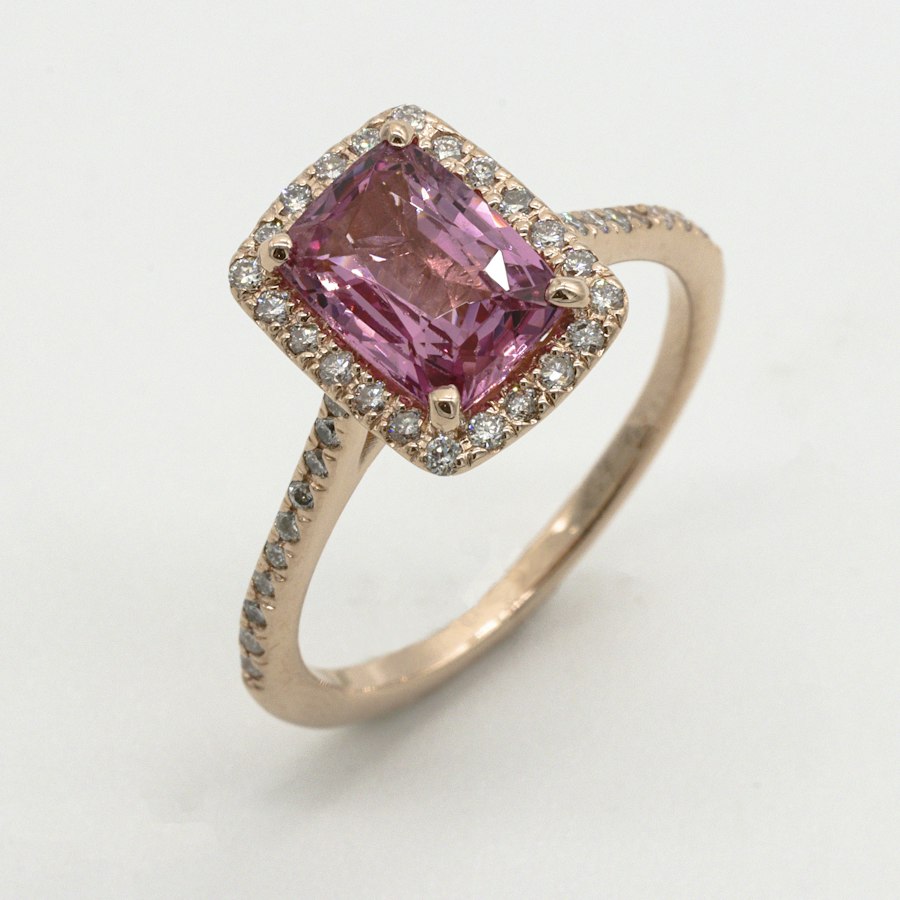
The three-stone ring, often called a trilogy, is one of the few engagement designs that is as much about narrative as it is about sparkle. The center stone reads as the present; the two side stones can stand for the years behind you and the ones ahead. That story is why couples choose it. But the trilogy is also harder to get right than a solitaire, because three stones have to balance against one another and against the width of the band.
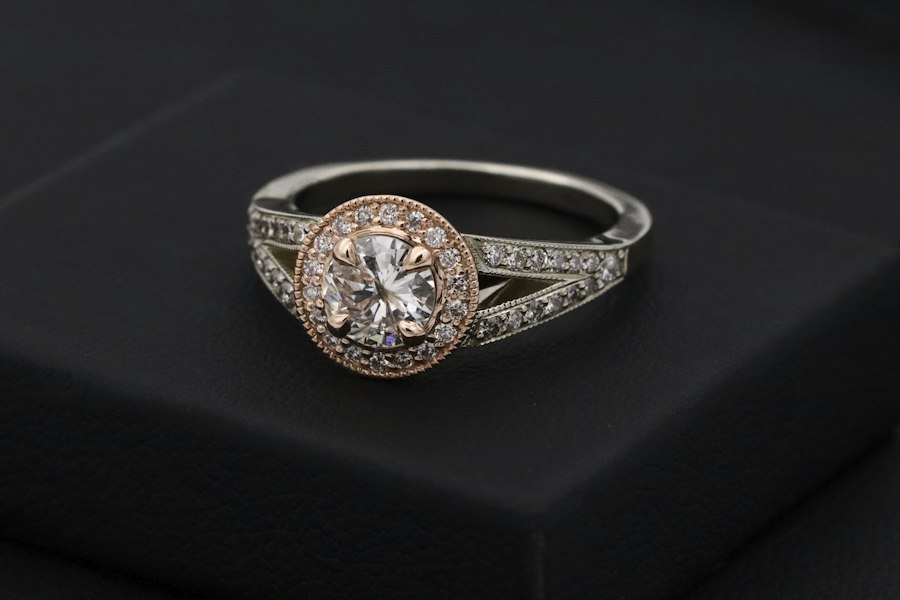
Start with the center stone, not the sides
The instinct is to pick three stones that look nice together. The better order is to choose the center stone first and then design the sides around it. The center carries about sixty to seventy percent of the visual weight of the ring, and its cut, depth, and girdle thickness will dictate how much space the setting needs. A deep stone, for example, sits lower in its head and changes how the side stones line up at the same height.
When you select a center stone, decide its cut before anything else. Round centers pair cleanly with round or pear side stones. Oval centers often read best with tapered sides that follow the oval length. Cushion centers take well to smaller cushion or round accents that echo the soft corners.
Proportions that hold up
A trilogy looks awkward when the side stones compete with the center. As a starting point, most ateliers size the two side stones so their combined weight is roughly a third of the center weight, give or take. If your center is a one-carat stone, side stones around 0.25 to 0.35 carats each tend to sit comfortably without crowding the center.
The gap between the stones matters as much as the sizes. A narrow gap makes the ring read as one wide band of stone; a wide gap makes the three stones look disconnected. A gap of about one millimeter, adjusted to the cut, usually keeps the grouping tight but breathable.
Choosing the side stones
Side stones do not have to match the center material. Many couples use a white diamond or moissanite center with colored side stones, or two different colored gems that reference a birth month or a shared memory. If you do mix materials, treat the side stones as accents rather than equals: keep their saturation lower than the center stone, or the eye will land on the sides first.
Consistency matters more than perfection. Side stones should share a similar cut style and a similar depth so they set at the same level. A shallow side stone and a deep side stone in the same head will never look even, no matter how well the ring is polished.
Setting choices for a trilogy
Prong settings are the most common choice for a three-stone ring because they let light reach each stone. For a lower-profile everyday ring, bezel or half-bezel sides reduce the chance of the side edges catching on fabric. Channel settings work best when all three stones are the same cut and width, which is rare in a bespoke trilogy, so they are usually reserved for matching bands rather than the engagement piece itself.
Pay attention to how the setting joins the band. The shoulders of a trilogy ring should flow into the shank without a visible step. A clean transition reads as a single designed object; a soldered-on setting head reads as three stones glued to a plain band.
Band width and stacking
A three-stone ring already carries visual width, so the band should not fight it. A shank between 1.8 and 2.4 millimeters at the base supports the head without making the ring look heavy on smaller hands. If you plan to wear a wedding band alongside it, raise the center head slightly or choose a contoured band that meets the ring cleanly. Otherwise the two rings will never sit flush.
When a trilogy is the wrong choice
A trilogy is not the right design for every hand or every story. If you want a ring that reads as light and minimal, three stones will always look wider than a solitaire of the same center weight. If you work with your hands, the two side stones add two more edges that can catch on fabric or knocks. In those cases, a solitaire with a single hidden accent, or a trilogy worn on less active occasions, is the more honest choice. The narrative matters, but it should not outweigh how the ring will actually be worn on a Tuesday.
What makes a bespoke trilogy worth the time
A stock trilogy ring is a compromise: the center stone size is fixed, the side stones are generic, and the band width is whatever the factory chose. A bespoke version lets you tune the proportion to one hand, one center stone, and one story. That tuning is where the extra weeks and the extra cost show up, and it is why the result tends to feel like a piece of jewelry rather than a catalog option.
For more on choosing the center stone, see our guide to picking the center stone for a custom ring, and review the setting types that work for a trilogy before your consultation.