A client brought in a white gold solitaire that had gone dull and gray around the prongs and asked us to "polish it." We held it up to the light and told her the problem was not polish. The rhodium layer had worn through on the high spots and the warm yellow-white of the underlying 14k alloy was showing. Polishing would make it worse-thinner, smoother, and still yellow. What she needed was replating. Polishing and replating are not the same repair, and reaching for the wrong one shortens the life of the ring.
What polishing actually does
Polishing abrades the surface of the metal with progressively finer compounds. It removes a thin layer of metal-typically 0.01-0.03mm per polish-to lift fine scratches and bring back a shine. That is fine occasionally. It is not fine every few months. Each polish removes real gold or platinum, and over a decade of yearly polishing a 2mm shank can drop to 1.6mm and weaken. We recommend polishing a worn ring no more than once every 2-3 years, and only when scratches have built up. For the silver side of this, see cleaning silver at home. The tarnish behaviour of silver is different from gold, and cleaning silver with a jewelry cloth is not polishing the metal away.
What replating actually does
Replating electroplates a thin layer of rhodium-about 0.5-1.0 microns-over the existing white gold. It does not remove metal; it adds a bright, white, hard coating. Rhodium plating is what gives off-the-shelf white gold its mirror look, and it wears off in 12-24 months on a daily ring as the high spots contact desks, sinks and phones. Replating is a refresh, not a repair, and it costs $40-80 per ring. It is the correct fix when the ring is dull-yellow around the prongs but the metal itself is unworn.
Which one fixes which problem
Polish for: fine surface scratches, a matte finish you want to bring back to shine, a ring that looks tired but is still the right color. Expect 20-30 minutes on the bench.
Replate for: yellowing white gold, a patchy gray look around the prongs, a ring that was bright when new and now looks uneven. Expect 1-2 days because the plating needs to cure.
Neither for: a bent shank, a loose stone, a cracked shoulder, or a ring that has been polished thin. Those need a repair, not a cosmetic service. See restoring a vintage ring and resetting stones and repair versus remake. And for routine care, see caring for a handmade piece.
The long-term math
A white gold ring replated every 18 months and polished every 3 years will look new for 20 years. A white gold ring polished twice a year without replating will lose about 0.1mm of shank width per half decade and turn yellow underneath anyway. Platinum and palladium rings never need replating-they are white all the way through-and they only need polishing when scratches actually build up. That durability gap is part of the price argument for choosing those metals in the first place.
At-home care that avoids both services
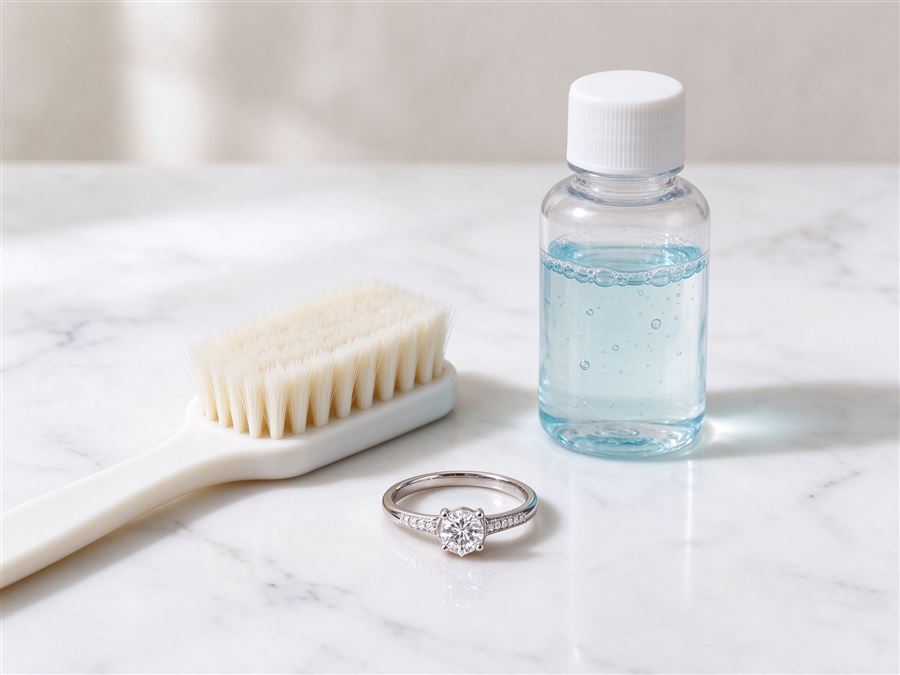
Most clients reach for polishing or replating because the ring looks dull, when the actual cause is built-up lotion and skin oil. A 20-second wash in warm water with a drop of mild soap, brushed with a soft toothbrush under the stone, removes that film and restores the shine without touching the metal. We recommend that at-home wash once a week. Save the bench visit for when the metal itself is scratched or the rhodium has worn through, not for when the ring simply needs cleaning. Clients who wash weekly stretch replating to every 24 months instead of every 12, and they almost never need an emergency polish.
FAQ
How often should a white gold ring be replated?
Every 12-24 months for a daily-wear ring. The rhodium wears fastest on the prongs and the top of the shank. You will see the yellow showing through before it looks bad.
Can I polish rhodium plating off by mistake?
Yes. Aggressive polishing with a rouge cloth strips rhodium quickly. We tell clients to wash with mild soap and water, and save polishing for the bench.
Is replating safe for stones?
Yes for diamonds, sapphires and rubies. Soft stones (emerald, opal, pearls) are removed before plating because the acids and heat can damage them.
Does polishing reduce a ring's value?
On a certified diamond, no-the stone is untouched. On a vintage or antique piece, yes: a worn original patina is part of the value, and over-polishing a vintage ring is a real loss. We treat vintage pieces as restoration, not refresh.
Not sure whether your ring needs polish or replate? Bring it in for a free inspection. We will look at the prongs under 10x, measure the shank, and tell you which service it actually needs-before we touch anything. Trade retail partners: our care guide differentiates polish, replate and repair on one page so your customers stop asking for the wrong service.