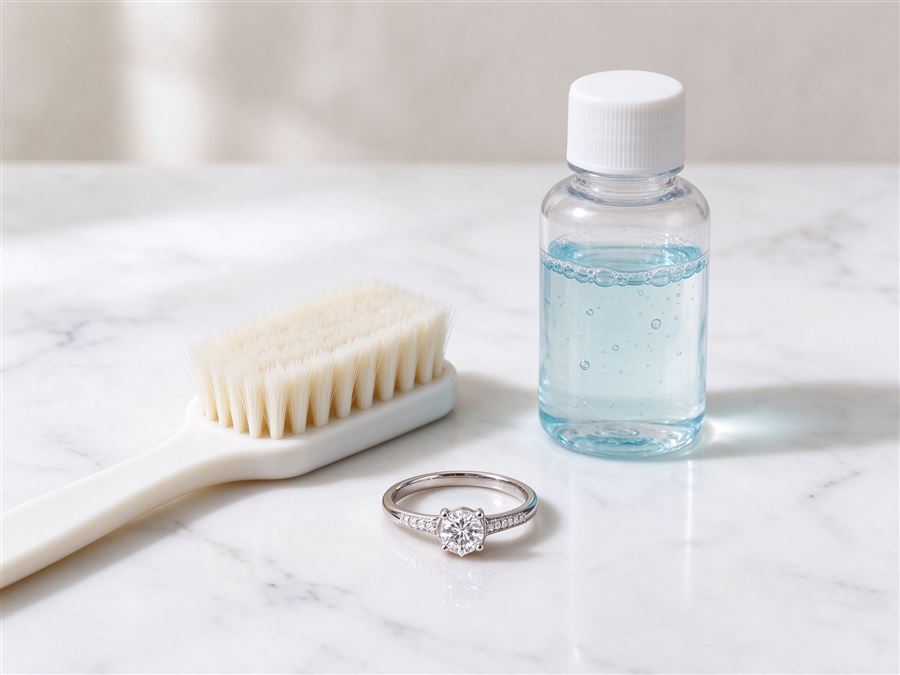
A 1925 platinum diamond ring came into the workshop last year with a bent prong, a worn-through shank, and a stone that sat at a slight angle. The client wanted it fixed like new. The honest answer was that we could fix it, but like new would erase eighty years of work: the hand-engraved milgrain, the slightly irregular prongs, the warm patina on the platinum. Restoring vintage jewellery is a different conversation from repairing a modern piece, because the damage is not always the enemy.
When to repair, not remake
Repair is the right call when the structure is sound and the age of the piece is part of its value. Tightening a prong, restringing a pearl necklace, rebuilding a worn bezel wall, or replacing a lost clasp are bench jobs that leave the original craft intact. We will match the solder alloy to the period: pre-1950 pieces often use higher-karat, softer solder than modern commissions, and using modern hard solder would discolour the surrounding metal. Read the broader decision in our repair vs redesign note, and the ring-specific version in restoring a vintage ring reset.
When a remake is the honest answer
There are four conditions where repair stops making sense. First, a cracked or worn-through shank that has been soldered twice already; a third solder joint will fail. Second, a deformed setting where the prongs are bent beyond straightening without breaking. Third, missing stones that cannot be matched in cut and age; a modern brilliant in an Art Deco old-mine-cut setting looks wrong on the hand. Fourth, alloy deterioration where the original white gold has corroded from nickel content and cannot be stabilised. In those cases we rebuild the piece in the original style, using the old stones and as much of the old metal as we can credibly reuse. We say this in writing rather than letting the client keep paying for repairs that will not hold.
Keep the patina, or take it back?
Patina is the thin surface change that decades of wear leave: slight dulling on high points, darker lines in engraved grooves, a soft matte on platinum. Some clients want it kept; others want the ring to look as it did on the wedding day. There is no wrong answer, but the choice changes the bench work. A heavy polish removes 5-10 microns of metal per pass, and after ten such passes the milgrain edges are gone for good. We usually recommend a light clean, a prong tighten, and leave the patina, then show the client what a full polish would look like on a hidden spot first. Compare the intentional look in our intentional patina guide.
Paperwork, hallmarks, and disclosure
Vintage pieces often carry hallmarks that are no longer current. We record them photographically before any work, and we do not restrike them. Any karat mark we add to a rebuilt section follows the rules under 16 CFR Part 23, so the finished piece is honestly marked. If the old piece has inherited stones moving into a new setting, read our upcycling inherited stones note. Home care for the restored piece follows our at-home cleaning guide; vintage stones should not go into an ultrasonic unless we clear it on the bench.
What we photograph before we touch the piece
Every vintage piece that comes in for work gets a six-photo set before any tool touches it: front, back, inside shank, hallmark close-up, under-girdle shot of the stones, and a shot of the wear pattern on the high points. That file travels with the piece through the bench and is handed back at collection. It matters later if a family member wants to know what changed, and it matters for insurance if a claim is ever filed. We also note the solder seams on the bench sheet, so a later repairer knows where the piece has already been worked.
FAQ
How much does vintage restoration usually cost?
A prong tighten and clean runs from $60-$120. A shank rebuild with matching alloy runs $250-$450. A full remake in the original style starts around $800, depending on stones. We quote in writing after a bench inspection.
Can you match an Art Deco stone that is missing?
We source old-mine and old-European cut diamonds from trade suppliers rather than setting a modern brilliant. If a match is impossible, we will tell you and propose a redesign that does not fight the era.
Will restoring the ring lower its value?
Heavy polishing and over-restoration can. We photograph before, use period-correct solder, and keep hallmarks intact. For pieces of real museum value, we will suggest a conservator rather than a bench repair.
How long does restoration take?
A simple tighten is same-week. A shank rebuild runs one to two weeks. A full remake runs four to six weeks, same as a bespoke commission.
Have a vintage piece that needs an honest look? Book a bench inspection. We will photograph it, test the solder, and tell you in writing whether repair, light polish, or remake is the right call. Trade partners: our vintage triage sheet gives your counter staff the same four-question decision tree we use on the bench.