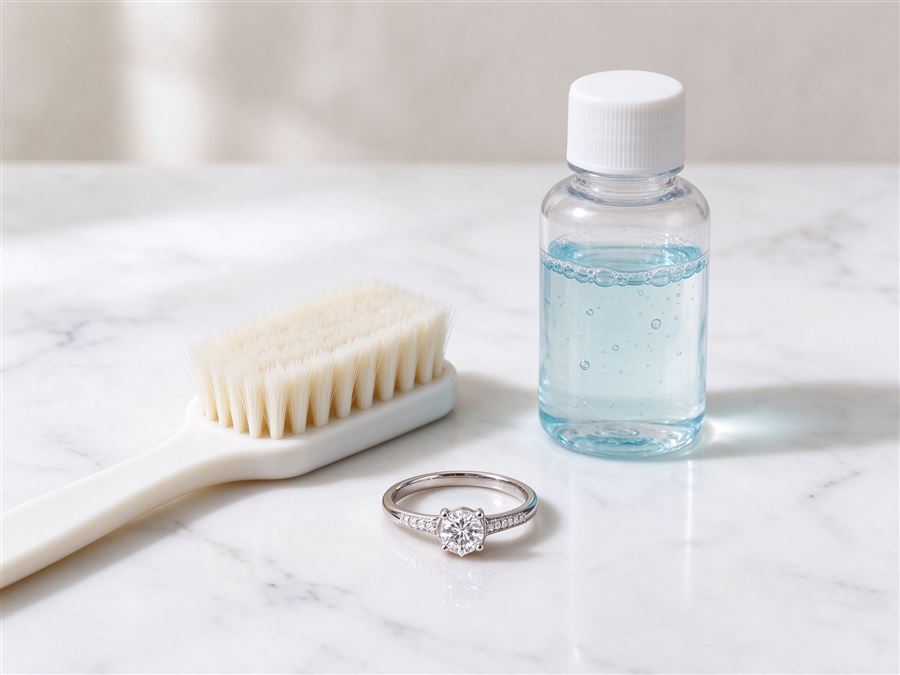
A platinum solitaire came into the bench last winter. The client had it repaired twice: a prong re-tightened, then a re-tip. Two months after the second repair, the stone was loose again. The diagnosis was not the repair; it was that the ring had been repaired too many times. The shank was thin, the setting was fatigued, and the honest answer was a remake, not a third fix. Here is how we decide when a piece crosses that line.
The three failure patterns
Worn through. A ring band thins over years of wear, usually on the bottom of the shank where it rubs against surfaces. When the wall drops below 1.2 mm on a 14k band, the structural integrity is gone. We measure with a calliper and show the client the number. At 1.5 mm, a re-sheave (building up the wall) works. At 1.0 mm, the band is a remake.
Repeated prong failure. Prongs wear thin at the tip. Re-tipping is fine once or twice. If the same prong has been re-tipped three times, the underlying setting is fatigued and the stone needs a new seat. We will say so rather than re-tip a fourth time for 35.
Cracked shank or broken solder joint. A crack in the band can be soldered once. If the crack returns in the same place, the metal is work-hardened and brittle. The piece needs to be re-cast, not re-soldered.
The cost tipping point
Repair is cheaper than redesign, until it is not. A prong re-tip is 25 to 45. A band re-sheave is 60 to 120. A full re-set of an existing stone into a new mounting is 350 to 700. When the repair cost over two years approaches the remake cost, the remake wins, because it resets the clock on the piece. We show clients both numbers on the bench sheet.
If the stone itself is going to be re-used, the remake is essentially a bespoke reset; see our guide to upcycling an inherited stone into a new ring. The process is identical: we remove the stone, cast a new setting, and re-set it with a fresh seat.
What to keep and what to remake
When a piece is beyond repair, we separate the components. The stone is almost always re-used. The old metal is sometimes kept as a memento, sometimes inlaid into the new band, and usually re-melted at the client's discretion. Engraving can be copied by hand into the new inside of the band. We do not promise to keep the exact vintage look of a 1970s mounting if the structure is unsalvageable; we will design a new piece that references it instead.
For care that delays the moment of repair, our notes on caring for a handmade piece cover the annual prong check and storage habits. And to understand the patina-versus-wear distinction before you book a repair, read patina on silver and gold; sometimes what looks like damage is just age.
When repair is absolutely the right answer
We do not push redesign. A single loose stone, a broken chain jump ring, a bent earring post, a re-plating of white gold: these are repairs, and they should be repaired. A redesign is the answer only when the structure is fatigued, the cost of fixes is accumulating, or the client simply no longer likes the piece. We will write down which path we recommend and why, so the decision is yours.
For the regulatory side, any repair that touches a stamped fineness mark must be re-hallmarked in the UK, and any re-set stone must be disclosed accurately in line with the FTC Jewelry Guides for US clients. We handle both as standard.
FAQ
How do I know if my ring needs repair or remake?
Bring it in. We measure the shank, examine the prongs under magnification, and tell you honestly. If a 35 re-tip fixes it, we will say so.
Can you remake a ring and keep the same stones?
Yes. That is the most common remake. We remove every stone, cast a new mounting, and re-set. You keep the stones and the story; you get a structurally fresh setting.
Is remade jewelry worth less than the original?
Structurally, no; it is often more durable. Sentimentally, that is a personal question. We preserve the original engraving and metal where we can, and we keep a photograph of the old piece in the commission file.
How long does a remake take?
Three to five weeks, similar to a fresh bespoke commission. Expedited service is available but adds a surcharge because it disrupts the casting schedule.
Not sure whether that loose stone is a quick fix or a sign of fatigue? Book a 20-minute bench assessment. We will measure, photograph and write down both the repair and the remake option with their costs. Trade partners: our wholesale repair-and-remake service serves retail jewellers nationwide; ask for the trade returns agreement.