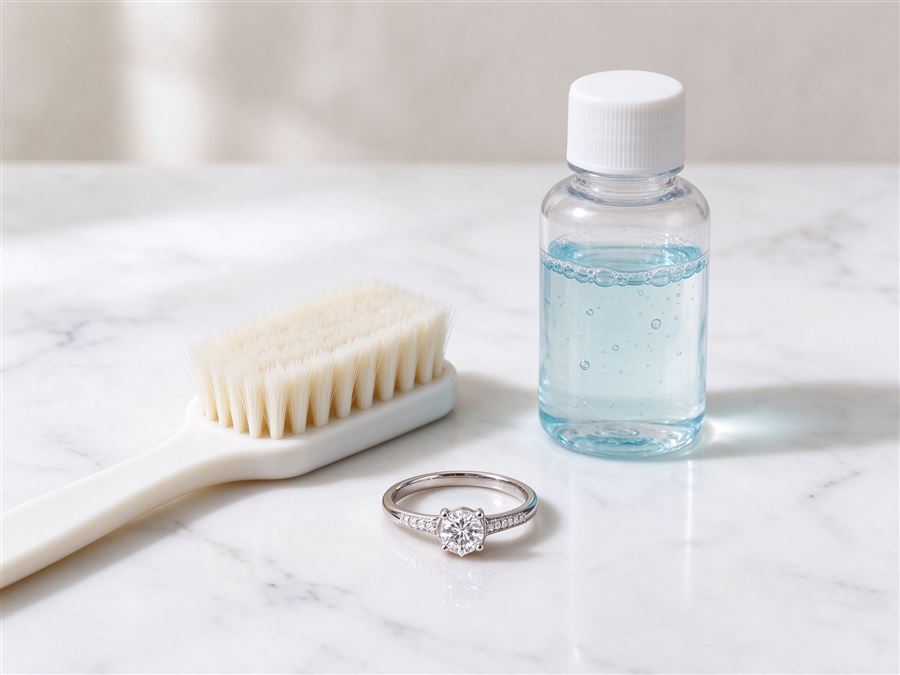
A client brought in a 1940s solitaire that had spent twenty years in a jewellery box. The diamond was fine. The gold band was paper-thin on the underside, two prongs were bent flat, and the ring would not have survived another month of daily wear. The instinct was to set the diamond in a brand-new mounting. We did the opposite: we rebuilt the original shank and prongs, kept the old engraving on the shoulders, and the ring still reads as the 1940s piece it is. Restoration is the choice when the mounting itself is the story.
Diagnose before you quote
The first job is a close exam under 10x magnification: measure shank thickness at the thinnest point, check every prong for wear, inspect the gallery for cracks, and look for previous solder repairs. A shank under 0.6 mm needs a reshank; prongs that have been worn flat need rebuilding; a cracked gallery usually means a new basket. We photograph the findings before any work, because the client has to see why the repair is needed. For the broader repair-versus-redesign decision, our repair versus redesign guide sets the same decision tree.
The reshank: when the band wears through
A reshank replaces the lower half of the band with matching-alloy gold, keeping the original shoulders and engraving intact. It is the most common restoration we do. We match the metal (9k to 9k, 14k to 14k) because soldering dissimilar alloys causes porosity. A reshank runs 120 to 220 and adds roughly one week. The GIA 4Cs reference matters here only as a reminder that the stone should be graded or at least photographed before the work, so the chain of evidence is clear.
Prong rebuilding and stone security
Worn prongs are the reason stones fall out. We rebuild each prong with wire solder, contour it to the stone girdle, and then peg-set the tip so it cannot catch on fabric. After a prong rebuild we recommend a six-month check on the first year, because the client will start wearing the ring daily again. If the stone itself is chipped near a prong seat, our upcycle of an inherited stone guide covers when to recut rather than reset.
Finish, rhodium, and patina decisions
White gold yellowing is usually rhodium wearing thin, not a problem with the alloy. We re-plate as the last step. On vintage pieces we sometimes leave a faint patina on the shoulders so the engraving reads as old, not as new. That is a deliberate choice, explained in our patina: intentional versus worn note. We also follow the FTC 16 CFR Part 23 marking rules and restamp the hallmarks if the original marks have worn away, so the restored piece is honestly marked for future resale.
When restoration becomes a redesign
If the gallery is cracked in three places, the shank cannot be saved, and the engraving is worn smooth, restoration starts to cost more than a fresh casting. At that point we move the stone into a new setting that echoes the old design. The care guide for handmade jewellery helps the client decide how much daily wear the piece will actually see, which decides whether a heavy restoration is worth it. Trade partners: our wholesale restoration programme accepts customer heirlooms sent in by retail stores, with a flat-fee diagnosis and photographed estimates.
The post-restoration check we always book is a free six-month prong inspection. A rebuilt prong sits slightly higher than the surrounding metal for the first few weeks of wear, and clients who notice the change often panic and stop wearing the ring. The inspection lets us confirm the seats have settled, re-tighten any tip that has loosened, and give the client a written note that the piece is safe for daily wear. We also photograph the restored ring next to the original before-and-after shots so the insurer has a clean record.
FAQ
How much does a vintage ring restoration cost?
A reshank and prong rebuild lands between 150 and 350. Rhodium and polish add 40 to 80. Full basket rebuilding can exceed 400, at which point we usually compare against a fresh setting.
Will the restored ring look new?
It will look clean and secure, but we can keep a faint patina on original engraving so it still reads as vintage. Tell us which side of the line you want.
How often should a restored ring be checked?
Every six months in the first year, then annually. We recommend a prong and shank check on any solitaire worn daily, regardless of age.
Can you restore rings with stones I did not buy from you?
Yes. We document the stone and mounting before work, and we accept insured shipments from retail partners and private clients worldwide.
Have a tired ring in a box? Send photos and the shank measurement. We will diagnose under magnification, quote the restoration in writing, and send before-and-after photos of the work. Retail partners: our heirloom restoration programme turns inherited pieces back into sellable, wearable jewellery.