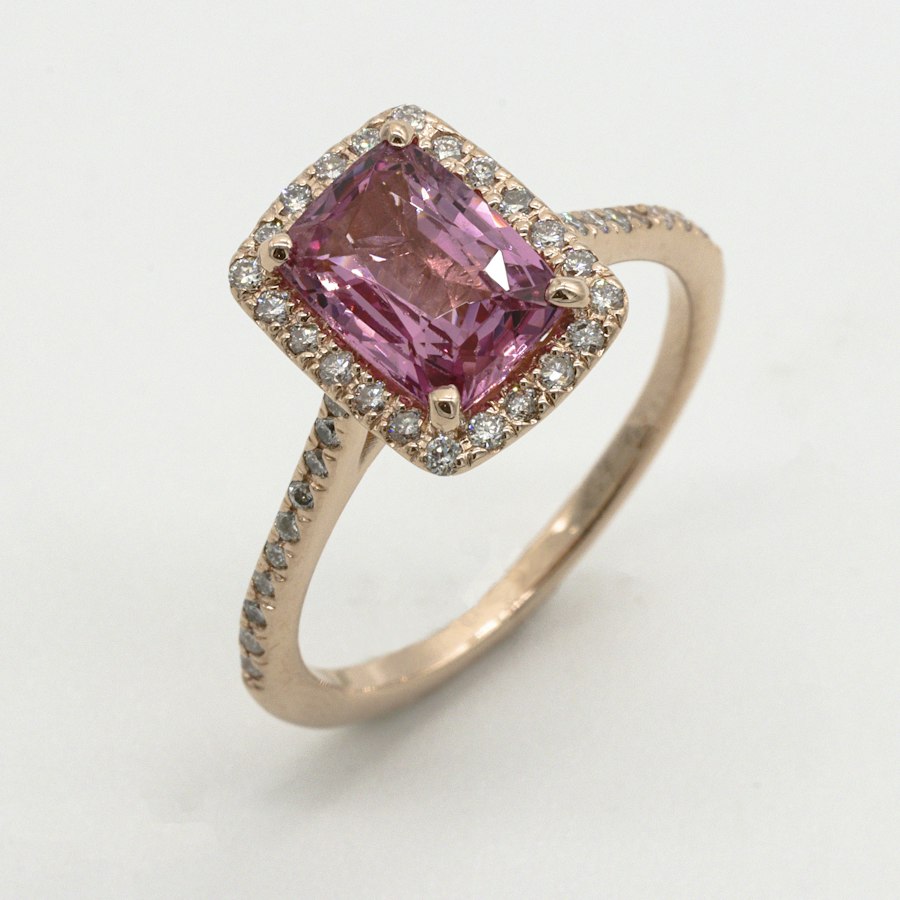
A client came in holding a white gold solitaire that had yellowed around the prongs and asked, "Is there a white metal that just stays white?" She had been replated every 18 months and was tired of it. The answer most salespeople give is "platinum," but the answer a working bench gives is "platinum or palladium, and here is the difference." Both are platinum-group metals. Both stay white without rhodium. They are not the same price, and they do not feel the same on the hand.
What each metal actually is
Platinum used in jewelry is almost always 950 platinum (95% pure, alloyed with copper or cobalt). Palladium jewelry is typically 950 palladium as well, alloyed with copper and gallium. Both sit in the same family on the periodic table, which is why they look near-identical when polished. The platinum group includes ruthenium, rhodium, palladium, osmium, iridium and platinum; only platinum and palladium are used as the primary jewelry metal at commercial scale.
The difference everyone feels first is weight. Platinum has a specific gravity of about 21.4, nearly twice that of 14k white gold. Palladium is far lighter, at roughly 12.0-close to 14k gold. A platinum band feels dense and permanent on the finger; a palladium band feels like a comfortable gold band that happens to be white.
Side by side on the bench
Hardness and wear. Platinum 950 is a soft metal, roughly 100-120 HV on the Vickers scale. It scratches more readily, but the metal displaces rather than wears away, so a platinum ring patinas gracefully over decades. Palladium 950 is slightly harder, around 120-150 HV, and resists fine scratching a little better. Neither needs rhodium plating. For the feel of weight on the finger, see our note on platinum weight and feel.
Price. Palladium typically runs 40-60% cheaper than platinum per gram. A 5g wedding band in platinum costs roughly $900-1,200 in metal alone; the same band in palladium costs $350-550. Setting labour is similar. For the gold-side comparison, see custom gold karat and color choices.
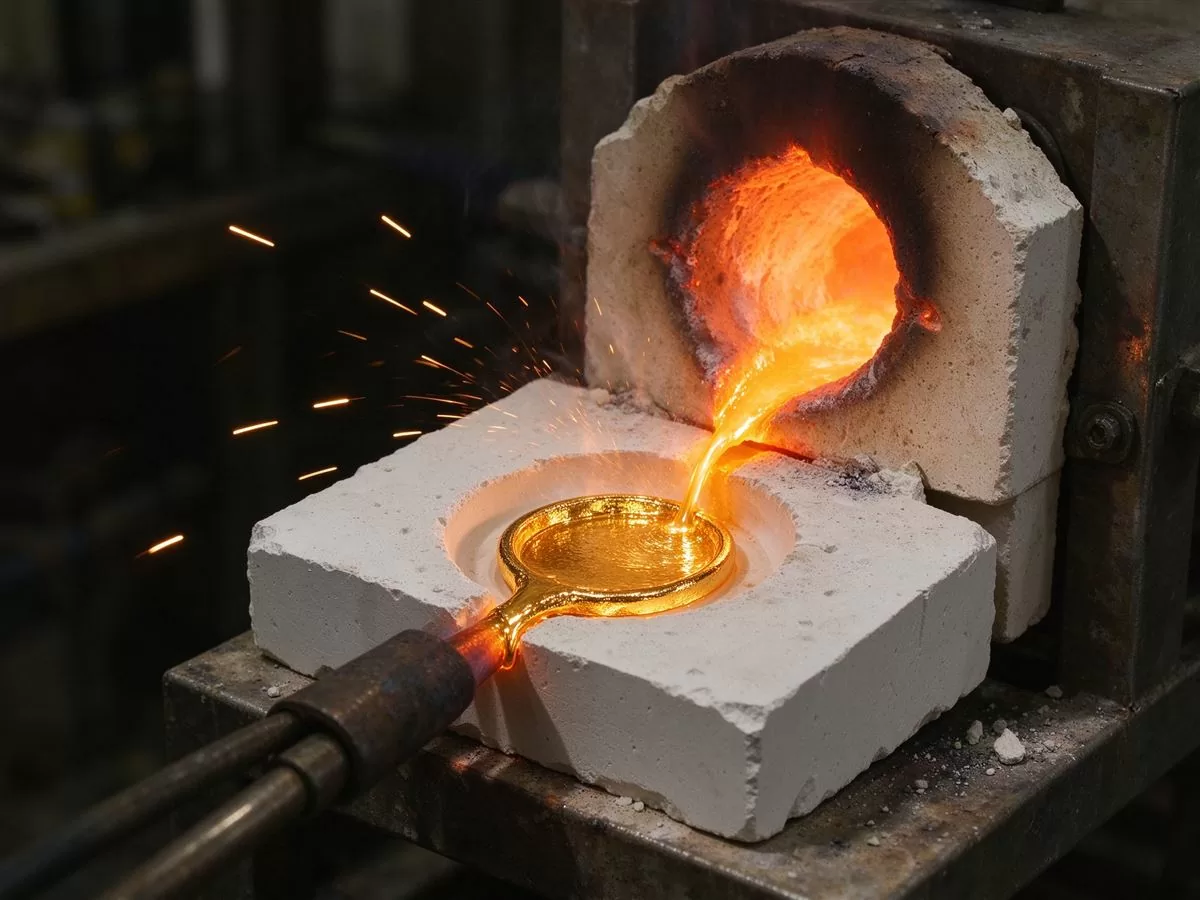
Casting behaviour. Palladium is harder to cast cleanly than platinum. It melts at a higher temperature and absorbs oxygen if the vacuum is not tight, which is why not every workshop pours palladium. Platinum, by contrast, is forgiving to cast and is the metal most often used for delicate pave.
Which to pick for daily wear
Pick platinum if the client wants the "forever" weight, is commissioning an heirloom, or likes the way a dense band sits. Pick palladium if the client wants a white metal that never yellows but cannot tolerate the heft of platinum on a daily ring, or if the budget needs to stretch toward a bigger stone. Neither tarnishes. Both are hypoallergenic compared to nickel-bearing white gold. If you are still weighing options, our note in what moves a bespoke quote shows how the metal choice lands on the invoice.
Allergies and the nickel question
One reason clients arrive asking about platinum or palladium is a reaction to cheaper white gold. Standard 14k white gold in some markets uses nickel as the whitener, and nickel is the single most common contact allergen in jewelry. Platinum 950 and palladium 950 contain no nickel, which is why dermatologists often point sensitive skin toward them. If the client has had a reaction to a ring before, we default to palladium or platinum rather than a nickel-bearing white gold, and we confirm the alloy composition in writing on the quote so there is no ambiguity about what is on the finger.
FAQ
Does palladium scratch as badly as platinum?
Slightly less. Palladium 950 is a touch harder than platinum 950, so fine surface marks appear later. Both show scratches eventually, but both polish back cleanly because the metal is pure rather than plated.
Is palladium a "poor man's platinum"?
No. It is a separate platinum-group metal with its own density and casting properties. It costs less because the commodity market prices it differently, not because it is inferior. Many clients choose it deliberately for the lighter feel.
Do I ever need to rhodium-plate palladium or platinum?
No. Both are naturally white all the way through. Rhodium plating is a cosmetic layer over white gold that yellows as the underlying alloy shows through; platinum and palladium do not have that problem.
Which metal is better for an engagement ring center stone?
Platinum, if the setting is delicate pave or a tension head, because its soft grip holds prongs tightly without work-hardening. Palladium works well for solitaire and bezel settings where the metal is thick.
Want a white ring that never needs replating? Book a 20-minute sitting. We will lay a platinum band and a palladium band side by side on the scale so you can feel the difference, then quote both in writing within 48 hours. Trade retail partners: our metal-swatch pack includes both 950 alloys with current per-gram pricing your sales team can quote against.