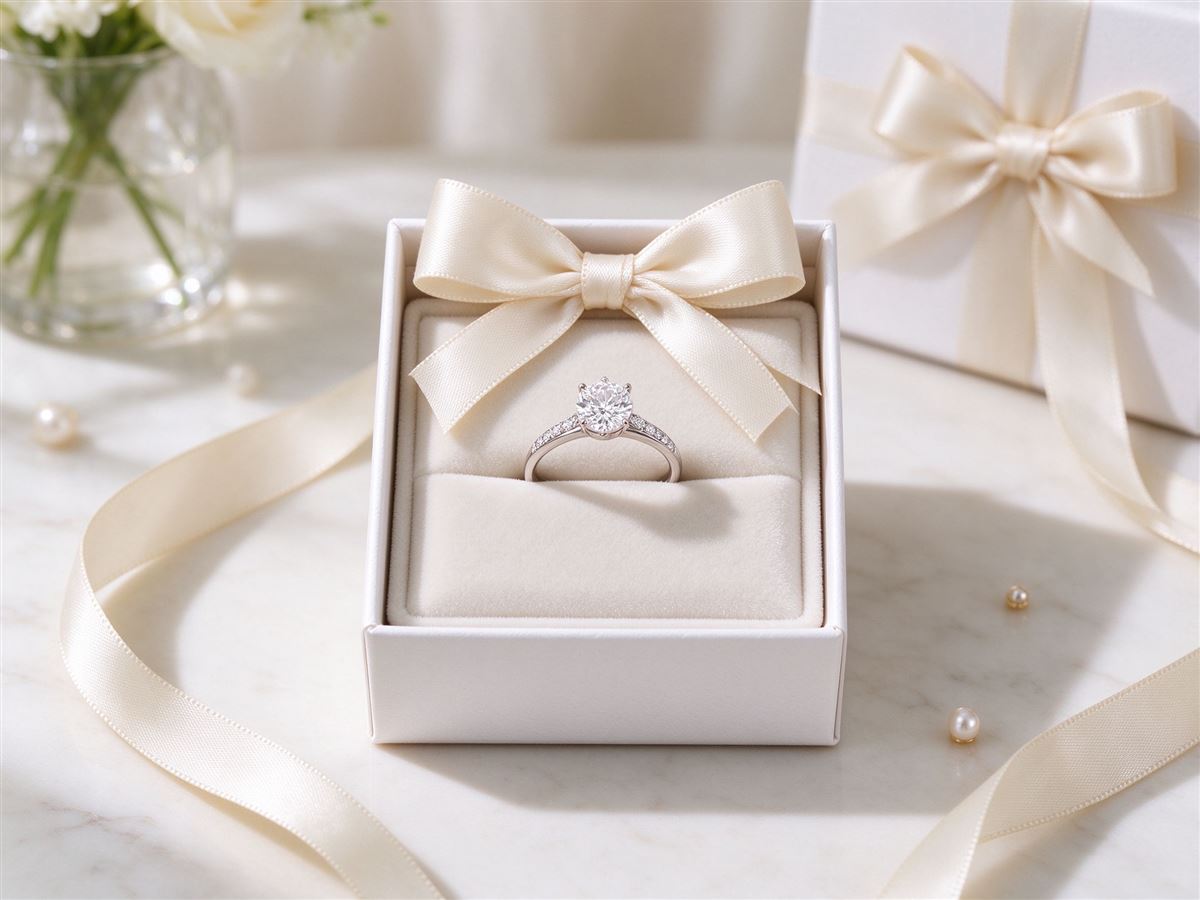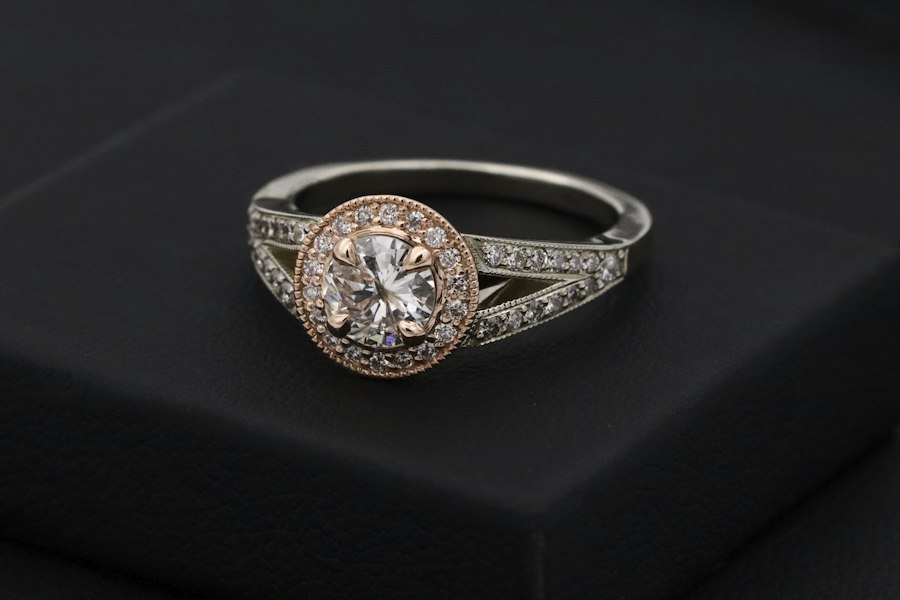
The shoebox on our reception desk last week held a 1962 diamond ring, a single pearl stud, a broken bracelet clasp and a gold charm shaped like a swan. The client wanted "something she can actually wear." That is the most common brief we get for inherited jewellery, and it is also the one that needs the most careful unpacking, because the pieces in the box are not just material. They are the only physical trace of someone.
Inventory first, design second
The first sitting is not a sketching sitting. It is an inventory. We weigh every piece, measure every stone under 10x magnification, note chips, and photograph the original in daylight and under magnification. A 0.50 ct stone that looks fine to the eye may have a feather reaching the girdle that decides whether it can be reset into a ring or should live in a pendant where it takes less impact. We grade in-house and disclose the result in writing, consistent with the FTC Jewelry Guides on diamond and gemstone disclosure.
That inventory becomes the design budget. Stones over 0.25 ct are usually worth keeping. Broken chains and clasps are recycled into the new cast. Pearls are almost never reused in a new setting because drilling holes weakens them; they usually move to a new string rather than a new mount. We explain that in the first sitting so no one is surprised.
Three ways to keep the story visible
Reset the stone, keep the metal story out. The old diamond goes into a new, modern setting. The original gold is refined and returned as a small ingot if the client wants it, or melted into the new band at a quoted percentage. Most clients choose this. It is the fastest path from drawer to hand, and it is the direction we take in upcycling an inherited stone into a new ring.
Incorporate the original metal by alloy. We melt the old ring, refine it, and recast it as part of the new band. Expect a 4-6% refining loss by weight, which we quote up front. A 4.8 g 14k band comes back as about 4.5 g of usable metal. This is the option clients choose when they want the literal gold of the grandmother's ring in the new piece. We cover the metal math in certified recycled gold options.
Split the inheritance into two pieces. One stone becomes the engagement ring, the other becomes a pendant or a pair of studs. This is the standard move when two siblings both want a piece of the same ring. We photograph the original before it is cut, and we keep a CAD record so the split is documented.
What we tell clients to expect emotionally
Resetting a family ring is not the same as buying a new one. Clients often cry at the first sitting, and again when they pick the piece up. We do not rush either. The old piece is photographed before work begins, and the after photos go into the commission file. We also keep the original box, if there was one, because it is part of the story. If the piece is a vintage ring with unknown marks, we cross-check against NGTC reference material and report any treatment or origin notes we can confirm.
Timeline and cost
A reset of a known stone into a new setting takes four to six weeks. A melt-and-recast with a new CAD takes six to eight weeks. Labour usually lands between $400 and $900 depending on the complexity, plus the new metal and any additional stones. We show three design directions in writing before any work starts, and we hold the original stones in our safe while the piece is in production. Read more on the schedule in bespoke order lead times.
Clients often pair the new piece with a matching band for a renewal ceremony; we cover that in wedding bands that match but not match, and in necklace design with inherited diamonds.
FAQ
Can I melt my grandmother's ring and use the same gold in my new ring?
Yes. We refine the old metal, re-alloy it to the karat you want, and cast the new band with it. Budget for a 4-6% refining loss. We do not melt the original stone; that stays intact and is reset into the new mount.
What if the stone has no certificate?
We grade it in-house and note the result on the invoice. If the stone is over 0.75 ct, we can send it out for a full lab report at the client's cost. It is not required to reset, but it helps if you want insurance documentation later.
Can two siblings split one ring into two pieces?
Yes. The most common split is the center stone into one pendant and the side stones into a pair of studs. We photograph and document the original before any work, and we quote both pieces together so the split is fair.
What happens to the original setting?
It is returned to you, refined into a small ingot, or recycled into the new cast at a quoted percentage. We do not dispose of any original material without your written sign-off.
Have a family piece sitting in a drawer? Bring it in for a free 30-minute sitting. We will inventory every stone, weigh the metal, photograph the piece, and sketch three redesign directions on the spot. You leave with a written quote and the original piece back in your bag. Trade retail partners: our heirloom reset one-pager gives your staff the same inventory checklist we use in-house, so first appointments close faster.