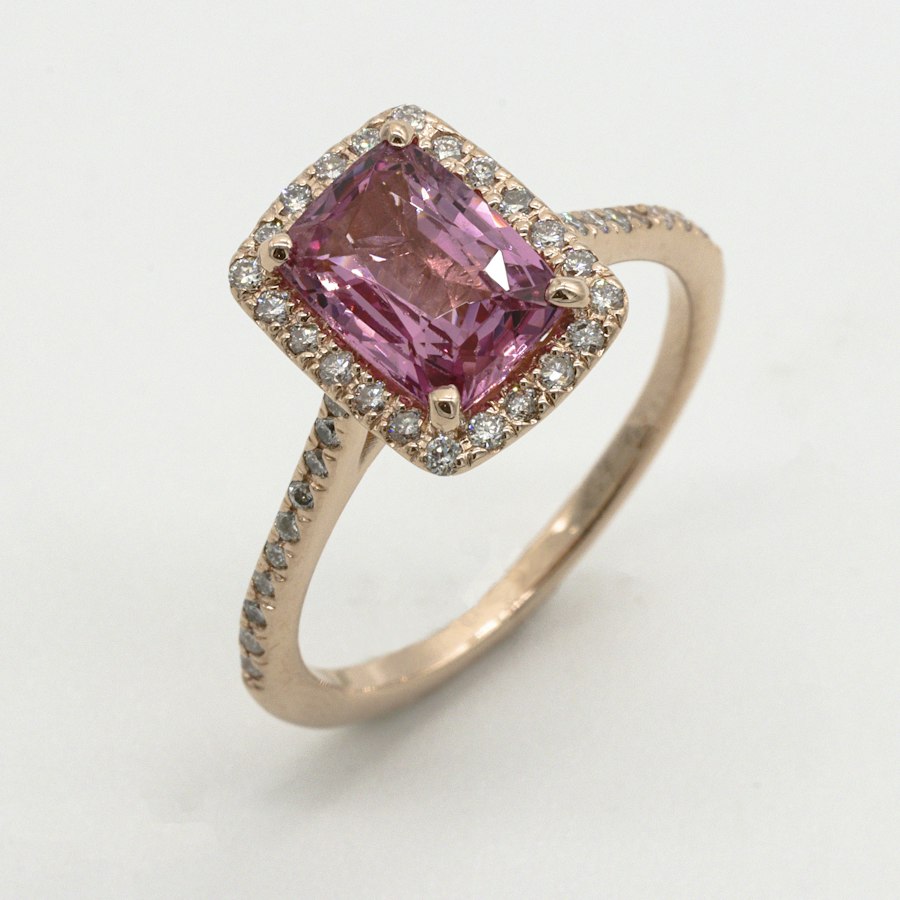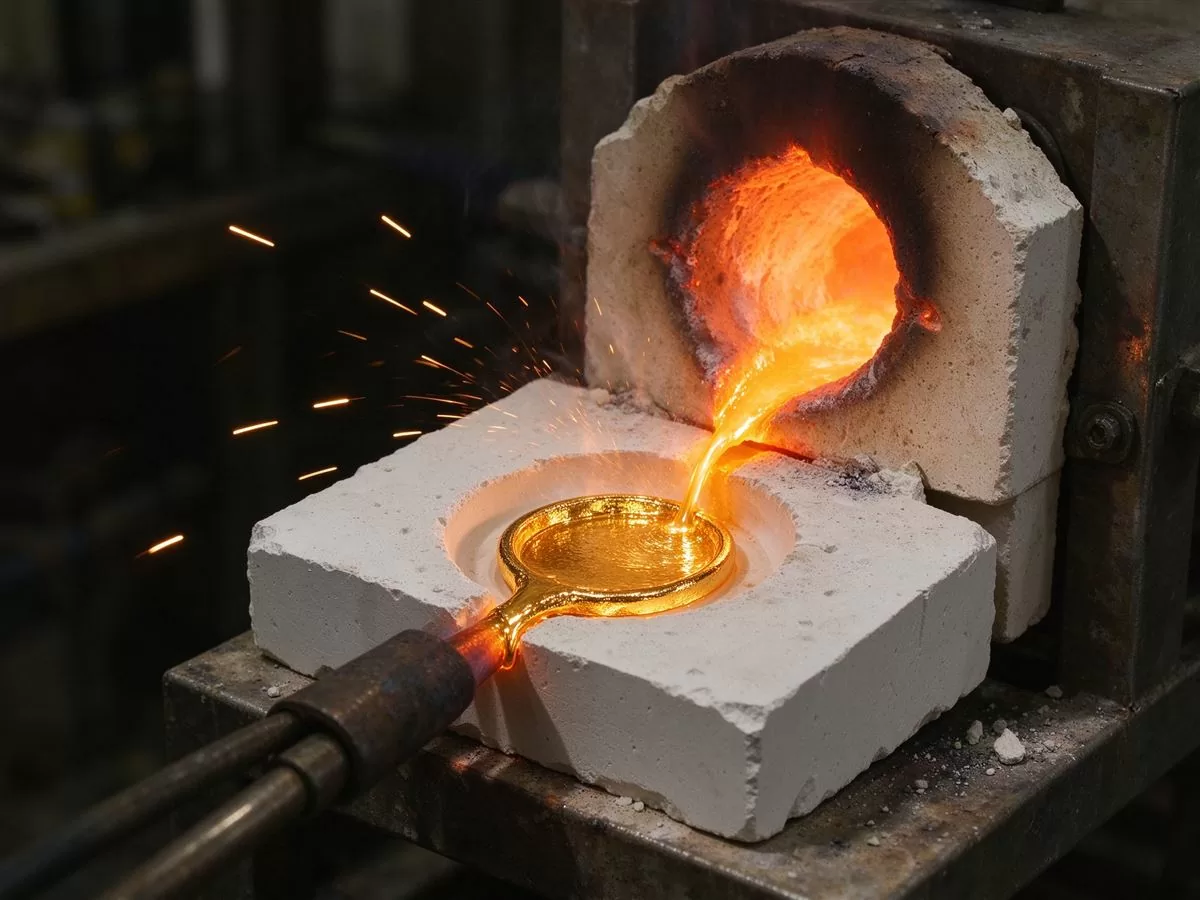
When a client says "I want gold," we do not start drawing. We stop and ask which gold, because the answer changes the cast, the polish, the price and the jewellery they can wear in ten years. The word "gold" covers 10k, 14k, 18k and 22k, and three colors of each, and the choice is not cosmetic. It is an engineering decision that happens to look pretty.
What the karat number actually means
Karat is the proportion of pure gold in the alloy, out of 24 parts. 24k is pure gold, soft and warm, and almost never used for rings because it scratches and deforms. 18k is 75% gold, 14k is 58.3% gold, and 10k is 41.7% gold. The rest is copper, silver, zinc, and sometimes palladium or nickel. The standard fineness marks are published under ISO 9202 for precious metal jewellery alloys, and US jewellers must stamp the karat consistent with 16 CFR Part 23.
Higher karat means richer color and softer metal. Lower karat means harder metal, thinner possible shanks, and lower price per gram. For a wedding band that wears daily, we almost always recommend 14k. It scratches less than 18k, holds prong shape better, and costs roughly 20% less per gram. 18k is the choice for someone who wants the deep warm yellow that only high gold content gives, and who accepts that the ring will show wear faster.
The three colors and why they behave differently
Yellow gold is gold plus copper and silver. At 14k it is durable and skin-friendly. At 18k it is the color people picture when they picture heirloom jewellery.
Rose gold leans on copper, which is why it is pink. Copper is also the most common trigger for metal contact dermatitis. About 1-3% of wearers react to rose gold, especially on fresh ring sizes or with hands that sweat heavily. We cover this alongside rose gold versus yellow gold in custom pieces, and we offer a palladium-cored rose alloy for sensitive clients.
White gold is gold alloyed with nickel, silver or palladium, then rhodium-plated to look bright. The rhodium wears off in 12-24 months on a daily ring, which is why white gold yellows at the edges. Nickel-bearing white gold is the alloy most likely to trigger reactions; the EU Nickel Directive limits nickel release from prolonged skin contact, and we stock palladium white gold to stay well below that threshold. If you want a permanent white finish without replating, platinum is the alternative we cover in platinum weight and feel.
Mixing colors in one piece
Two-tone rings are common, but the alloys have to be compatible. You cannot solder 14k yellow to 18k white without a matching solder and a controlled heat profile, because the two metals melt at slightly different points. We build two-tone pieces as a cast sandwich rather than a soldered join where possible. We also note that mixing karats in one ring changes the resale value calculation; read more in certified recycled gold options.
What we ask before we quote
Three questions decide the alloy. First, does the wearer react to cheap costume jewellery? If yes, we go palladium white or 18k yellow and skip nickel white. Second, will the piece be worn daily? If yes, 14k over 18k for hardness. Third, what is the long-term plan? If the ring is a future heirloom, 18k holds its visual identity better across generations even though it wears faster. We put the chosen alloy on the work order, and we stamp the finished piece to match.
FAQ
Is 14k or 18k better for an engagement ring?
For daily wear, 14k. It is harder, resists prong bending, and costs less per gram. Choose 18k if the deep yellow color is the point of the design and you are okay with rhodium or polish touch-ups every year.
Why does my white gold ring turn yellow?
Because the bright white you bought was rhodium plating, which wears off. Underneath is the pale alloy. Rhodium replating takes a few minutes and costs $40-80. If you want a permanent white, platinum is the answer.
Can I wear rose gold if I have sensitive skin?
Most people can, but copper is a known sensitizer. We offer a low-copper rose alloy that keeps the pink tone while cutting copper content. We also recommend a nickel-free palladium white as a first step for anyone who has reacted to cheap rings.
Does higher karat mean better resale value?
Per gram, yes, because there is more pure gold. But the design and the stones usually dominate the resale value, and a well-made 14k piece outsells a poorly made 18k piece. The karat is a floor, not a ceiling.
Not sure which gold to spec for your commission? We keep metal samples of 14k yellow, 18k yellow, 14k rose and palladium white on the consultation table, so you can see them on your own skin tone under daylight. Book a 20-minute sitting and we will quote the same design in two alloys side by side. Wholesale and retail trade partners: our alloy spec sheet lists the exact mill runs we buy, so your team can quote consistently.