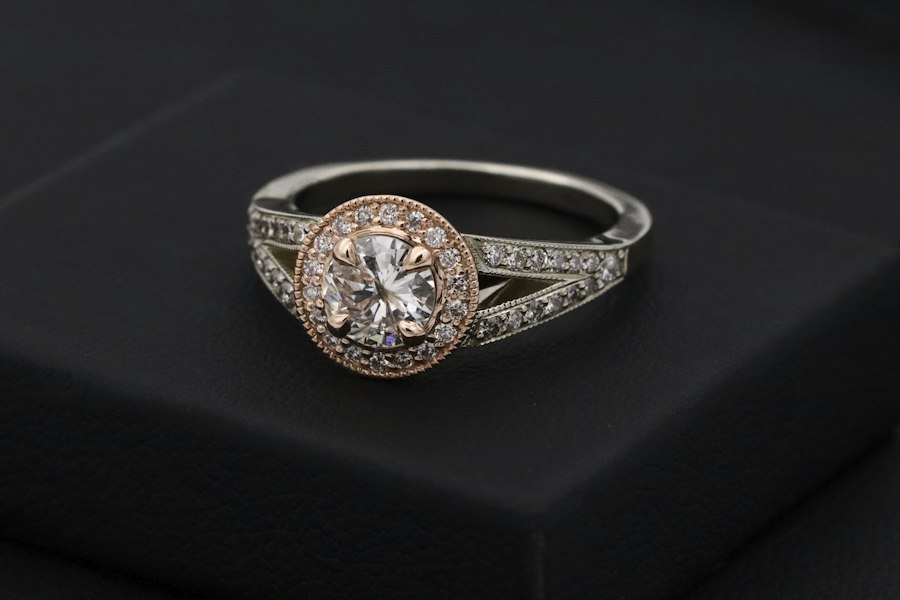
The first consultation for a second engagement ring often opens with the same awkward sentence. I want something that does not look like a typical engagement ring. Clients say it tentatively, because they are not sure it is a reasonable request. It is. It is, in fact, one of the most common design briefs we take on, and the rings that come out of it are often the most personal commissions in the studio. A second marriage carries a different set of references than a first, and the ring should reflect that rather than default to it.
The first thing to let go of is the rule that the ring has to look like anything in particular. There is no handbook that says a second engagement ring must be smaller, quieter, colored, or different. Some clients want a ring that reads exactly like a first engagement ring, because the new chapter deserves the same ceremony. Others want the opposite, because they do not want a visual echo of what came before. Both are legitimate. The atelier job is to find out which one you actually want, not to project a cultural assumption onto you.
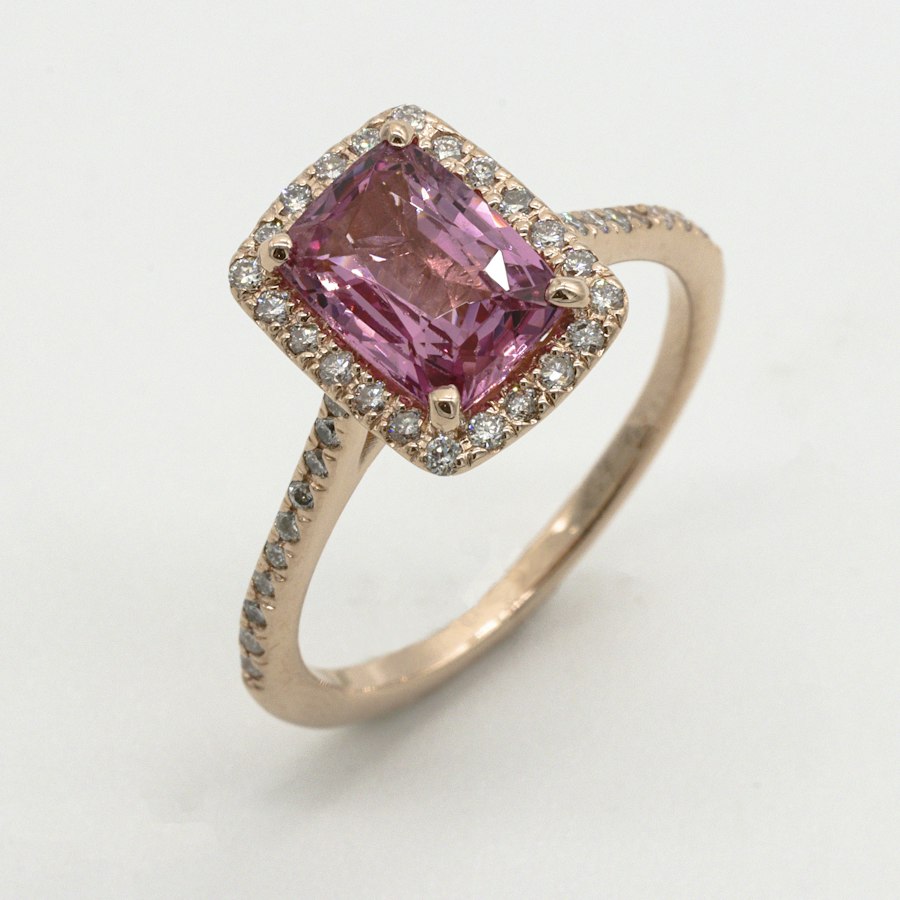
What clients tend to ask for, when they describe their real preference, is one of a few directions. A lower profile, less traditional setting that works for a hand that may already carry children's daily routine. A colored center stone, such as a sapphire, an emerald or a morganite, which reads as intentional rather than default. A design that incorporates something from a prior chapter, such as a family stone, a child's birthstone, or a piece of gold from a ring that is being retired. Or a design that deliberately does none of that, and simply looks like the couple in question.
The question of the old ring comes up in almost every consultation. There are three honest answers. You can keep it as-is in a safe, which is the right choice when it carries sentimental weight for children or family. You can repurpose the stones or the gold into the new piece, which is a way of carrying what was meaningful forward without wearing the old ring. Or you can let it go, sell it or melt it, which is also legitimate. We do not have a view on which is correct. We have done all three. The only mistake is letting the presence of the old ring block the design of the new one.
Budget is usually clearer the second time around. Clients have been through the process, they know what they actually wear on a daily basis, and they are less likely to overspend on a setting that looks good in a case but never leaves the house. We often see clients who spent heavily on a first ring and now want to spend less on carat and more on design, because they know the ring will be worn for decades and the design matters more than the certificate number. That is a sensible instinct.
Colored stones are the most common pivot. A sapphire, particularly a teal or Montana sapphire, gives the ring a visual identity that a white diamond does not. It is also more forgiving of daily wear, because the color hides inclusions that would be visible in a white stone, and it reads as intentional rather than borrowed. Colored stones pair beautifully with a lower, bezel-style setting, which is the profile most second-time clients lean toward. The ring looks like a piece of fine jewelry rather than a category of jewelry.
Incorporating children or family is where a lot of these commissions become genuinely meaningful. A small birthstone on the shoulder of the setting. A band engraved with children's initials inside. A setting designed around a stone that came from a grandmother, a previous marriage, or a piece the client wore through their twenties. These details are small, but they are what the owner leans in to see years later. The center stone carries the visual weight. The small details carry the story.
Talking about the ring with family is a practical step. Adult children, parents, ex-partners and shared family history all have opinions about what the ring should or should not be. We suggest the couple decide the brief together first, then tell the family. A ring designed by committee is a ring no one loves. A ring the couple designed together, shown to the family as a finished piece, is a ring that gets welcomed.
The emotional throughline is that a second engagement ring is not a correction of the first one. It is a fresh commission, designed for the people the couple are now, with the lives they have built. The rings we make for this moment are often the ones clients tell us they could not have imagined on day one, and could not now imagine living without. That is the right test for any engagement ring, on the first commission or the fifth.
If you are working with a family stone, our piece on turning a family heirloom into an engagement ring covers the reset process, and our breakdown of custom engagement ring cost and timeline will help you plan around the date you have in mind.