A handmade piece is not fragile, but it is not invincible either. The reason most custom rings come back for repair has nothing to do with poor making and everything to do with ordinary wear: a prong loosened by a year of typing, a band scratched by a shared jewelry box, a rhodium layer worn off by sweat and soap. None of this is hard to prevent. It just requires a short routine that takes about ten minutes a month.
The monthly clean
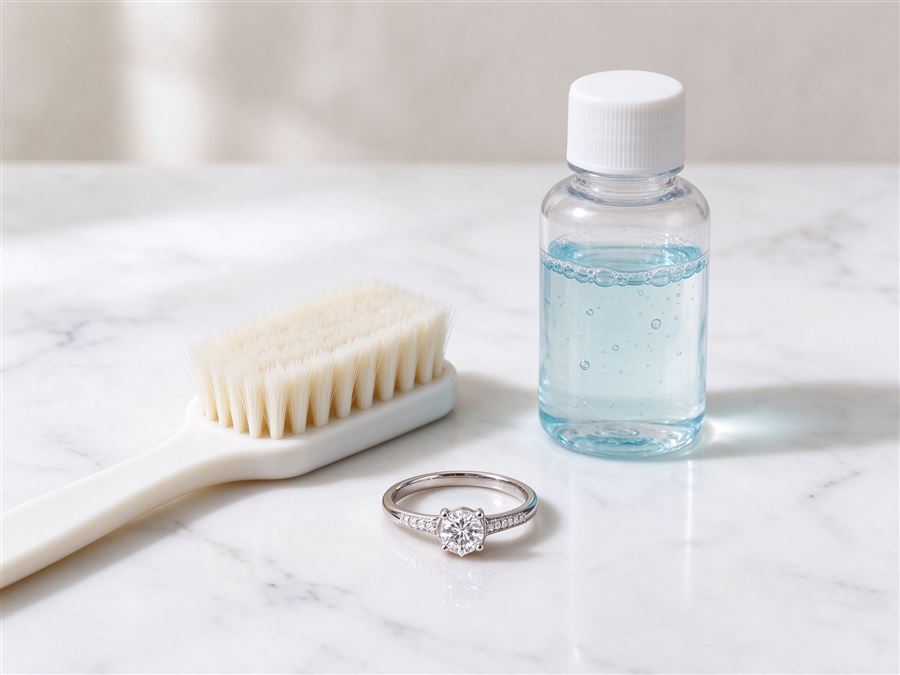
Soap, lotion, and skin oil are the three things that dull a ring faster than wear itself. A monthly clean uses warm water, a drop of mild dish soap, and a soft brush; an old toothbrush works. Soak for five minutes, brush gently under the prongs, rinse, and pat dry with a lint-free cloth. Avoid ultrasonic cleaners at home unless the atelier confirms your stones can take them; some inclusions and softer gems can fracture in an ultrasonic bath.
Silver pieces tarnish because they contain 92.5 percent silver, as the sterling silver standard on Wikipedia describes, and the tarnish comes from sulfur in the air, not from you. A silver polishing cloth, used gently once a month, removes the layer without abrading the finish. Never use toothpaste on any piece; it is abrasive and scratches the polish.
The quarterly prong check
Once a quarter, look at the setting under bright light with a magnifier. The signs of trouble are a prong that has bent flat against the stone, a prong tip that looks shorter than the others, or a stone that wiggles when you tap it. A loose prong re-tips for $20 to $40, which is cheap. Losing a stone because a prong silently opened up is not. If you wear the piece daily, a yearly check at the atelier is worthwhile; we keep the original CAD and can inspect the exact setting geometry.
Storage that prevents scratches
The second most common repair source is a jewelry box where every piece touches every other piece. A gold band tossed next to a diamond bracelet will scratch both. Store each piece in its own soft pouch, or in a compartmented box. Necklaces should be clasped to prevent tangling, which is the cause of most broken chain links.
White gold pieces need attention on a longer cycle. The rhodium plating that gives white gold its bright white finish wears off over 18 to 24 months, revealing the slightly warmer gold beneath. A re-dip costs $40 to $70 and takes a day. It is not a sign the piece is failing; it is normal maintenance.
What to take off, and when
The rule is simple: take the piece off for anything abrasive or chemical. Dishwashing, hand cream, gardening, swimming in a chlorinated pool, applying perfume, and applying lotion. Chlorine in particular can pit gold alloys over years. A custom solitaire that stays on through every shower will still outlast a stock ring, but it will need an earlier re-finish. The design choices that reduce this wear are covered in designing a one-of-a-kind engagement ring, where we discuss low-profile settings for daily life.
How often should a handmade ring be professionally checked?
Once a year for a daily-wear ring, every two to three years for an occasional piece. The check covers prongs, solder joints, and the shank for thinning.
Can I wear my ring to the gym?
Weightlifting and boxing deform bands and bend prongs. Take the ring off. A knuckle that swells during a lift is also the classic way a ring gets stuck.
Why does my white gold look yellow?
The rhodium layer has worn through, which is normal after 18 to 24 months. A re-plating restores the bright white finish for about $40 to $70.
Does engraving fade with cleaning?
Hand engraving does not. Machine engraving on a worn band can soften over years, which is why we hand-engrave commemorative pieces; see anniversary gifts that commemorate a story.
When to send it back to the bench
Two signs mean a professional visit, not a home fix: a prong you cannot push back by hand, and a shank that has thinned to a visible wire. Both are cheap to repair early and expensive once a stone is lost. For engraved commemorative pieces, keep the atelier's reference photo on file; that record is why the engraving detail stays readable for decades, as we cover in anniversary gifts that commemorate a story.
A bespoke piece is a decades-long object, not a seasonal purchase. Book a complimentary annual inspection; we will check the prongs, the plating, and the CAD reference, and tell you what actually needs doing. You pay only for the work that is truly required, never for a service you do not need, and most pieces need nothing more than a yearly polish and prong check.