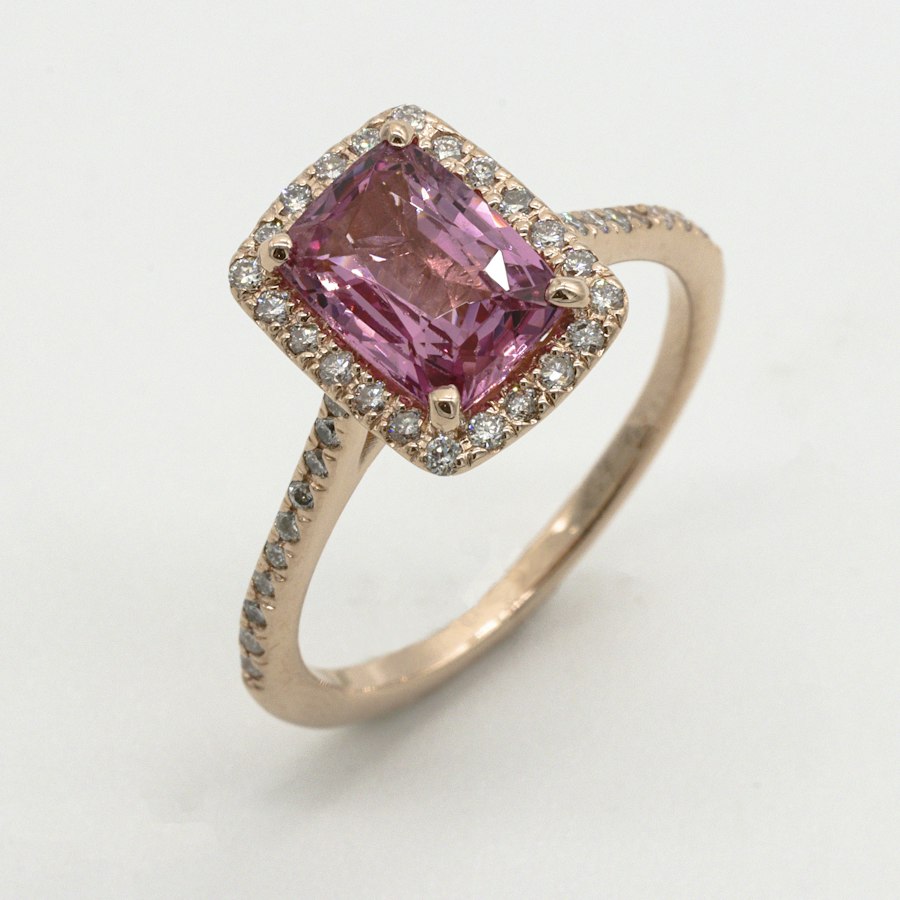
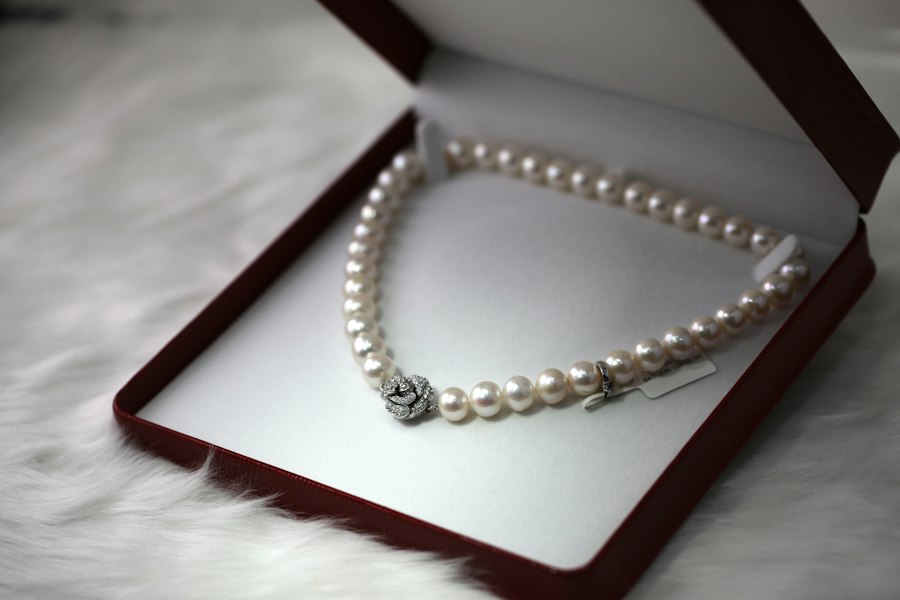
The bezel setting is the quietest setting in the bridal case, and lately it is also the most misunderstood. Clients come in asking for one because they read online that it is the protective setting. They leave either convinced it is exactly right, or surprised to learn that it is not the right call for every stone. Here is the honest bench view.
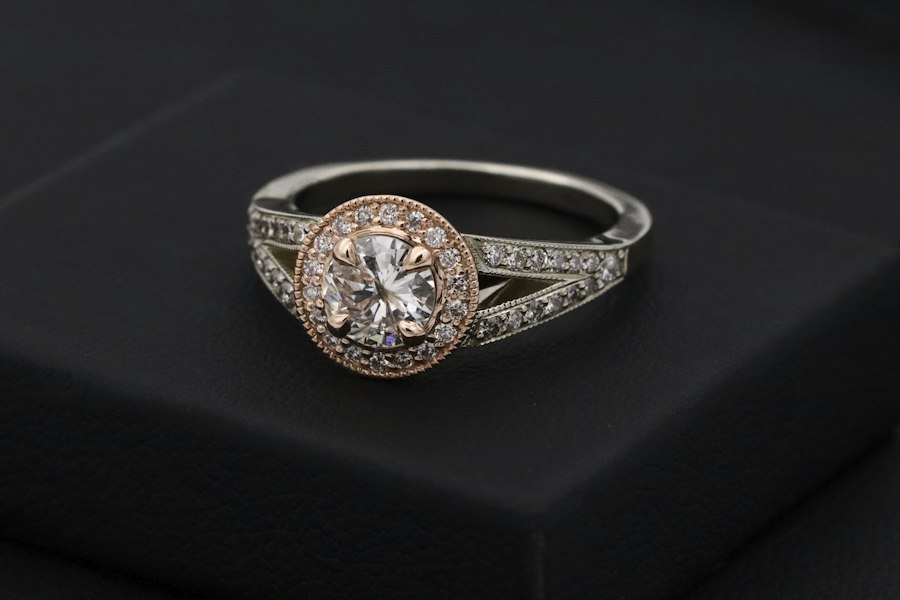
What a bezel actually is
A bezel is a thin band of metal wrapped all the way around the edge of the stone. The stone sits in a custom-fitted seat, and the metal edge is burnished over the girdle so it holds the gem in place continuously. There are no prongs to catch, no tips to wear, nothing to hook a sweater. From the side, the ring reads as a smooth, low curve. From the top, the stone sits in a neat metal frame.
It is the oldest setting method in jewelry. Egyptian goldsmiths used it. It is also one of the most modern-looking settings in current design, because it strips the ring down to a stone and a clean metal line. A bezel ring reads architectural, Scandinavian, modernist. It does not read flashy, and that is exactly why some clients love it and others rule it out.
The honest tradeoffs
Bezels protect the stone better than prongs. A direct knock that would bend a prong or chip a corner against a prong is absorbed by the metal wall. This is why we recommend bezel settings for active clients: nurses, chefs, tradespeople, musicians, anyone whose hands work for a living.
The tradeoff is light. A bezel blocks a small amount of light entering the stone from the side. On a bright, well-cut, light-colored stone, the effect is small. On a stone that relies on side light for its fire, like a deep emerald-cut diamond or a colored sapphire, the bezel can make it look darker and quieter than a prong setting would. We always tell clients this. We have them try a prong and a bezel in the same stone shape before they decide, because the difference is visible in a way that photos do not capture.
A second tradeoff is that a bezel is harder to resize. The metal wall that wraps the stone has to be opened, the band resized, and the wall closed again. It is not impossible. It is just more involved than a prong shank. If you expect significant size changes through weight shifts, pregnancy, or climate, talk to us about that before we commit to a full bezel.
Half bezels and rub-over variants
Not every bezel is a full bezel. A half bezel wraps the stone at two points, leaving the sides open for light. It protects the most vulnerable corners (the corners of an oval, a pear, a cushion) while letting the stone breathe. It is the compromise we most often recommend for clients who want the modern look without giving up all the sparkle. A rub-over setting is a bezel with a heavier wall, common on cabochon stones and on vintage-style pieces.
We also combine bezels with small accent stones along the shoulders. The combination reads clean and contemporary, and it adds a little sparkle without introducing prongs that catch. It is one of our favorite current silhouettes, and it photographs beautifully.
Who should choose it
Choose a bezel if you want a ring you do not think about. If you do not want to check prongs every month. If you want a setting that will not catch on gloves, keyboards, or hair. If you like the look of a stone in a clean metal frame. Choose a prong instead if you want maximum sparkle, if you have a lighter stone that needs every bit of side light, or if you expect your ring size to move around a lot over the years.
A bezel is not the better setting. It is the setting that fits a particular kind of life. We walk clients through every setting type at the consultation, and we recommend trying both on before deciding. The right choice is usually obvious once the ring is on the hand. The only mistake is choosing a bezel because a blog post told you it is safest, without understanding what it does to the light in your specific stone. Come see it in person. That is the only honest way to decide.
If you are torn between a bezel and a prong, our honest suggestion is to try both on the same finger. The way a setting reads on your own hand, with your own skin tone and your own nail length, is never what it looks like on a model. Bring a friend whose opinion you trust, and spend ten minutes wearing each one around the studio. Pick up a pen, turn a door handle, gesture as you talk. The right setting becomes obvious within minutes. The wrong one starts to catch on something before you leave the room.