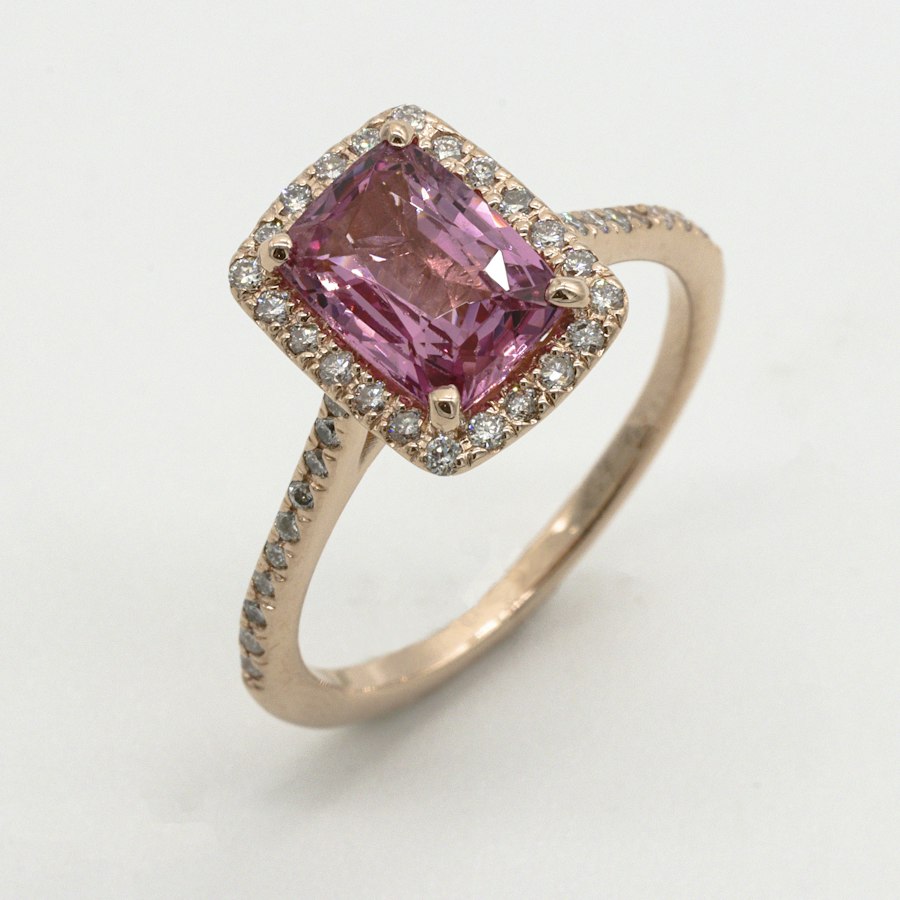
"I love vintage rings" is one of the first things we hear in a consultation. What most clients mean, though, is not always the same thing. Some want the object that actually came out of the 1920s, with its own history and its own wear. Others want a ring that looks vintage—the milgrain, the low setting, the old-world sparkle—but built in metal that will last thirty years on a modern hand. Both are wonderful. They are also different purchases, with different prices, risks, and rewards. Here is how we help clients decide.
What a genuine antique ring actually is
A real antique engagement ring—Edwardian, Art Deco, mid-century—was made by hand in its period, and it carries the marks of that time: old-cut diamonds with different facet patterns, platinum or early white gold, hand-soldered settings, and often a history of resize and repair. The stones are not GIA-graded in the modern sense; they are evaluated by eye. The shank is often thin by today's standards, because jewelry was made to be worn delicately. Prices can be comparable to a new bespoke ring, sometimes lower for the design but higher for the provenance, and they move with the collector market.
What a vintage-inspired bespoke ring is
A vintage-inspired ring is a new piece designed to echo a period style—Deco geometry, Edwardian lace, mid-century clean lines—but built with modern materials and tolerances. The center stone is a modern, fully graded diamond or gemstone. The shank is built to contemporary durability standards. The milgrain and filigree are applied by hand, so the look is authentic, but the ring can be sized, insured, and worn without the nervousness that comes with a 100-year-old object. We specialize in this, and our guide to designing an Art Deco engagement ring goes deep on the details that make the style read as real.
Condition and risk
Genuine antiques have lived. Prongs are often worn thin. Shanks have been resized so many times that the metal is work-hardened and prone to cracking. Stones may have chips hidden under the prongs. Restoration can cost as much as the ring itself. None of this makes antique rings bad—it makes them objects that need an expert eye. We recommend any antique purchase be inspected by an independent jeweler before closing, and insured the day you buy it. A vintage-inspired bespoke ring, by contrast, comes with a fresh warranty, a new appraisal, and a shank built to last. If you are weighing repair vs remake, our note on heirloom ring repair and restoration covers the economics honestly.
Sizing and wearability
This is where the two paths diverge most sharply. An antique Deco band is often a half size too small or too large, and resizing it can break its symmetry or weaken a filigree shoulder. A vintage-inspired ring is sized to your finger exactly, in your width and your profile. If your knuckle is large, if your fingers change with the weather, or if you simply want a ring that fits perfectly, the bespoke path is the lower-friction choice. We cover fit questions in how to measure your ring size at home and in our fittings.
Stones and ethics
An old mine-cut diamond carries no modern lab report, and its origin may be untraceable. A new vintage-inspired ring can center a lab-grown diamond or a responsibly sourced natural stone with full documentation. For clients who care about traceability, conflict-free sourcing, and a known provenance, the new piece is easier to defend. Our note on ethical sourcing in bespoke jewelry explains what "responsibly sourced" actually means on a bench.
Cost
Antique rings are priced by rarity, design, and collector demand, not by a transparent stone-plus-labor formula. A Deco ring in good condition can cost more than a new bespoke equivalent, because the design itself is the asset. A vintage-inspired bespoke ring lets you spend your budget on the stone and the craftsmanship you actually want, with no premium for the story. If you are planning the budget, our guide to budgeting for a custom engagement ring will help you see where the numbers land.
How to choose
Choose a genuine antique if the romance of the object matters more than perfection, if you are comfortable with inspection and restoration, and if you want a ring that exists nowhere else. Choose a vintage-inspired bespoke ring if you want the look without the risk, a modern stone with full grading, a perfect fit, and a piece built to wear every day for decades. Many clients end up somewhere in between: an antique center stone reset into a new bespoke setting, which gives the history of the old stone and the durability of a fresh band. That is one of our favorite commissions, and we walk through it in resetting a diamond into a new ring.
Either path leads to a ring you will love. The difference is what you want the ring to carry: a story that already happened, or one you are about to begin.