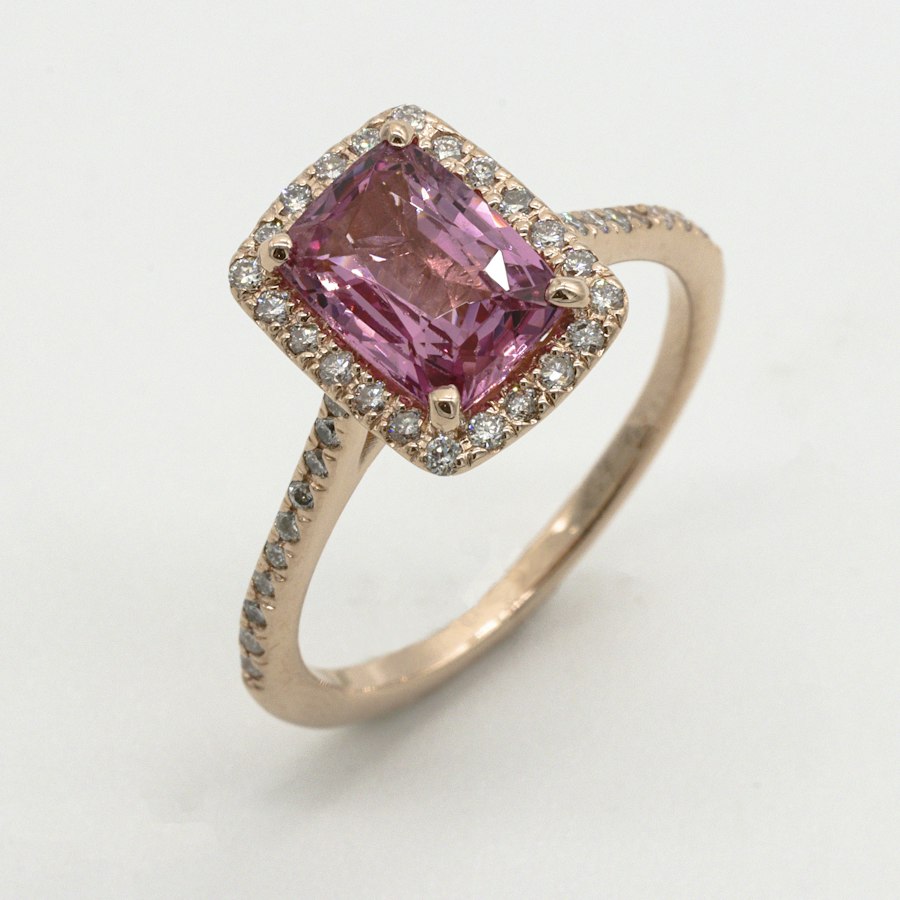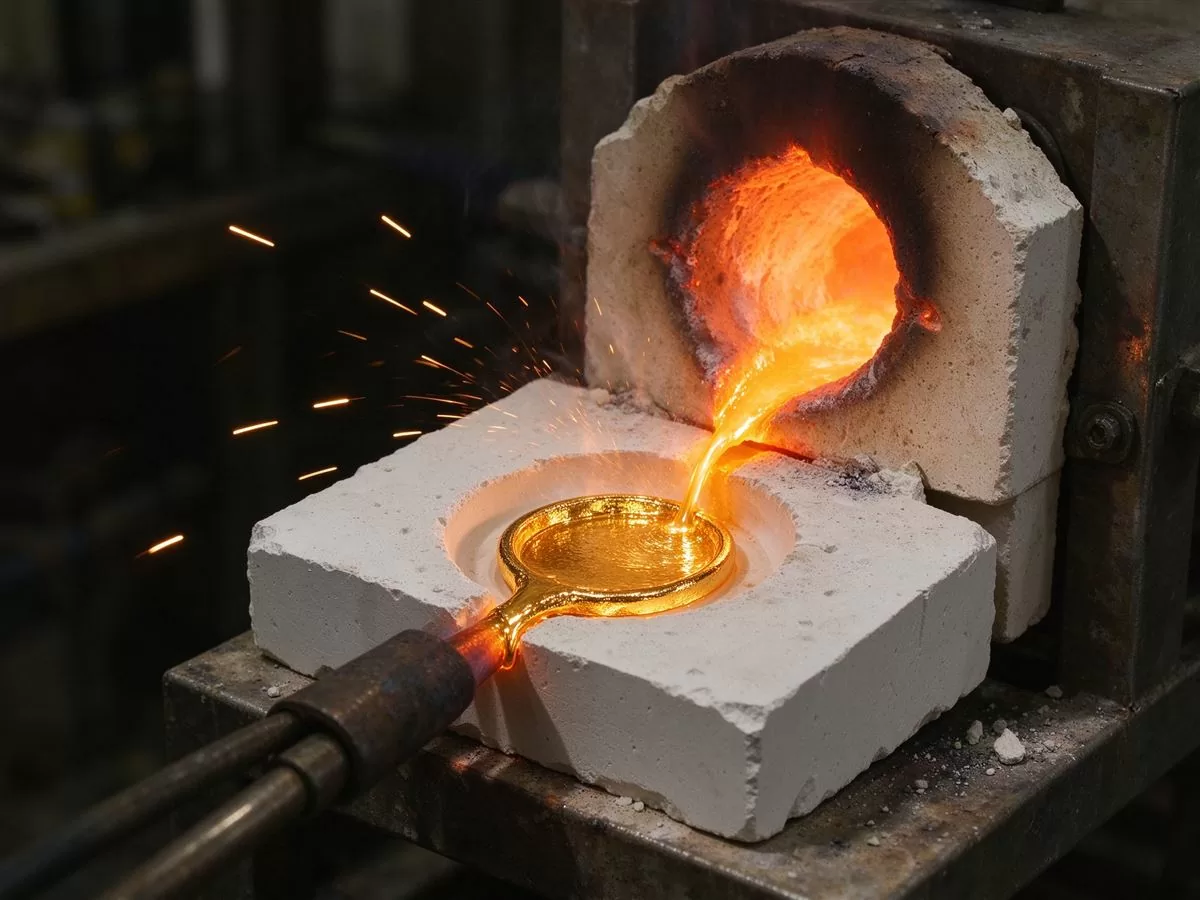
A retailer emailed us last month asking why the 14k rose gold band they bought from us looked different in their customer's hand next to a piece they had on consignment from another vendor. The answer was not plating. It was the alloy. Rose gold is not a single material; it is a recipe, and two recipes at the same karat can read as pink, peach or brick red. Same with white gold: one recipe comes out warm grey, another comes out near-platinum. This piece is the alloy breakdown we walk wholesale partners through before they commit to a color.
What each additive does to the gold
Pure 24k yellow gold is too soft for a ring shank and too yellow for most modern bridal briefs. Alloying metals dilute it to 14k (58.5% gold) or 18k (75% gold) while changing the color. The standard reference for fineness marks in jewelry is the Karat definition on Wikipedia, and the legal marking rules in the US sit under 16 CFR 23, so anything stamped 14k must assay within tolerance.
White gold uses either nickel, palladium or silver as the bleaching agent. Nickel white gold is the cheapest and hardest, but roughly 10 to 15 percent of wearers react to the nickel. Palladium white gold is softer, more expensive, and skin-safe. Silver-bearing white gold sits between the two and tends to drift warm over years. Nearly every white gold piece on the market is then rhodium-plated to a bright, uniform finish; that plate wears off in 12 to 24 months on a daily-wear ring and needs redoing.
Rose gold uses copper, sometimes with a touch of silver. A 75:25 copper-to-gold ratio at 18k reads as a soft blush. At 14k with 35 to 40 percent copper, the color deepens toward terracotta. Copper also hardens the alloy, which is why rose gold bands can be made thinner than yellow gold without bending. The tradeoff is oxidation: rose gold develops a darker patina in the crevices over decades, which many clients actually want.
Which alloy to quote for which client
Skin-sensitive customers get palladium 14k white gold, even though it costs 15 to 20 percent more per gram than nickel white gold. We include a note in the quote so the retailer can explain the price delta. Bridal customers who want the brightest, whitest look get nickel white gold with rhodium plate, but we warn them about the 18-month re-plating cycle. Clients who want rose gold that will not fade in tone get 18k rose; 14k rose is louder but more prone to surface scratching because the alloy is harder. We also offer two-tone commissions where the shank is rose and the head is white gold, which is the single fastest-growing request in our last three quarters.
What the retail counter cannot tell you
Stock white gold jewelry from mass-market vendors is almost always nickel-based, because it is 30 to 40 percent cheaper per ounce. The consumer does not find out until the ring sits on their finger for a month and the skin under it turns green or itchy. When you commission custom, you choose the alloy. That choice is the entire reason a bespoke white gold ring feels different on the hand. Read more on the karat tradeoffs in custom gold karat and color choices, compare the visual result in rose gold vs yellow gold pieces, and for clients weighing up platinum as an alternative, platinum weight and feel covers why some buyers still prefer it over plated white gold.
Wholesale buyers: we cast to order in 14K palladium white, 14K nickel white, 18K rose, 14K rose and 18K yellow. Alloy certificates ship with each batch. MOQ is 10 pieces per alloy for semi-mounted stock.
Is white gold really hypoallergenic?
Only the palladium-bearing version is. Nickel white gold triggers contact dermatitis in roughly one in eight wearers. If your customer has reacted to cheap fashion jewelry before, quote palladium white gold.
How often does rhodium plating need replacing?
On a daily-wear solitaire, 18 to 24 months. On a ring worn only to events, 4 to 5 years. We include the first re-plating free with every bespoke white gold commission.
Does rose gold tarnish?
It does not blacken like silver, but the copper component oxidizes slowly and deepens the color in the engraved crevices. Most clients consider this patina, not damage.
Can I mix rose and white gold in one ring?
Yes, and it is one of the most common bespoke requests. We build the shank in rose and the head and shoulders in white gold. The two metals are soldered and then polished as one piece.
Which alloy holds a hand engraving best?
18k rose gold and 14k yellow gold take hand engraving cleanly. Nickel white gold is harder and wears the bur faster; the result is still legible but requires a more skilled engraver.