What to Expect From CAD Ring Design: The 3D Model Before the Ring
Before a custom ring is cast, it exists as a 3D model on a screen. That stage is called CAD, computer-aided design, and it is the step where a sketch becomes something you can rotate, zoom, and measure. Most customers have never seen a CAD file before they order, and the process is simpler than the name suggests. Here is what happens between your idea and the wax print.
What CAD Actually Is
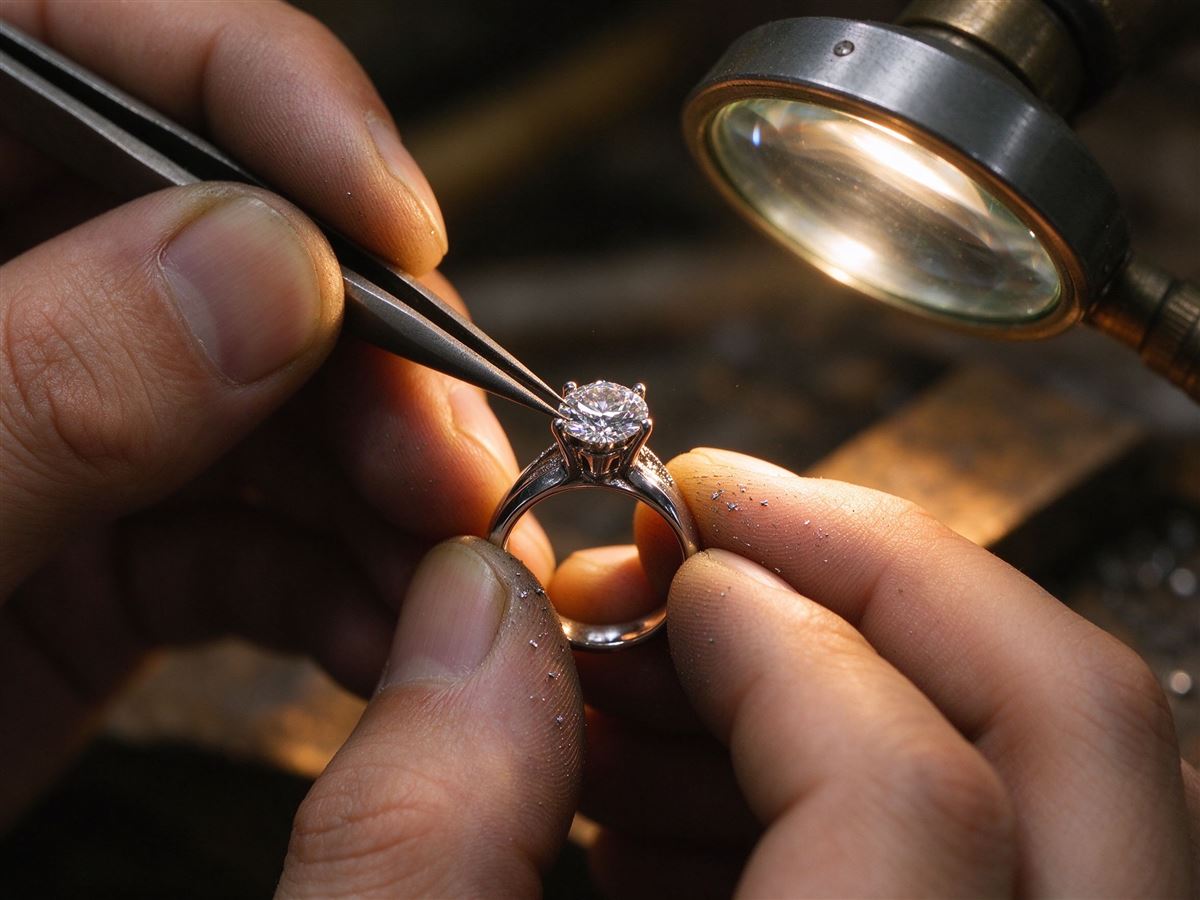
CAD is a digital model of the ring, built in specialized jewelry design software. The designer starts with the measurements you provide, the stone size, the band width, and any details from your reference photo. They build the ring in three dimensions, matching the proportions down to the tenth of a millimetre. The model shows the setting, the prongs, the band, and any engraving or texture you have asked for.
Once the model is approved, it is 3D printed in wax. The wax print is what gets cast into metal. So the CAD is not just a picture, it is the actual blueprint that becomes the ring.
What You Receive
When HOLYCOME sends you a CAD for approval, it is usually a set of rendered images from multiple angles, sometimes a short rotating video. You will see the ring from the front, the side, and the top. You will see how the stone sits in the prongs. You will see the band width and the profile. The render is not a photograph of a real ring, but it is accurate enough that the finished piece will match it within a fraction of a millimetre.
What You Can Change at This Stage
Almost anything. CAD is the cheapest time to change the design. If the band looks too thin, the designer thickens it. If the prongs look too tall, they lower them. If you want a hidden diamond on the inside of the band, it is added now. Once the ring is cast, those changes mean starting over. At the CAD stage, they mean adjusting a few numbers on the screen.
Most customers do two or three rounds of revisions. That is normal and expected. The first CAD is a starting point. The second is closer. The third is the one you approve.
What You Should Look At
When you open the CAD render, do not just admire the sparkle. Check these points.
- Proportion. Does the stone look right for the band width?
- Prong style. Are the prongs the shape you expected? Four prongs or six?
- Band profile. Is the band flat, rounded, or comfort-fit on the inside?
- Height. How high does the stone sit off the finger? High settings catch on things, low settings are practical.
- Symmetry. Does the ring look balanced from the top?
How Long It Takes
A first CAD draft usually arrives within three to five business days of your order. Each revision takes another one to two days. Most custom rings are approved on the second or third draft, which means the CAD stage takes about a week. After approval, the wax print, casting, stone setting, and polishing take another one to two weeks. Total custom lead time is typically two to three weeks.
What CAD Cannot Show You
The render cannot show you the actual colour of the moissanite, because the render uses a generic gem shader. It cannot show you how the ring feels on the finger. It cannot show the exact warmth of the yellow gold. Those come in the final photos, which we send before the ring ships. The CAD gets the geometry right, the photos get the look right.
The Approval Step
When you are happy with the CAD, you reply with approval. That is the point of no easy return. Once the wax is printed and cast, the ring is in metal and changes become expensive. So take your time on the CAD. Send specific notes, not vague ones. Move the prongs by half a millimetre if you want. The design stage is where your money is best spent.
What Happens After Approval
The CAD file is exported to a 3D printer, which builds a wax replica layer by layer. That wax is encased in plaster, burned out in a kiln, and replaced with molten gold or platinum. The cast ring is then cleaned up, the stone is set, and the band is polished. We photograph the finished ring and send it to you for final approval before it ships.
What the CAD File Is Used For After Approval
The CAD file is not just a render. It is the actual blueprint that drives the 3D printer. When you approve the design, the file is exported to a wax printer that builds the ring layer by layer. That wax is encased in plaster, burned out in a kiln, and replaced with molten gold. The CAD geometry is what becomes the metal geometry. Approve it carefully, because every dimension in that file ends up in the ring.
How Many Revisions Is Normal
Most customers do two or three rounds of revisions. The first CAD is a starting point. The second is closer. The third is the one you approve. That is normal and expected. We do not charge for reasonable revisions, because the design stage is where the ring gets right. If you are on the fourth or fifth round, we will talk through what is off, because at that point the issue is usually a misunderstanding rather than a design tweak.
What CAD Cannot Show
The render cannot show the actual colour of the moissanite, because it uses a generic gem shader. It cannot show how the ring feels on the finger. It cannot show the exact warmth of the yellow gold. Those come in the final photos, which we send before the ring ships. The CAD gets the geometry right. The photos get the look right.
The Approval Step
When you reply with approval, that is the point of no easy return. Once the wax is printed and cast, the ring is in metal and changes become expensive. Take your time on the CAD. Send specific notes, not vague ones. Move the prongs by half a millimetre if you want. The design stage is where your money is best spent.
What the CAD File Becomes
The CAD file is not just a render. It is the actual blueprint that drives the 3D printer. When you approve the design, the file is exported to a wax printer that builds the ring layer by layer. That wax is encased in plaster, burned out in a kiln, and replaced with molten gold. The CAD geometry is what becomes the metal geometry. Approve it carefully, because every dimension in that file ends up in the ring.
How Many Revisions Is Normal
Most customers do two or three rounds of revisions. The first CAD is a starting point. The second is closer. The third is the one you approve. That is normal and expected. We do not charge for reasonable revisions, because the design stage is where the ring gets right. If you are on the fourth or fifth round, we will talk through what is off.
What CAD Cannot Show
The render cannot show the actual colour of the moissanite, because it uses a generic gem shader. It cannot show how the ring feels on the finger. It cannot show the exact warmth of the yellow gold. Those come in the final photos, which we send before the ring ships. The CAD gets the geometry right. The photos get the look right.
The Approval Step
When you reply with approval, that is the point of no easy return. Once the wax is printed and cast, the ring is in metal and changes become expensive. Take your time on the CAD. Send specific notes, not vague ones. Move the prongs by half a millimetre if you want. The design stage is where your money is best spent.
The Bottom Line
CAD is the bridge between a Pinterest photo and a ring on your finger. It lets you change the design for free before any metal is poured. Look at the proportions, the prongs, and the band height. Take your time, ask for revisions, and approve only when it feels right. The CAD stage is where a custom ring stops being a drawing and starts being a piece of jewelry.