A client once asked, mid-consultation, "So where does the gold actually come from?" The honest answer is that the gold is poured into a mould that was once a ring of wax. Lost-wax casting is five thousand years old, and the steps have barely changed. Understanding the journey helps clients know why a commission takes weeks rather than days, and why a wax proof is the moment to change your mind.
Step 1: Wax carving
The designer starts with a block of jeweller's wax: hard wax for rings, soft wax for organic shapes. The carver uses gravers, files and hot tools to shape the piece to exact dimensions. This is where the design becomes physical: the wall thickness, the inside comfort fit, the bezel depth, all of it is decided in the wax. A wax ring weighs roughly 1 gram per 10 grams of final gold, which lets us predict the metal weight and the quote accurately.
Clients see this wax before casting. It is the moment to widen the band, deepen the bezel, or change the curve. Once we cast in metal, changes require re-carving and re-casting. For a contrast route, some commissions skip wax and go straight to 3D printing; see our notes on 3D printing and what the customer actually sees.
Step 2: Sprueing and investing
The wax is attached to a wax stick called a sprue, which acts as the channel for metal and the vent for wax vapour. The whole assembly is mounted on a base and lowered into a steel flask. Liquid investment plaster is poured over it under a vacuum to remove bubbles. The plaster then sets hard overnight. The piece you will eventually wear is now invisible, encased in stone-hard plaster.
Step 3: Burnout and casting
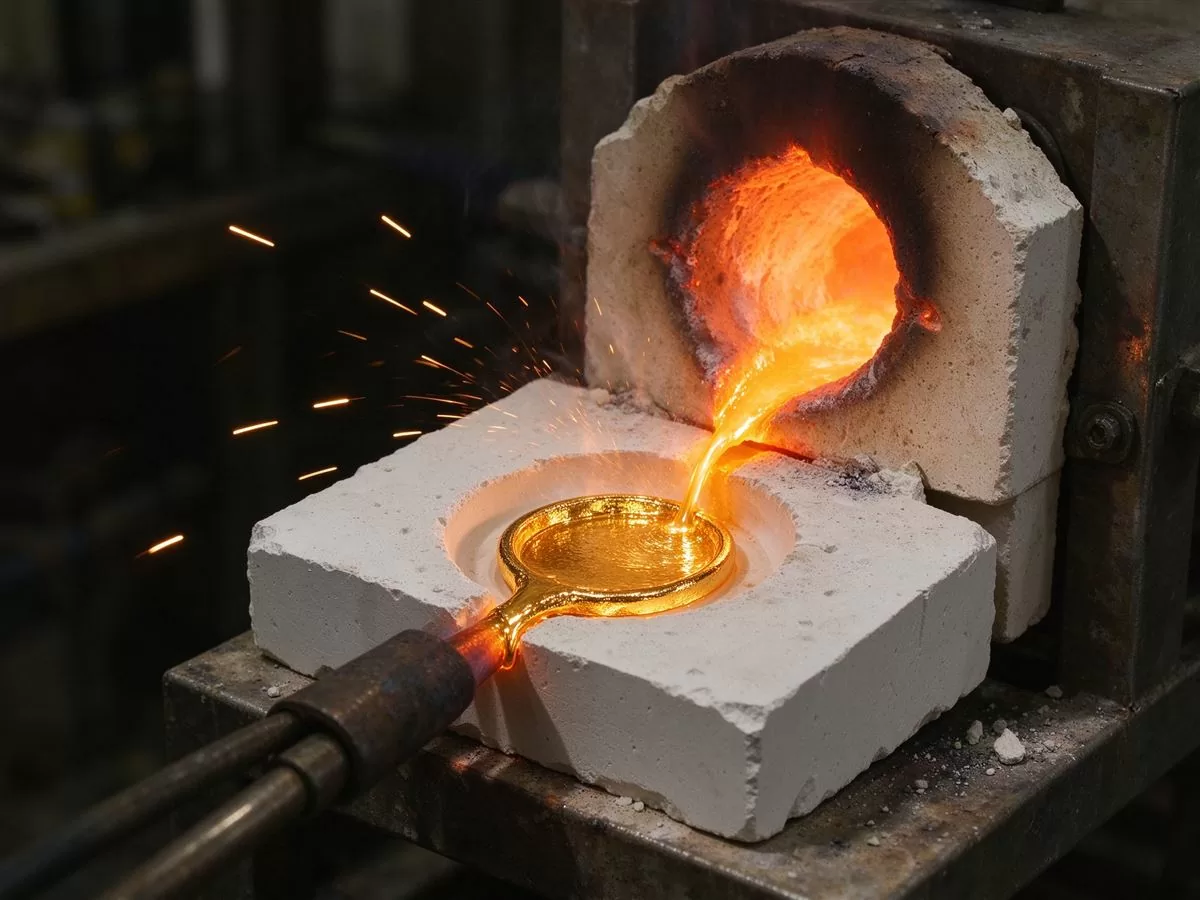
The flask goes into a kiln at around 700 C. The wax melts, runs out, and burns away completely, leaving a hollow cavity exactly in the shape of the ring. The flask is then moved while hot to the casting machine. Molten gold or platinum is poured into the cavity, either by centrifugal force or under vacuum. As the metal fills the cavity, it takes every detail of the original wax, down to the file marks.
The alloy and fineness we use are stamped to ISO 9202 fineness standards, so a 14k casting is 585 parts per thousand gold, and the hallmark on the finished ring matches what we quoted.
Step 4: Breaking out and cleaning
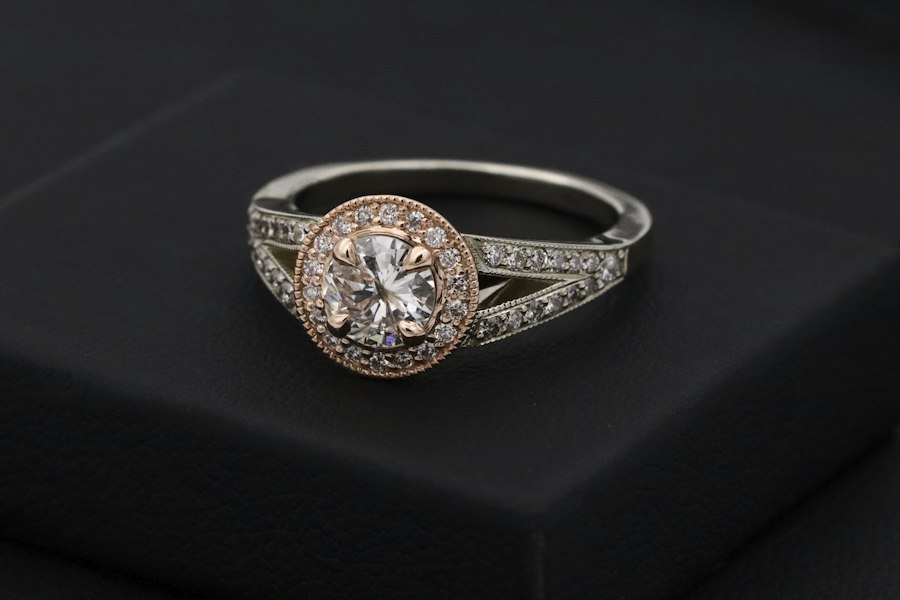
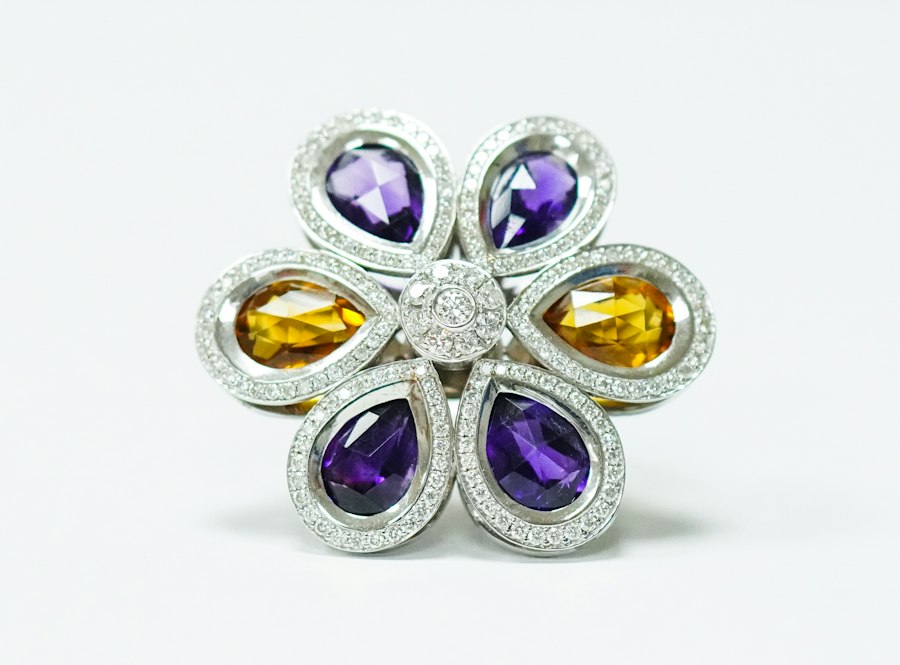
Once the flask cools, the plaster is broken away in water. The ring appears on the end of the sprue like a metal branch. The sprue is cut off, the surplus filed away, and the ring goes through pickling (an acid bath to remove oxide), tumbling, and then hand finishing. The final stages, stone setting, engraving, polishing, are the ones the client sees in the finished photographs.
Wastage is real. Roughly 15 to 25 percent of the metal weight ends up as sprue, scraps and polish dust. We recover and re-melt the scrap in line with standard trade practice, and we disclose the metal weight on the final invoice so the client knows exactly what they are paying for. The full journey in context is in our piece on the bespoke process from sketch to setting.
Why this matters for your commission
The wax stage is cheap to change; the casting stage is expensive. That is why we insist on a wax proof photograph, and why we quote a fixed number of revisions before cast. If you want to compare the other route, our notes on 3D printing and what the customer actually sees explain when we mill a resin model instead of carving by hand. It is also why rush commissions cost more: you pay for a separate flask, a separate burnout, and a separate cast, which in a workshop is the most expensive hour of the day.
FAQ
Is lost-wax casting better than 3D printing?
They feed the same process. Hand carving gives an organic, slightly irregular surface that many clients prefer; 3D printing gives perfect symmetry and faster iteration. We use both depending on the design.
Can I watch my piece being cast?
Not usually; casting involves molten metal at over 1,000 C and a busy bench. We photograph the wax proof and the casting breakout for every commission, so you see both ends of the journey.
What happens if the casting fails?
Occasionally a bubble in the investment leaves a small void. We re-carve and re-cast at our cost. Clients are not charged for a failed first cast on a bespoke piece.
How long does casting itself take?
The burnout runs overnight, the casting takes minutes, and the cooling takes half a day. The bottleneck is the investment set time and the kiln schedule, not the pour.
Want to see your design as a wax before it becomes gold? Every bespoke commission at our atelier includes a wax proof photograph and a 48-hour window to request changes. Book a consultation and watch your idea take physical shape. Trade partners: our casting service offers white-label production for retailers; ask for the trade casting schedule and pricing.