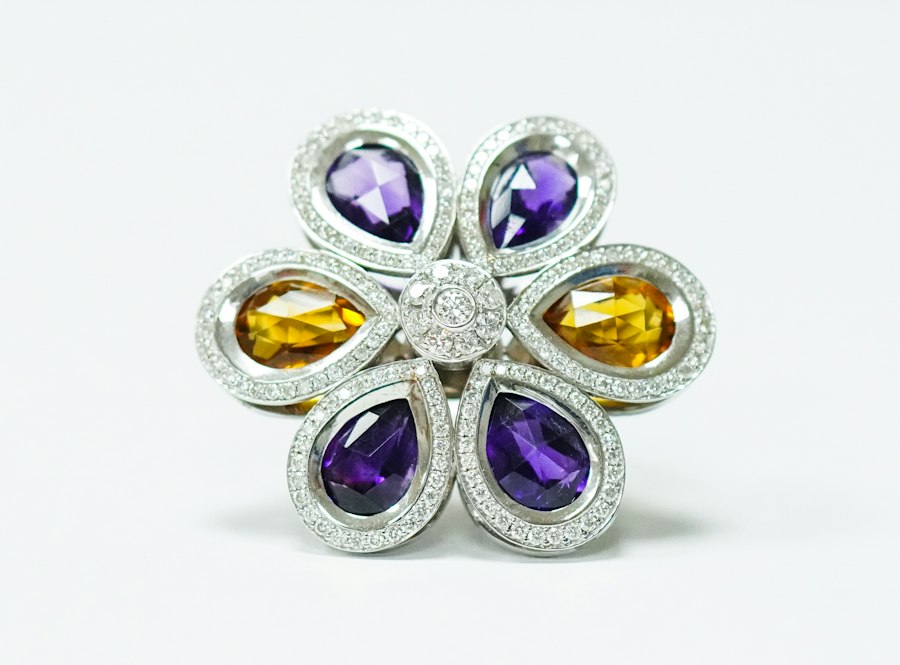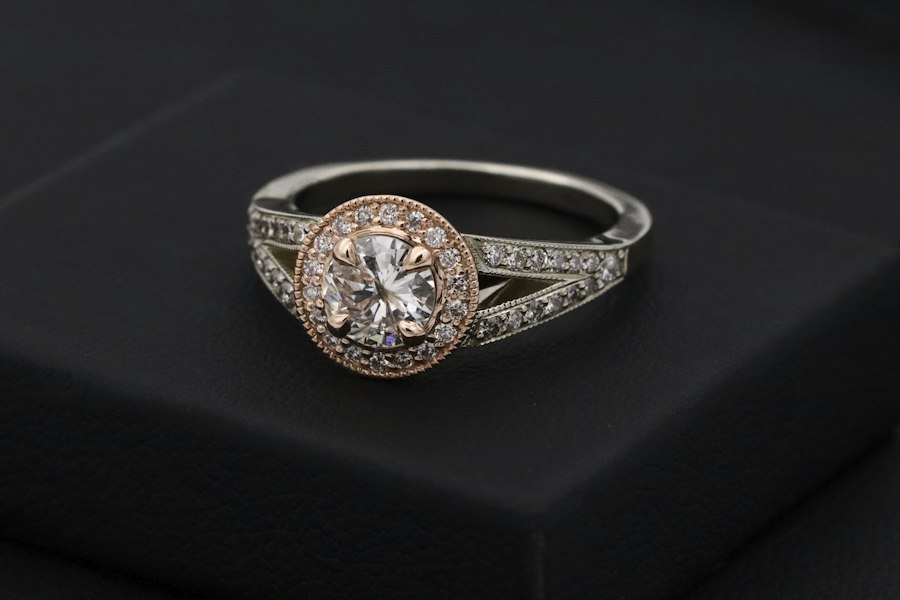
A client walked in with a ring that had not been worn in eleven years. The diamond was her grandmother's, just under a carat, and the mounting was a thick yellow-gold cluster that caught every glove and snagged every sweater. She did not want a new diamond. She wanted the same stone, in a ring she would actually put on every morning. That is the core of an upcycle commission: the stone keeps its history, the mounting does not have to.
Start with the stone, not the setting
Before any drawing happens, the stone comes out of the mounting and is examined. We measure the seat, check the girdle for chips, confirm the diameter in millimetres, and grade what we can see under 10x magnification. An inherited stone almost never arrives with paperwork, so the first job is documentation: weights, dimensions, and a note of any existing damage. If it is a diamond, understanding the four Cs helps us set honest expectations about fire and brilliance; the GIA explanation of the 4Cs is the reference we hand clients. A stone with a chip near a prong seat needs a setting that hides that edge rather than exposing it.
This stage also settles the legal and disclosure question. When you reset a previously owned stone, the new ring is not a new diamond and must never be described as one. The FTC Jewelry Guides (16 CFR Part 23) require accurate disclosure of any previously used or reclaimed component, and we mark the setting accordingly so the piece can be resold or insured later without ambiguity.
Choose a setting that fits the stone, not nostalgia
The most common reset we do is moving a round brilliant into a low-profile four- or six-prong solitaire. Low profile matters because inherited stones are often older cuts with shorter crowns; a tall setting makes them look smaller and catches on clothing. For stones under 6.5 mm (roughly one carat round), a 1.8 mm wide band keeps the proportion right without overwhelming the finger.
Side stones are optional, but we advise clients against adding more than two small accents. A reset of a 0.90 ct diamond into a mounting with ten melee stones turns the piece into a different object and dilutes the story. If the client wants warmth, we match the band to skin tone rather than piling on stones; compare rose gold versus yellow gold for custom pieces before committing.
Metal choices for a reset
Reusing the old mounting's metal is rarely worth it. The old gold is often 9k or a soft alloy, and melting it down into a new thin band introduces porosity. We instead offer 14k or 18k in white, yellow, or rose, plus platinum 950 for clients who want the most durable prong on a stone they plan to pass on again. Platinum is roughly 30 to 45 percent more expensive than 14k white gold for the same ring, but it does not need rhodium re-plating every two years.
Budgets usually land between 450 and 1,200 for the reset itself, excluding the stone. A pave or halo adds 250 to 500 in labour and stones. To understand where that sits, read our breakdown of how much bespoke jewelry actually costs.
Security and insurance after the reset
A reset ring should be re-insured within a week. The replacement value has changed because the labour and new metal now sit on the policy. We supply a finished photograph, a weight sheet, and the original stone measurements so the insurer has a record. We also recommend a six-month prong check on any solitaire under 2 mm of band, because inherited stones are rarely as perfectly round as modern cut diamonds and the seat can settle.
If you are deciding between a reset and a completely new design, our guide to designing a one-of-a-kind ring walks through the trade-offs. And if the old mounting itself has sentimental value, small sections of it can be flattened into the new band's interior as a hidden detail.
FAQ
Can a chipped stone be reset?
Yes, but the chip determines the setting. A chip on the girdle can be hidden under a prong or bezel; a chip on the table or crown usually means a re-polish or a recut, which removes weight. We photograph the stone under magnification before quoting so there are no surprises.
Do you melt down my old gold into the new ring?
Usually no. Reclaimed old gold is inconsistent in alloy and can cause porosity in thin castings. Some clients keep the old mounting as a memento, and a small sliver can be inlaid into the new band if they want the metal physically present.
How long does an upcycle reset take?
Three to five weeks on average. The stone exam and design take a week, the casting and fitting take two weeks, and stone setting plus polishing take another week. Rush jobs in under ten days are possible but add a surcharge.
What happens to the original paperwork, if any?
Any certificate, valuation, or photograph of the original mounting stays with the piece file. We re-photograph the finished ring and issue a new weight and dimensions sheet so the chain of ownership is clear for future resale or insurance.
Have an inherited stone sitting in a drawer? Book a 30-minute atelier consultation and bring the piece in. We will examine the stone, sketch two or three setting options, and quote the reset in writing. Trade retailers: our white-label reset programme turns client heirlooms into sellable, on-trend pieces; ask for the wholesale commission pack.