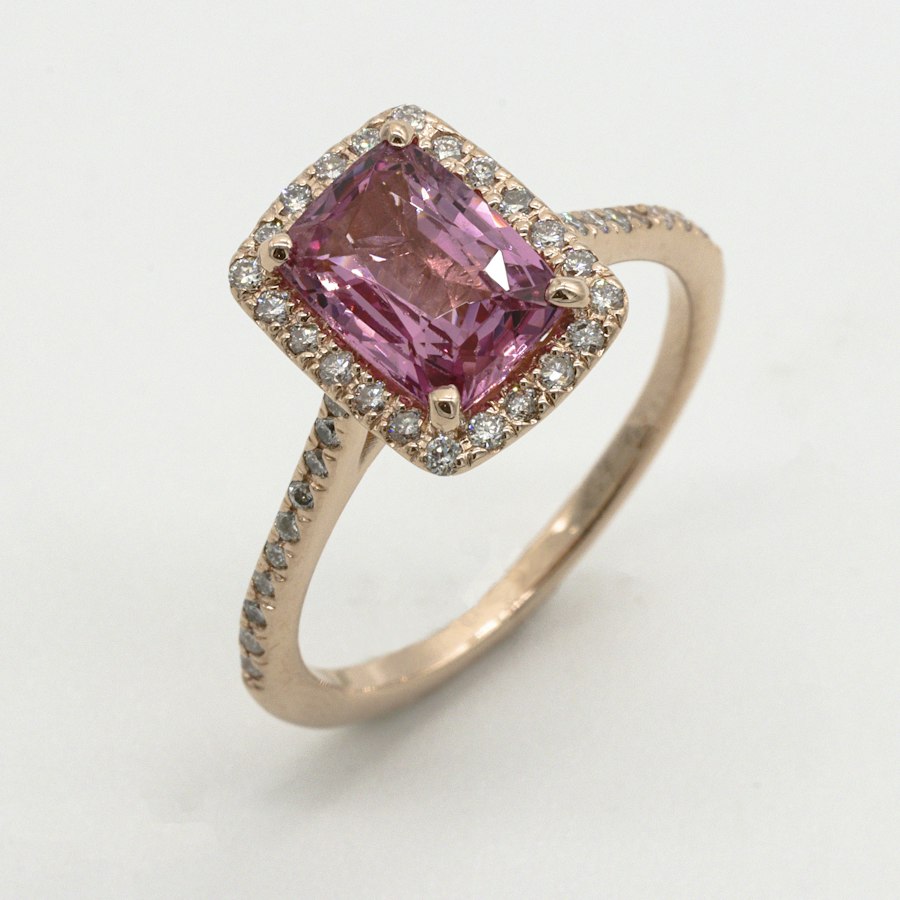
The first surprise for most custom clients is that rose gold is not a separate metal. It is yellow gold diluted with copper, and the copper is doing the work of color. Yellow gold, by contrast, is gold diluted with silver and zinc. Because the alloying elements differ, the two colors do not just look different: they scratch differently, react to skin differently, and pair with gemstones differently. Picking between them on a mood board is a mistake. Picking them on alloy data is not.
What each color actually contains
At 18k, yellow gold is 75 percent pure gold plus roughly 12.5 percent silver and 12.5 percent zinc. At 14k, it is 58.3 percent gold. Rose gold at 18k is 75 percent gold plus up to 25 percent copper, sometimes with a touch of silver to soften the red. The copper is what gives rose gold its warm pink tone and is also why rose gold is measurably harder than yellow gold of the same karat. The karat system itself, and how fineness is declared, is documented on Wikipedia's entry on karat.
That hardness matters in daily wear. Rose gold resists dents better than soft 18k yellow gold, which is why it is the default choice for people who bang their hands on desks. The trade-off is that copper can deepen the color slightly over years of wear, and very high copper content can irritate sensitive skin.
How they read against skin and stone
Yellow gold is the warmer, more neutral choice. It makes a white diamond look white rather than gray, and it reads classically against olive, medium, and deep skin tones. Rose gold flatters cool and fair complexions because the pink sits beside the skin rather than competing with it. The same center stone looks different in each: a D-color diamond in yellow gold picks up a faint warm cast from the metal around it, while the same stone in rose gold reads slightly rosier.
Color stones shift the decision. Emeralds and rubies in rose gold can feel heavy and saturated; the same gems in yellow gold feel richer but softer. Diamonds and moissanite pair cleanly with either. If you are still choosing the stone, cross-reference choosing a center stone for a custom design before locking the metal.
Durability and long-term aging
Copper oxidizes. Pure rose gold does not tarnish the way silver does, but over a decade the surface copper can take on a slightly deeper, antique tone that many owners actually prefer. Yellow gold stays stable, scratches more readily, and needs a polish every year or two to stay bright. Platinum is the third option for clients who want a non-yellow, non-pink metal that patinas to a soft matte; it costs about twice gold by weight.
For clients with known metal sensitivity, the relevant rule is the EU nickel-release limit for items in prolonged skin contact, summarized in the Nickel Directive 2004/98/EC. Rose gold itself is copper-driven, but many white gold rhodium finishes rely on nickel in the under-alloy, which is where reactions usually appear.
Mixing the two in one piece
One of the quiet advantages of a custom commission is that you do not have to choose globally. A rose gold shank with a yellow gold setting, or a two-tone band that splits along the center line, is a common request. The cost premium for two-tone work is modest, usually $80 to $150 extra, because the atelier solders two pre-finished components rather than casting twice. If you want a wedding band that echoes but does not match an engagement ring, two-tone is a clean solution; see custom wedding bands that match but do not match.
Does rose gold fade or turn skin green?
It does not fade to a different color, but the copper can deepen over years. Green skin staining happens mainly with lower-karat alloys in damp conditions; 18k rose gold rarely causes it.
Which holds its value better, rose or yellow gold?
Both contain the same pure gold weight per karat, so melt value is identical at 18k. Resale demand swings with fashion, but the gold content itself is the floor price.
Can I change the color later?
Not without re-casting. Rhodium plating changes white gold, but rose and yellow gold are cast in their final alloy. Decide the color before CAD, as we explain in the bespoke process from sketch to setting.
Which metal is best for an engagement ring?
There is no universal answer. Choose rose gold for hardness and a modern warm look, yellow gold for neutral brilliance and tradition, or platinum for clients who want a hypoallergenic, patina-prone white metal.
Still deciding between tones? Book a metal sample set mailed to your door, then a design call. We will match the alloy to your skin, your stone, and the life the ring actually leads.