Rose gold is the metal people fall for in person and then second-guess at home. It looks warm and alive under studio lights, and then the question comes up: will it turn my finger green? Will it darken? Is it as durable as yellow gold? These are good questions, and the answers are more reassuring than you have probably heard. Rose gold is not a separate metal. It is gold, alloyed with copper, and understanding that one fact explains almost everything about how it behaves.
Pure gold is too soft to wear daily, so every gold ring you own is alloyed with other metals to harden it. Yellow gold is alloyed with silver and copper in roughly equal measure. White gold is alloyed with nickel or palladium, and usually rhodium plated on top. Rose gold is alloyed heavily with copper, which is where the blush tone comes from. The more copper, the deeper the rose. A 14k rose gold has a stronger color than an 18k rose gold, because the lower gold content means a higher proportion of copper relative to gold. This is a useful detail when you are choosing: 18k rose gold is softer and warmer, 14k rose gold is harder and pinker. We cover the broader trade-offs in our metal guide, and the copper content is the variable that makes rose gold unique.
The question everyone asks is about skin. Copper can leave a faint green mark on some people's skin, usually when the skin is damp and the metal is in contact with it for long periods. This is harmless, and it is more common with cheap copper jewelry than with proper rose gold, where the copper is bound into a gold alloy. A well-made 14k or 18k rose gold ring worn daily rarely leaves a mark, and if it does, the mark washes off easily. People with very acidic skin may notice a slightly darker band on the inside of the ring over years, but this is a patina, not corrosion, and it wears away at the next polish. If you have sensitive skin, our article on nickel-free rings for sensitive skin is worth reading, because rose gold is naturally nickel-free, which is one of its quiet advantages.
How does rose gold age? It develops a patina over time, in the same way all gold does, but the patina reads slightly differently. On a high-polish rose gold ring, the patina softens the shine into a warmer, matte glow that many clients prefer to the original finish. On a brushed or matte rose gold band, the patina is almost invisible, which is why we often recommend a matte finish for clients who want a rose gold ring that will not show scratches. The copper content also means rose gold is slightly harder than 18k yellow gold, because copper is a hardening alloy. This makes it a practical choice for a thin band or a ring with fine detail. Our guide to matte, polished, or brush finishes goes through how each finish ages on any metal.
Cleaning rose gold is simple and nearly identical to cleaning yellow gold. Warm water, a drop of mild dish soap, a soft brush, and a lint-free cloth will remove everyday oils and cosmetics. Ultrasonic cleaners are safe for most solid rose gold pieces, but we generally recommend against steam cleaning, because the heat can accelerate any existing discoloration and, on stones with treatments, can cause problems. If your rose gold ring has stones, follow the care instructions for the stones themselves, not just the metal. We walk through the home routine in home jewelry cleaning and care, and the rose gold version of the routine is the same, just gentler.
What about discoloration on the inside of the band? If the inside of your rose gold ring has darkened to a deep brown, this is normal patina from contact with skin, lotions, and soap. It can be polished away in a few minutes at the bench, and many clients choose to leave it, because it is a visible sign of wear. If you prefer a fresh look, ask for a light polish at your next annual check. We cover how often that should be in the annual jewelry maintenance checklist, and for rose gold, a yearly polish and prong check is usually enough.
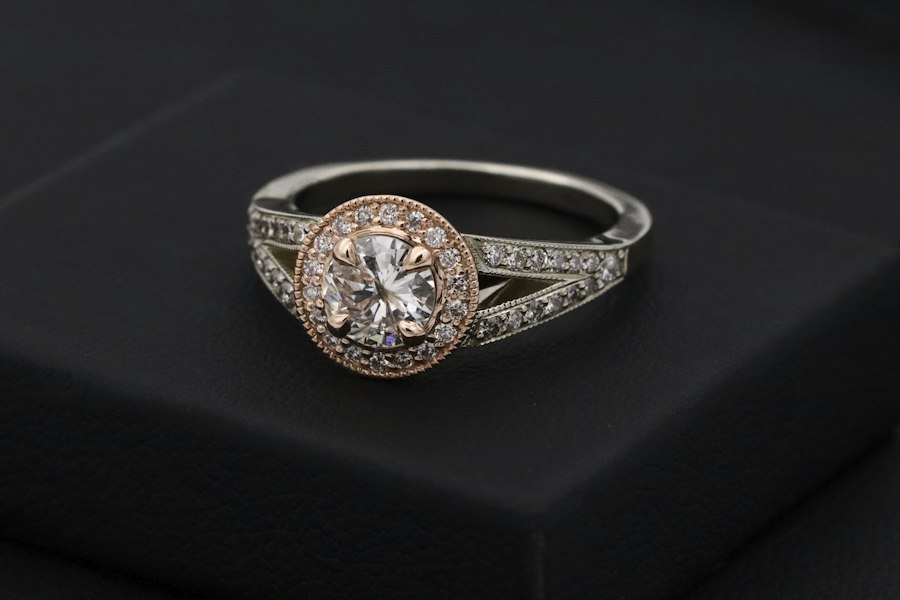
One design note: rose gold pairs differently than yellow gold. It sits beautifully against warm ivory, deep green, and navy, and it is the classic metal for Art Deco-style and vintage-inspired commissions. It also mixes well with yellow gold in a stacked set, which is a look we see more of every year. If you are designing a ring and drawn to rose gold, we will talk through whether the color will flatter your skin tone and the stones you have chosen, because rose gold changes the apparent color of a stone slightly. A diamond looks slightly warmer in rose gold. A sapphire looks slightly deeper. This is usually a feature, but it is worth knowing before you commit.
Rose gold is not a trend that will disappear, because it is not really a trend. It is a warm, durable, naturally nickel-free alloy that has been used in fine jewelry for more than a century. Treat it like the gold it is, give it the same gentle care, and it will age into something that looks more like you every year.