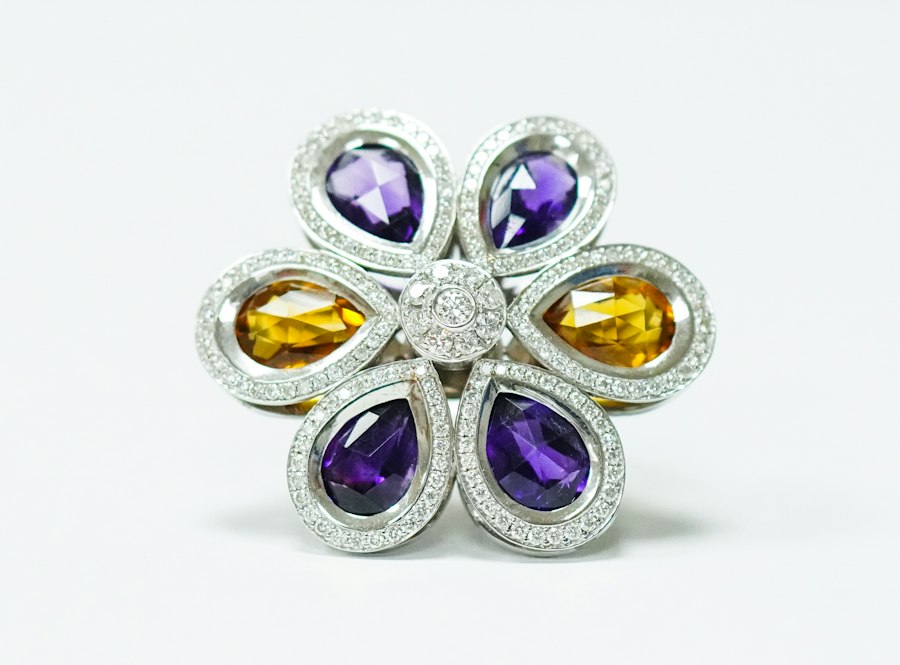
For a lot of people, the wedding ring lands in a box the day the papers are signed. It sits there for years. Once a year it surfaces during a move, and you think the same thing: I should do something with this. Then you close the drawer again. There is a third option between keeping it on your finger and selling it for scrap, and it is the option more of our clients are choosing. You can keep the material value and let go of the meaning, by redesigning the ring into something that belongs only to you.

Why people keep the ring at all
A wedding ring is usually one of the most concentrated pieces of gold and gemstone you own. A single solitaire might hold a diamond worth more than any other item in your jewelry box. Selling it means converting a story into cash you will spend on groceries and forget. Resetting it means you keep the intrinsic value in a form you actually want to wear. The gold and the stone were paid for already; you are only paying for the craftsmanship to give them a new shape.
There is also an emotional arithmetic to it. Keeping the ring in a drawer keeps a small door open to the past, every time you see it. Wearing the same ring on your own hand can feel like a costume. Turning it into a pair of earrings, a pendant, or a slim band on another finger closes that door on your terms. Clients tell us the moment they leave the bench with the new piece is the first time they stopped thinking about the old one.
What you can actually make from a wedding ring
The original design almost never survives the reset, but the material does. The diamond can be pulled from its setting and placed into something entirely new. The band can be melted down or reshaped. Common transformations we do each month include a solitaire reset into a bezel-set pendant, a wide band shaved down into a slim stacking ring, and a pair of studs made from smaller side stones that were originally set into a halo.
If the ring holds a center diamond that still has sentimental weight, many women choose to keep it as the center stone of a new, more modern solitaire. The stone stays; the setting that represented a chapter ends. A lower, more comfortable bezel or a sleek six-prong head changes the whole character of the ring without touching the diamond itself.
What to do with the gold you do not reuse
Not every gram of the old band needs to travel into the new piece. Some clients want a clean start in a different alloy or a different color entirely. The leftover gold can be refined and credited back against the new commission, or set aside for a future piece. We walk through the math at the consultation so there are no surprises about how much of the original material you are actually wearing. If you want to understand where the leftover metal goes, our note on what happens to old gold during a redesign covers the refining step in plain terms.
Deciding what not to do
We are honest with clients who walk in carrying a ring they are not sure about. Sometimes the right answer is not to redesign it at all. If the diamond is small, low quality, or the gold content is minimal, the cost of the new setting can exceed the value of the materials. In those cases, selling or trading the piece outright is the cleaner move. If you are attached to the ring for reasons that have nothing to do with the stones, keeping it in a memory box rather than forcing it into jewelry is also a legitimate choice. A redesign should feel like a relief, not another obligation.
How the commission works
The process is gentler than people expect. You bring the ring in, we photograph and weigh it, and you sit down with a designer to talk through what you actually want to wear on a normal Tuesday. We sketch two or three directions, you pick one, and we refine it in CAD before any gold is cut. Because you are reusing your own diamond, the commission is usually cheaper than buying an equivalent new ring, and the timeline is shorter than a from-scratch commission. If you want a sense of the steps before you book, our guide to turning a ring into a pendant walks through the same workflow.
By the time the new piece leaves the bench, it is smaller, lighter, and designed for your current life. The diamond is still yours. The gold is still yours. The story, finally, is too.