It always happens the same way. You take off one earring to shower, set it on the edge of the sink, and the next morning it is gone. The other one sits alone in a small dish on your dresser, a single stone catching the light. Most people assume the surviving earring is now a write-off, destined to live out its life in a junk drawer. At an atelier, that assumption is wrong. A single surviving earring is often enough to recreate a matching mate, and the result is a pair you would struggle to tell apart from the original.
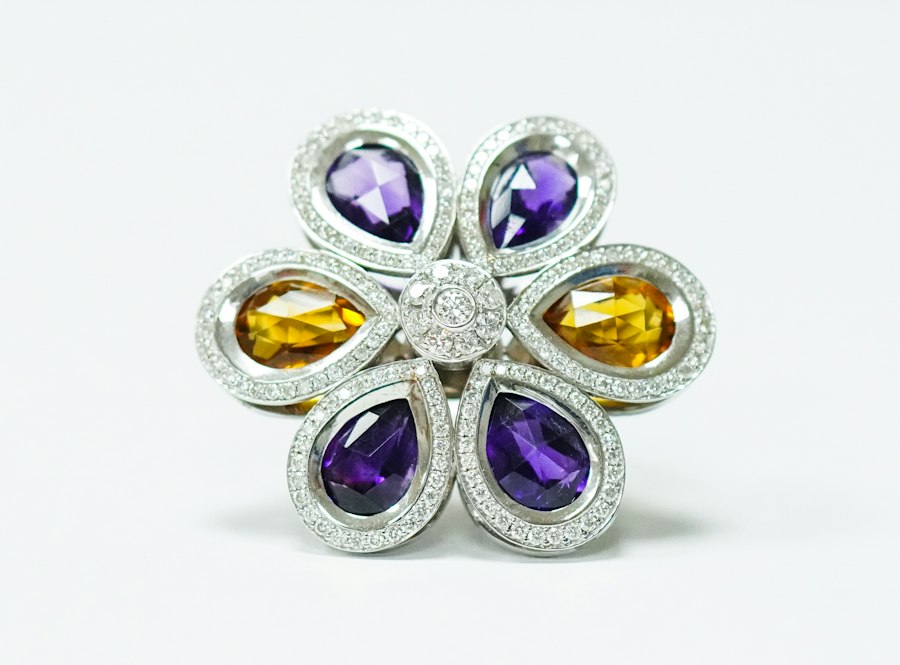
The process is closer to forensic work than to design. We photograph the surviving earring from every angle, weigh it, measure the stone diameter with a loupe gauge, and note the finish — matte, polished, hammered, brushed. We examine the back: the post thickness, the clutch type, the ear wire bend. Even the solder marks tell us something about how the original was made. From that evidence, we build the missing earring to match. The goal is not to make a new earring that looks similar. It is to make one that, when worn, balances perfectly with the survivor.
What is recoverable and what is not
Plain metal studs, small hoops, simple drop earrings, and solitaire-style studs are usually the easiest to match. The metal can be rolled or cast to the same thickness, and a stone of the right size and cut can be sourced. More complicated pieces — hand-engraved hoops, pave-set clusters, pieces with irregular vintage shapes — are harder but still possible, usually by casting directly from the surviving earring. If the original stone was an unusual gem or an old-cut diamond, matching it exactly may not be realistic, and we will tell you that honestly up front. In those cases, we can either source the closest available stone or redesign both earrings into a new pair so the survivor is not wearing a noticeably different mate.
Clients are sometimes surprised to learn that we can also go the other direction: take the single survivor and redesign it into a pendant, a ring, or a small pair of stud earrings by resetting its stone. That path is worth considering when the missing earring contained a stone that simply cannot be matched. We often talk through both options during the consultation, the same way we would for turning an old ring into earrings.
Cost and timeline
A single earring recreation is usually faster and cheaper than a full redesign because the design work is done for us by the survivor itself. The cost comes down to metal, stone, and hours on the bench. Simple studs can be turned around in a week or two. Pieces that require casting, hand-finishing, or stone matching take longer. We will give you a firm quote after we examine the survivor, and we will show you a wax or a photograph of the mate before the final stone is set.
If you have no survivor at all
Sometimes both earrings are gone but a photograph survives. We can work from a clear, well-lit photo taken next to a ruler, though the result will be a near-match rather than an exact one. This is a more creative exercise and a more honest conversation: we tell clients up front that the recreation will be inspired by the original, not identical. When a pair has sentimental value rather than collector value, that is usually enough.
We also see clients who simply love the surviving earring and want to wear it alone, clipped onto a chain as a pendant. That is a legitimate answer. A single statement earring on a necklace is a look, and it avoids the pressure of matching anything. If the earring is small, the pendant version reads subtle; if it is large, it becomes a deliberate focal point. We have converted surviving studs into necklace pendants, surviving drops into lapel pins, and surviving hoop earrings into charms on a bracelet. The point is that a single earring is not a problem to be solved by replacement alone. It is a small object with options.
If the surviving earring contains a pearl or a soft stone, matching it is harder than matching a diamond. Pearls are organic and no two are alike; a new pearl will always read slightly different in overtone and luster. In that case, we usually suggest converting the survivor into a pendant or redesigning both earrings into a new pair, rather than chasing a match that will never be exact. We will show you reference pearls before committing, so you can see the difference with your own eyes.
The single earring in your drawer is not a lost cause. Bring it in. We will measure it, photograph it, and tell you plainly whether a mate is achievable. Most of the time, the answer is yes.