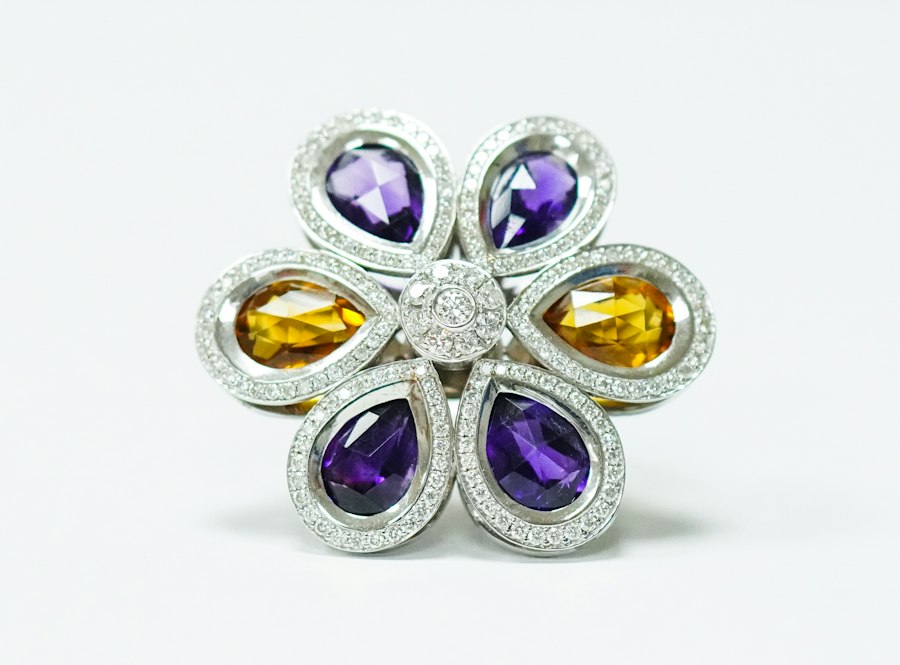
The ring you exchanged on your wedding day was never just metal and stone. It held promises, routines, and years of small gestures. When a marriage ends, that ring can feel like a problem: too expensive to throw away, too loaded to keep wearing, too sentimental to simply sell. A growing number of our clients land somewhere in between. They come to the atelier not to erase the past, but to reshape it into something that belongs to who they are now. A redesign after divorce is, at its best, a quiet act of authorship over the next chapter.

We should be clear about what this process is not. It is not a cover-up. It is not an attempt to pretend the marriage never happened. A good redesign honors the story by letting the materials live on in a form that makes sense for your life. The gold your parents helped you buy, the diamond that was chosen together, the engravings you cannot bring yourself to file off — all of it can be reworked. Many clients are surprised to learn how much of the original piece survives, even when the final design looks nothing like the ring they once wore.
What happens to the original ring
Almost always, the first step is taking the ring apart. Stones are removed, inspected under magnification, and set aside. The metal is cleaned, weighed, and assessed for purity. In many redesigns, we melt your existing gold and reuse it directly in the new piece, which means the material on your hand is literally the material you have been wearing for years. If you prefer, we can also trade the old gold toward the cost of a different metal type, though most clients who come for emotional reasons want the continuity of reusing the same gold. We walk through this tradeout in detail when we explain what happens to old gold during a redesign.
Common directions clients choose
There is no single right answer, but a few patterns repeat. Some clients want something small and discreet: a slim band, a pendant on a fine chain, a pair of studs made from stones that once sat in one ring. Others want something bolder — a statement ring, a layered necklace, a cuff — that signals a deliberate break from the past. We have taken a three-stone engagement ring and rebuilt it as a pendant, melted a wedding band into a signet-style pinky ring, and split a single pair of diamonds into two separate pieces so that adult children could each keep a part of their parents' story. The goal is always to match the piece to the life you are actually building, not the life you left behind.
What to bring to the conversation
You do not need a finished design. Most clients arrive with feelings more than sketches. Bring the jewelry itself, of course, but also bring a sense of what you do and do not want. It helps to describe pieces you already wear every day — your watch, your everyday earrings, a necklace you never take off. That tells us about proportion, metal color, and how you actually live. If the idea of walking into a studio with the ring feels overwhelming, we can start with a phone consultation and a few photos. Pace matters more than speed here.
A note on timing
We have had clients call two weeks after a separation and clients wait three years. Both are valid. There is no deadline for grieving, and there is no deadline for redesign. What we would gently caution against is commissioning something in a moment of sharp anger, then waking up six months later wishing the design had been different. If you are unsure, we can keep the ring in a safe place and start with a small, reversible piece — a pendant, a pair of studs — before committing to a larger transformation. For clients who want to keep the ring recognizable but fresh, a lighter touch like refacing an existing ring can be the middle path.
Some clients are not ready to melt the ring. That is okay too. We can leave the gold intact, set the stones in a new mounting, and store the old band as a separate keepsake. The piece on your finger feels new, but the original form still exists, in a drawer, for when or if you want it. We have also kept engraved bands untouched and worn them on a chain as a pendant, so the words remain legible against the chest. There is no rule that says the material has to disappear. Sometimes continuity is the point.
What comes out of this process is rarely the piece you would have designed on your wedding day. That is the point. It is a piece that acknowledges where you have been and looks, unapologetically, forward.