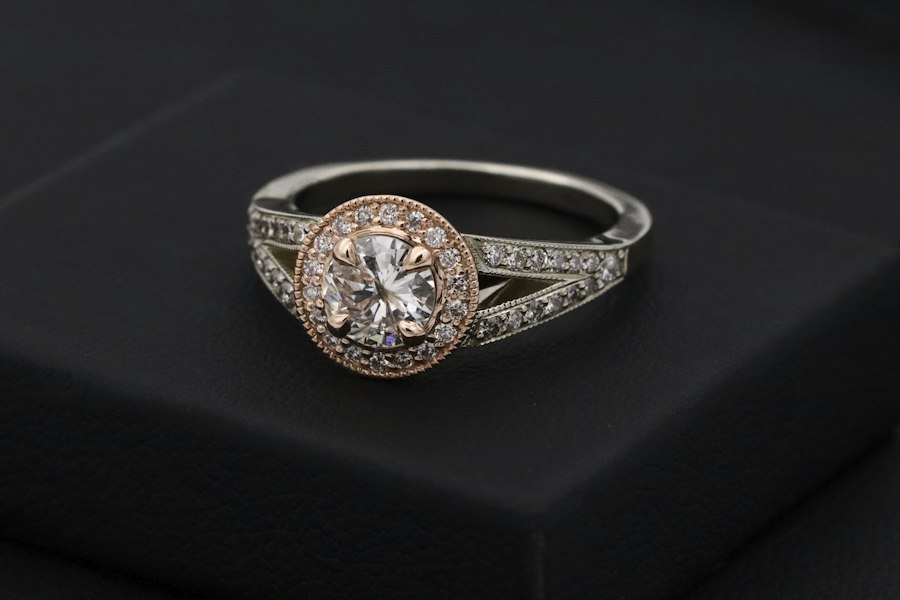
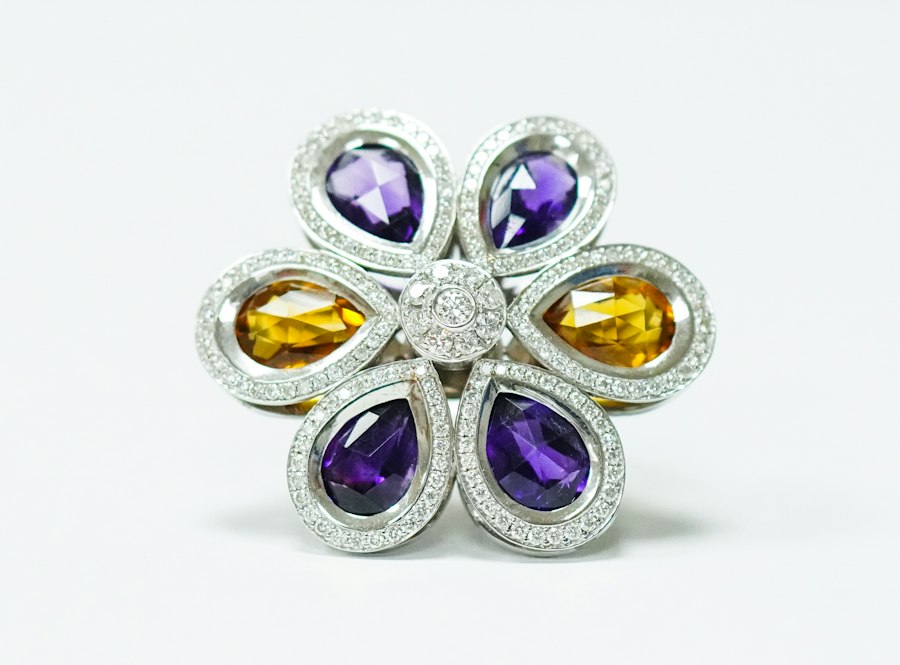
"How much does custom jewelry cost?" is the question every client asks first and the one most ateliers dodge. The honest answer is that a bespoke piece is a stack of small line items, none of which looks large on its own, and the stack usually totals between $1,200 and $3,500 in bench and design labor before you buy a single stone. Understanding those line items is the fastest way to control the budget without shrinking the design.
The line items, broken out
A typical custom ring quote hides four labor buckets inside one price. Design and sketching runs 2 to 4 hours at $60 to $120 per hour, so $120 to $480. CAD and modeling runs 3 to 6 hours, another $180 to $720. Casting, which includes the printed model, the investment flask, the metal melt, and the cut-off, costs $120 to $300. Setting and finishing, depending on stone count, runs $200 to $900. Add those up and the non-stone cost of a serious custom ring is roughly $620 to $2,400, before any margin.
The metal itself is billed by weight at spot plus a fabrication premium of 15 to 25 percent. A 5 gram 18k gold ring therefore costs about $550 to $700 in metal alone at current prices. Platinum, at roughly twice the price per gram of gold, pushes a similar ring to $1,100 to $1,400 in material.
Where the stone sits in the budget
The center stone is the variable that destroys carefully built budgets. A 1 carat equivalent mined diamond in a good cut runs $3,000 to $6,000; the same weight in a lab-grown diamond runs $800 to $1,800; moissanite runs $150 to $400 fully set. This is why two quotes that look identical on the band can differ by thousands of dollars. The FTC requires that mined and lab-grown diamonds be disclosed honestly and labeled correctly, as the FTC jewelry guides spell out, so a trustworthy quote should always name the stone category rather than just saying "diamond."
What you can cut without losing the look
Three levers shave real money. First, drop the halo. A halo adds stones, setting time, and a second row of prongs; removing it cuts $250 to $500. Second, move from 18k to 14k gold. The color difference is small, the ring is harder, and the metal bill drops about 22 percent. Third, reduce stone weight rather than setting complexity. A 0.9 carat well-cut stone reads nearly the same on the hand as a 1.1 carat but costs 25 to 35 percent less.
We cover the cut-over-weights logic in designing a one-of-a-kind engagement ring. The design sequence itself, and where each stage's cost appears, is detailed in the process from sketch to setting.
What the fee structure should look like
A fair commission is paid in three parts: a 30 to 40 percent deposit at CAD approval, the balance of labor and metal at casting, and the final 20 to 30 percent on delivery after the stone is set. Avoid ateliers that demand 100 percent up front, and avoid quotes that list only a single total with no breakout. If you are commissioning remotely, the staged structure protects both sides; see designing by video with a remote atelier.
Why is custom jewelry more expensive than a stock ring?
Because you are paying for one-off labor: a sketch, a CAD file, a printed model, and a single cast, none of which is amortized across hundreds of units. Stock jewelry spreads that labor over thousands of pieces.
Is a design fee refundable?
Sketch and early CAD work is usually non-refundable, but it is often credited toward the final piece if you proceed. Ask before the first sketch, not after.
Does a custom ring cost more to repair later?
Not if the atelier keeps the CAD file. A future resize or prong re-tip on a custom design is comparable in cost to the same service on a stock piece. Aftercare costs are listed in caring for a handmade jewelry piece.
What is the cheapest way to get a custom look?
Start from a stock setting and customize only one element: engraving, a different center stone, or a two-tone shank. That cuts the CAD and casting line items and lands the piece in the $600 to $1,200 range.
One more hidden cost to ask about: appraisal and certification. A written appraisal for insurance runs $75 to $150, and a GIA or IGI report on a loose center stone is billed separately. These are small line items, but they matter for insurance and resale, so confirm they are included in the quote rather than added later.
A transparent quote is the first sign of a trustworthy atelier. Book a call and we will send you a line-item estimate within 48 hours, with the stone budget split out so you can decide where the money actually goes.