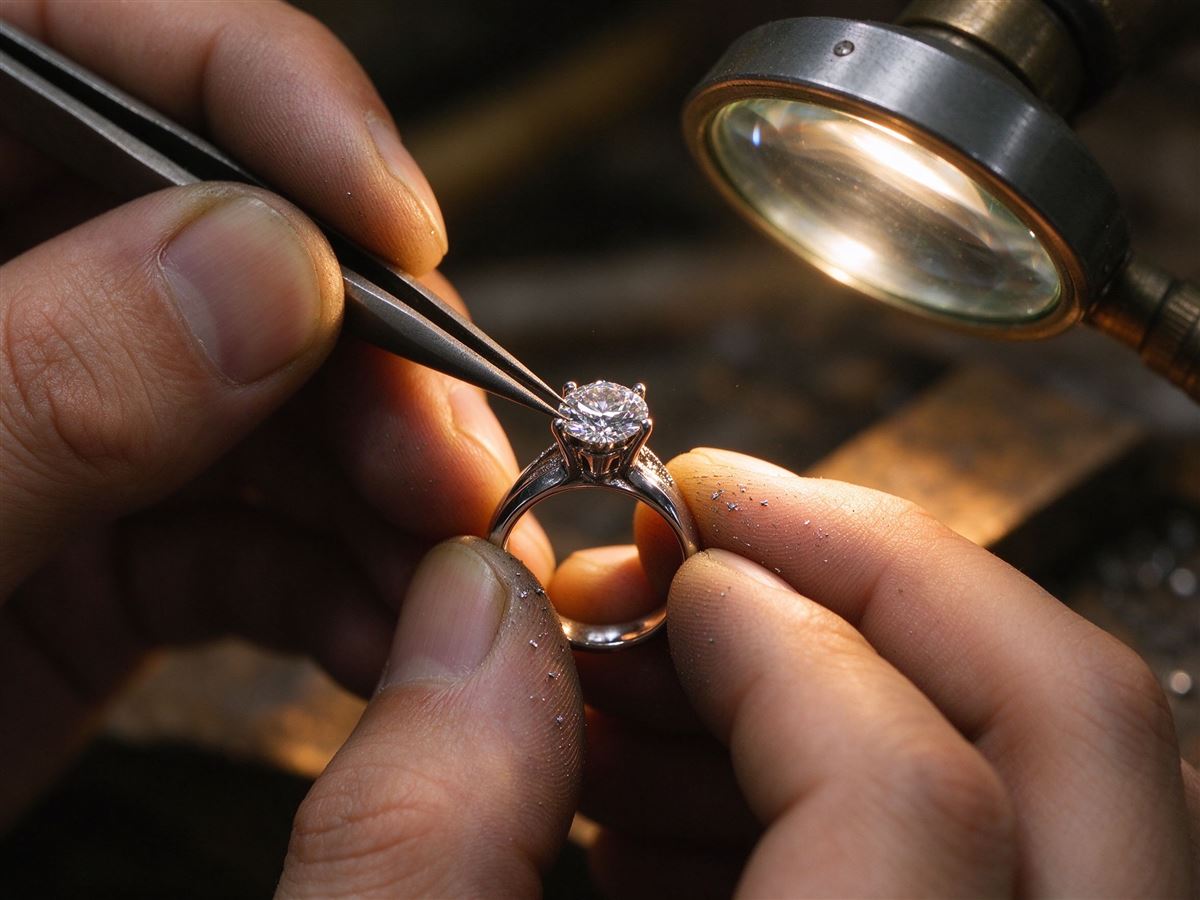
Designing Rings as a Couple: When Both People Choose Together
The traditional proposal script has one person buying a ring in secret and surprising the other. It is romantic, and it works for a lot of couples. But a growing number of people choose to design the rings together, either because they are proposing after a long conversation, or because they want the wedding bands to be a joint project. Designing together changes the process. It is less of a surprise and more of a collaboration, and the result is usually a ring that fits both people's taste rather than one person's guess.
Why Design Together
The secret proposal has a real risk. The buyer has to guess the other person's taste, and even thoughtful guesses miss. A ring that is close but not right is a ring that gets worn reluctantly. Designing together removes that risk. Both people see the CAD, both weigh in on the metal, the band width, the stone shape. The ring arrives already approved by the person who will wear it.
The trade-off is the surprise. If the proposal depends on her not knowing what the ring looks like, designing together kills that moment. But many couples now separate the proposal from the ring. He proposes with a placeholder, or with a ring chosen in broad strokes, and the real design happens after. The surprise is the question, not the jewelry.
How to Start the Conversation
If you want to design together, start with a question, not a decision. Ask her what she already likes. Look at her jewelry, her Pinterest boards, her saved posts. Ask whether she prefers yellow gold or white, thin bands or chunky, classic or modern. Do not ask her to design the ring in one conversation. Ask questions over a few weeks, and the picture emerges.
When you are ready to order, send us both references. We will work with both of you on the CAD. Most couples land on a design that is a compromise between one person's classic instinct and the other's modern instinct, and the result is better than either would have chosen alone.
Splitting the Decisions
A useful way to divide the design is this: the person who will wear the ring chooses the stone shape, the metal colour, and the band width. The other person chooses the setting style, the accents, and the engraving. This gives both people ownership of the result. The wearer does not end up with a ring they dislike, and the proposer gets to contribute the romantic details.
Matching Wedding Bands
Designing together is the easiest way to make sure the engagement ring and the wedding band sit flush. When the two are designed in the same CAD session, the wedding band is shaped to curve against the engagement ring. The result is a stack that sits tight, no gap, no wiggle. If you buy the engagement ring first and add the wedding band later, you may have to reshape the band to make them sit together.
Couples who design together often choose matching bands for themselves. A thin wedding band for her, a slightly wider version for him, in the same metal and the same finish. The set looks intentional without being identical.
The Budget Conversation
Designing together makes the budget conversation easier, because both people are in the room. There is no guessing what he can afford, no pretending to like a ring that costs too much. You look at the options together, pick the stone size, the metal, and the accents that fit the budget, and adjust. The result is a ring neither person resents.
The Engraving as a Joint Project
When you design together, the engraving becomes a joint choice. You argue about the date format, you debate coordinates versus initials, and you land on something both of you like. That small argument is part of the process, and the engraving that comes out of it means more than one person's solo choice.
What Happens to the Surprise?
If you still want to propose, you can. Design the ring together, agree on the look, and then plan the proposal separately. She knows what the ring will look like, but she does not know when or where you will ask. That is still a real moment. The surprise has moved from the ring to the question, which is where it probably should have been all along.
Why Design Together
The secret proposal carries a real risk. The buyer has to guess the other person's taste, and even thoughtful guesses miss. Designing together removes that risk. Both people see the CAD, both weigh in on the metal, the band width, and the stone shape. The ring arrives already approved by the person who will wear it.
Splitting the Decisions
A useful way to divide the design is this: the person who will wear the ring chooses the stone shape, the metal colour, and the band width. The other person chooses the setting style, the accents, and the engraving. This gives both people ownership. The wearer does not end up with a ring they dislike, and the proposer gets to contribute the romantic details.
Matching Wedding Bands
Designing together is the easiest way to make sure the engagement ring and the wedding band sit flush. When the two are designed in the same CAD session, the wedding band is shaped to curve against the engagement ring. The result is a stack that sits tight, no gap. If you buy the engagement ring first and add the wedding band later, you may have to reshape the band to make them sit together.
What Happens to the Surprise
If you still want to propose, you can. Design the ring together, agree on the look, and then plan the proposal separately. She knows what the ring will look like, but she does not know when or where you will ask. The surprise has moved from the ring to the question, which is where it probably should have been all along.
Why Design Together
The secret proposal carries a real risk. The buyer has to guess the other person's taste, and even thoughtful guesses miss. Designing together removes that risk. Both people see the CAD, both weigh in on the metal, the band width, and the stone shape. The ring arrives already approved by the person who will wear it.
Splitting the Decisions
A useful way to divide the design is this: the person who will wear the ring chooses the stone shape, the metal colour, and the band width. The other person chooses the setting style, the accents, and the engraving. This gives both people ownership. The wearer does not end up with a ring they dislike, and the proposer gets to contribute the romantic details.
Matching Wedding Bands
Designing together is the easiest way to make sure the engagement ring and the wedding band sit flush. When the two are designed in the same CAD session, the wedding band is shaped to curve against the engagement ring. The result is a stack that sits tight, no gap. If you buy the engagement ring first and add the wedding band later, you may have to reshape the band.
What Happens to the Surprise
If you still want to propose, you can. Design the ring together, agree on the look, and then plan the proposal separately. She knows what the ring will look like, but she does not know when or where you will ask. The surprise has moved from the ring to the question, which is where it probably should have been all along.
The Bottom Line
Designing the rings together is how you end up with a ring both people love. It removes the guesswork, it makes the budget conversation honest, and it produces a wedding band that sits flush. If you want to keep a proposal surprise, design the ring together but keep the moment a secret. The result is a ring that was made by both of you, not just chosen by one.