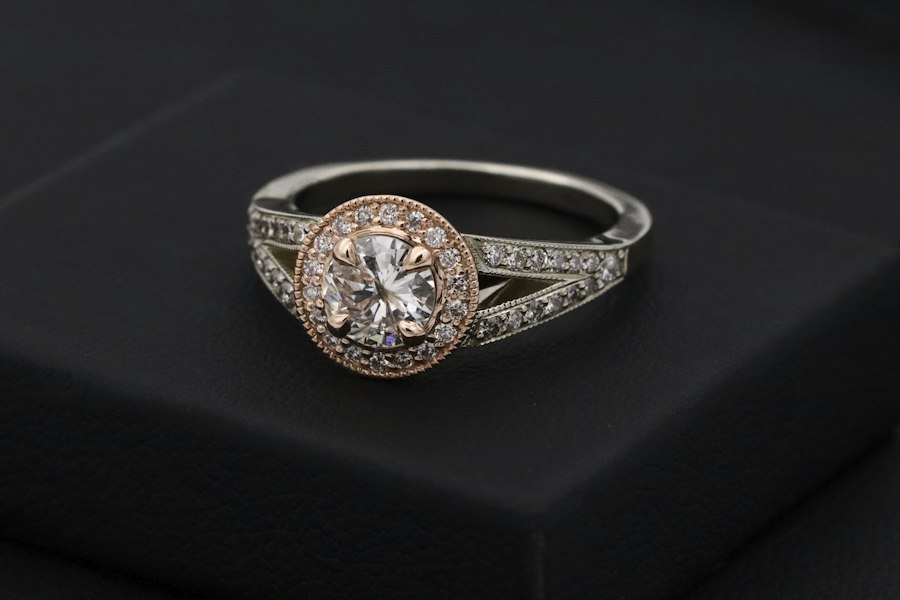
Every atelier has a drawer of pieces that came back thirty, forty, sixty years after they left the bench. They arrive scratched, resized twice, maybe cracked, but alive. The rings that become heirlooms are rarely the flashiest ones. They are the ones designed at the bench with repair in mind, built of material that can be worked again, and made simply enough to survive changing fashion. If you want the ring you commission today to be the ring your grandchild wears, the decisions start now.
Choose material that can be worked forever
Platinum and solid 18k gold are heirloom metals. They can be resized, re-tipped, cleaned, and rebuilt over and over without thinning to the point of failure. Thin-plated or hollow pieces cannot. A ring that cannot be repaired cannot be handed down, because the first dent ends the story. When we design for longevity, we choose solid, repairable metal and tell clients exactly how many times it can be sized before it needs a fresh shank.
Set stones securely and simply
The settings that survive are the ones a future jeweler can actually fix. A bezel or a well-executed prong setting outlasts a glued micro-set cluster. Fashionable hidden settings look striking new but become impossible to repair when one stone drops. We also avoid over-setting a ring so heavily that the structure weakens. A ring should carry its stones without being consumed by them. If stones already run in the family, resetting them into a durable setting is the single most reliable way to keep them in the family.
Design for many fingers
An heirloom changes hands. Your finger is not the only finger it will ever meet. We design shanks that can be sized up or down several full sizes without rebuilding the whole piece, and we avoid irreversible features that only make sense on one hand. A ring that fits only a size 6 and cannot be resized is, by definition, not an heirloom. It is a lifetime piece.
Tell the story on purpose
The rings that get kept are the rings whose story is known. A date engraved inside, a maker's mark, a handwritten note that travels with the box. We stamp our work and encourage clients to keep the paperwork, the original stone documentation, and a short written history of where the piece came from. Decades later, that note is what turns an anonymous ring into a family artifact. When the piece eventually needs care, a restoration reads that history back out of the metal.
Resist the trend
The hardest advice we give is also the most useful: design something that will not look dated. Not bland. Not anonymous. Just honest. Clean lines, honest stones, proportion that flatters rather than shouts. The rings people hand down are the ones that never looked like a season. Build for the long game, and the ring will do the rest.
The maker's mark and the paperwork
An heirloom is more durable when it is documented. We stamp every piece we make with our mark and a metal assay, so a future owner can identify the metal and the maker in seconds. We also keep a record of the commission: the stone weights, the metal purity, the design notes. If a grandchild brings the ring back in fifty years, that record lets us or another atelier restore it accurately instead of guessing. Encourage clients to photograph the ring on the day it is given, write down the occasion, and keep those notes with the jewelry. Objects survive. Stories survive only when someone writes them down, and a ring without a story is just metal.
Designing for a hand you have not met
The strangest and most rewarding part of building an heirloom is that you are designing for a finger you will never meet. You cannot size for it, but you can design around it: a slightly wider, repairable shank; a setting that a future jeweler can loosen and re-tighten; stones set simply enough to be re-set again. You are building a framework that another craftsperson will finish one day. That humility is what makes the piece last. The rings that survive generations are not the ones that tried to be perfect today. They are the ones that left room for tomorrow.
Ask us, at the consultation, which parts of your design are easy to repair and which are permanent. A good atelier will tell you plainly. The rings that outlive us are the ones whose next owner has choices: to resize, to re-tip, to re-set, to wear it a little differently. Build those choices into the design on day one, and the piece stays alive long after the hand that first wore it is gone.
Start with a piece you would be proud to hand over, and let the future take care of itself. The metal remembers what you put into it.