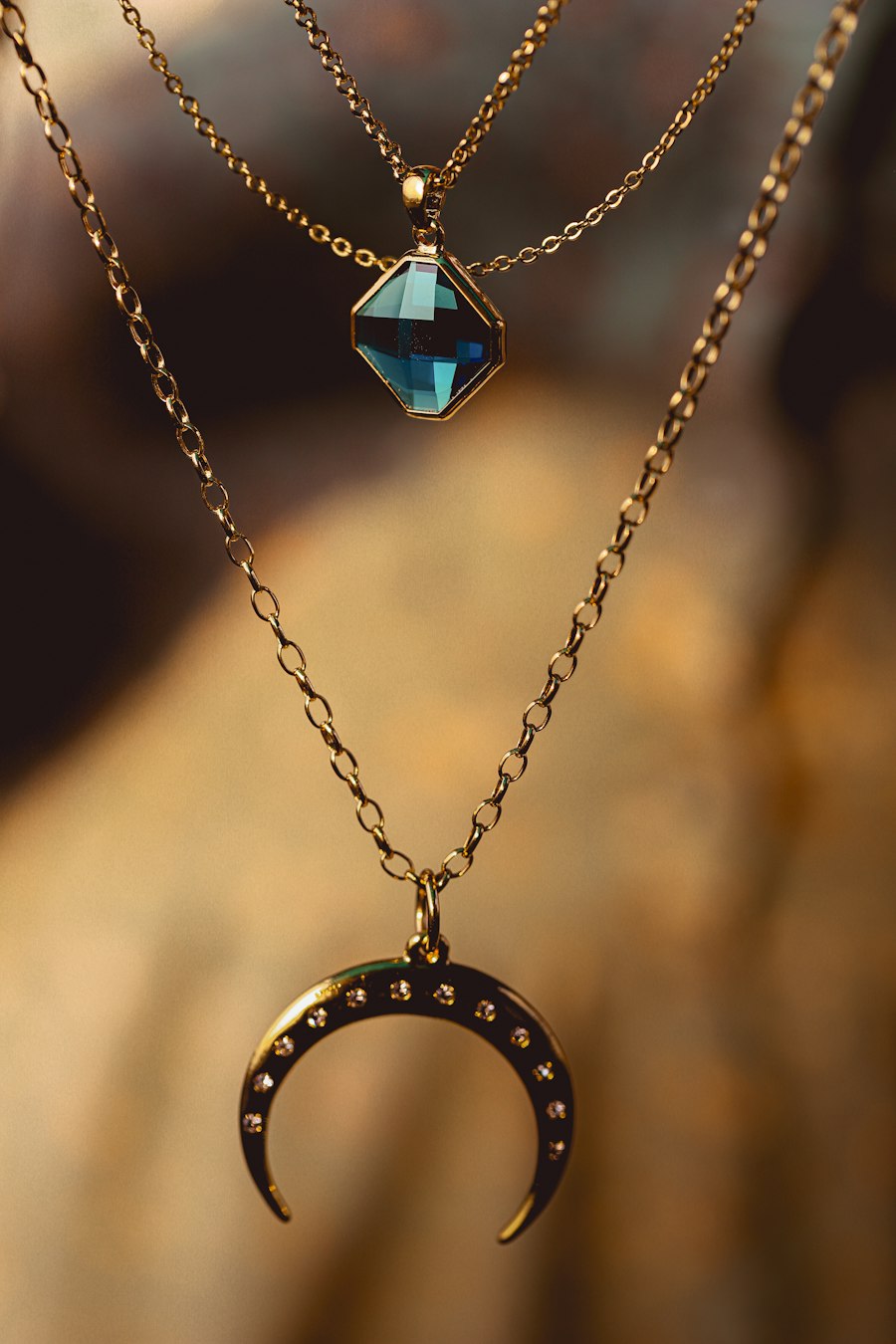
Somewhere in your family, there is a necklace. It belonged to a mother, an aunt, or a grandmother. It is not broken. It is just a little too long, a little too delicate, a little too 1987 to sit comfortably over a sweater today. It lives in a velvet pouch and comes out once a year. That necklace is exactly the kind of piece we love turning into a bracelet — because a bracelet gets worn, and worn jewelry is jewelry that still means something.

Why a necklace becomes a bracelet, specifically
Necklaces fall out of wear for predictable reasons. The chain tangles. The clasp is finicky. The pendant competes with every neckline. A bracelet sidesteps all of it. It sits on a wrist you look at all day, it does not fight collars, and the scale of a bracelet lets us spread a necklace's stones along a chain rather than crowding them into one pendant. In practice, an inherited necklace usually contains enough material to make a bracelet and a small pair of earrings or a pendant from the leftovers.
What we do in the first hour
We do not start by cutting anything. We lay the whole necklace out on a bench cloth and photograph it from every angle. Then we take it apart slowly, sorting every component into small bowls: stones, chain segments, charms, clasp, findings. This matters because once it is apart, the original design no longer constrains us. We are working with a pile of precious parts, not a necklace.
Alongside the sorting, we ask the questions that shape the redesign:
- Which single part means the most to you? Often it is a charm, not a stone. That charm becomes the center of the bracelet.
- Do you want it obvious that this is an inherited piece, or quiet? Quiet usually wins — it ages better.
- Will you wear it every day, or for evenings? Daily wear changes the clasp, the chain thickness, and the safety.
The design moves we use most often
After hundreds of these commissions, a few patterns recur. They are worth knowing before your consultation.
- Charm bracelet conversion. The necklace's pendants become charms on a new gold chain, spaced evenly. Each charm keeps its meaning; the chain is fresh.
- Station bracelet. The necklace's smaller stones are set at intervals along a thin gold or platinum bar. Quiet, modern, and surprisingly sturdy.
- Single statement bracelet. One stone — the best one from the necklace — becomes the focus, with the rest of the material woven into the chain or sold separately into earrings.
We talk through what happens to the old gold we do not reuse. It is yours, and we credit it against the new work or return it to you as a small bar. Nothing disappears without your say-so.
Clasp choices you do not get to skip
A bracelet lives or dies by its clasp, and inherited chain clasps are almost always too small or too worn to reuse. For an everyday piece, we fit a lobster or box clasp with an added safety chain, so a failed clasp drops the bracelet into your hand rather than onto the sidewalk. If you will be putting the bracelet on one-handed, we also suggest an extender chain in the same metal — a small addition that makes the difference between wearing it daily and leaving it on the dresser. These details are not glamorous, but they are why a redesign gets worn rather than stored.
What the leftovers become
Because an heirloom necklace usually yields more material than the bracelet needs, we plan the leftovers from the start. A small matching pair of studs from the chain's accent stones is the most common request. Sometimes the leftover gold becomes a thin band, or a small pendant on a new chain. Clients often give the leftovers to a sibling or a child, so the original necklace ends up represented in three pieces rather than trapped in one. Asking about the leftovers at the first consultation ensures we cut the redesign with all of those pieces in mind, rather than discovering afterward that we used up material you wanted elsewhere.
A bracelet that accumulates
The nicest surprise of a necklace-to-bracelet commission is that the bracelet becomes a starting point. Clients bring us a new charm five years later, a child's birthstone ten years after that. The original necklace, once trapped in a box, has become a piece that grows. That is the whole argument for redesign: jewelry that gets worn, added to, and lived in, outlasts jewelry that is preserved. We would rather build you a bracelet that scuffs at the edges than a necklace that never leaves the pouch.