A client brought in a bespoke silver necklace that had turned almost black in six months. She had cleaned it with a commercial dip, which stripped the soft patina we had intentionally left on the hand-hammered surface. That is the most common mistake with custom silver: people clean it like a ready-made piece, not like a surface that was finished on purpose. A bespoke silver piece needs a gentler routine than a mass-produced one, because the texture is part of the design.
Why bespoke silver tarnishes faster than you expect
Sterling silver is 92.5% silver and 7.5% other metals, usually copper. The copper reacts with sulphur in the air, in food, and in skin, which is what causes the black tarnish. A hand-hammered or chased surface has more micro-surface area than a polished one, so it tarnishes faster and traps the tarnish in the recesses. The sterling silver fineness standard does not change this; the finish does. Read our notes on intentional patina versus worn patina before you decide what counts as dirt and what counts as design.
The home routine that works
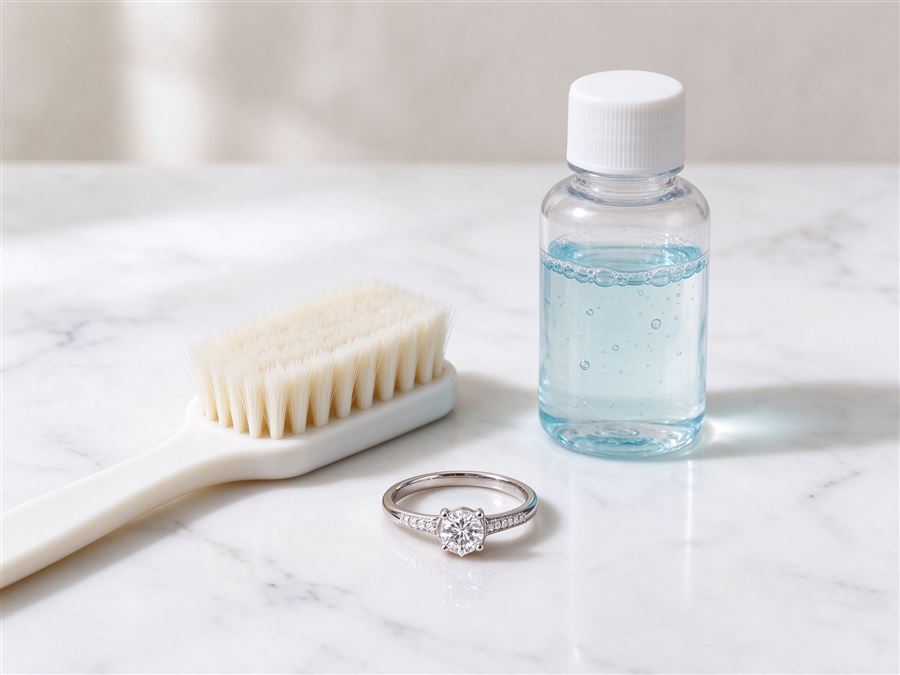
For a custom silver piece, use warm water, a drop of mild dish soap, and a soft baby toothbrush. Brush the recesses gently, rinse, and dry with a 100% cotton cloth. This removes skin oils and light tarnish without touching the patina. For heavier tarnish, use a silver polishing cloth treated with a very mild abrasive; do not rub the textured areas hard, because you will take the surface off. We cover the broader routine in care for handmade jewellery, but for bespoke silver the toothbrush and cloth are the only two tools you need at home.
What to avoid at home
Commercial silver dips are the first thing to avoid. They strip every surface, including the patina you paid for. Toothpaste is the second, because it is abrasive enough to scratch a hammered finish. Ultrasonic cleaners are the third: they are fine for a simple plain band, but on a chased or enameled piece they can loosen stones and lift enamel. The FTC Jewelry Guides do not govern cleaning, but they do require that any coating you add be disclosed, so if you choose to lacquer your silver at home, know that it will need to be redone.
When to bring it back to the atelier
If the tarnish has gone into the recesses and the cloth will not lift it, bring the piece in. We will steam it, repolish the high points, and refresh the patina in the recesses in one session. We also re-check the clasp and the chain links while the piece is on the bench. Retail partners on our white-label programme can offer this as a free lifetime care service, which is one of the strongest reasons to buy bespoke over ready-made.
Storage between wears
Tarnish speeds up when silver is exposed to air. We suggest a sealed plastic pouch with a small anti-tarnish strip, or a lined jewellery box with a compartment that is not shared with brass or copper pieces. Avoid rubber bands and cork-lined boxes, both of which release sulphur and accelerate blackening. The same storage rules apply to gold and platinum, but for silver they make the difference between a bi-weekly clean and a monthly one.
If the patina has been stripped by a previous clean, we can rebuild it in a bench session: blacken the recesses with a light sulphur solution and polish the high points back to silver. The process takes about twenty minutes and lasts a year on a daily-wear piece. We cover the same restoration logic in vintage ring restoration, but for a custom silver necklace the bench visit is the fastest fix.
FAQ
How often should I clean a custom silver piece?
Every two to four weeks with the soap-and-water routine. Weekly if you wear it every day. The polishing cloth is used as needed, not on a schedule.
Can I wear my silver in the shower?
We recommend no. Soap and hot water accelerate tarnish and can dry out any leather or fabric elements. Rinse it after exposure to seawater or chlorine, because both speed up the copper reaction.
Why is my silver turning black faster than my friend's?
Skin chemistry, diet, and local air quality all affect tarnish. High-sulphur foods like eggs and onions, and air near industrial areas, speed it up. A custom textured surface traps more of it than a polished one.
Should I lacquer my silver to stop tarnish?
Only if the piece is worn rarely. Lacquer wears off in months and strips off during cleaning. For everyday wear, the soap-and-water routine is faster and kinder to the finish.
Have a custom silver piece that lost its finish after a home clean? Bring it in or send photos. We will assess whether the patina can be restored, give you a maintenance cloth, and show you the two-minute routine that keeps the surface alive. Trade retailers: our silver-care white-label pack includes the polishing cloth, the care card, and the atelier refresh service your team can offer at no charge.