A client looked at a CAD render of her ring and said it looked too thin. We exported the model, 3D-printed a wax, and hung it on her finger. Ten seconds later she said it was too thick. That is the whole reason bespoke commissions use CAD and wax together: the screen lies, the wax tells the truth, and neither step can replace the other. Here is how the two tools actually work in a modern atelier.
What CAD does well, and what it does badly
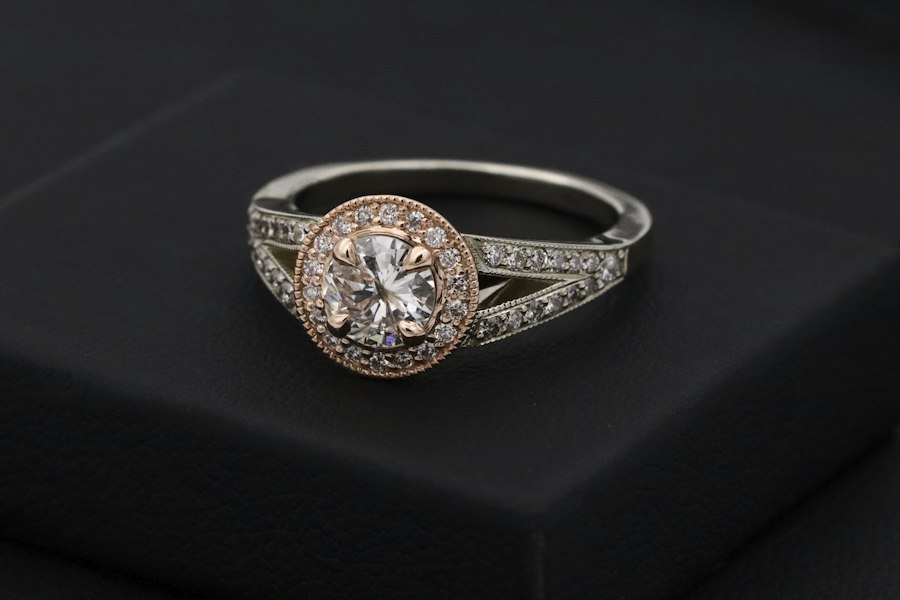
CAD (computer-aided design) lets the jeweller rotate the ring, check the stone seat, measure the wall thickness, and quote the metal weight before any metal is poured. It is how we send you a render in 48 hours instead of a hand sketch in two weeks. CAD is weak at feel. A 2 mm band on a screen looks light; on the finger it can feel heavy. A bezel that looks elegant on a render can pinch the knuckle in real life. We cover the customer-visible side in 3D printing and what customers actually see.
The wax step is the physical check
Once the CAD is approved, we 3D-print a resin or mill a wax in the exact size. The client tries it on, feels the weight, checks the profile against the knuckle, and decides whether the band width is right. This step is where most commissions change. A client who wanted a 6 mm band often lands at 5 mm after trying the wax. We walk through the hand-carved version of the same step in the wax-to-casting maker's journey, but for bespoke commissions the wax is printed from the CAD, not carved from scratch.
Casting from the approved wax
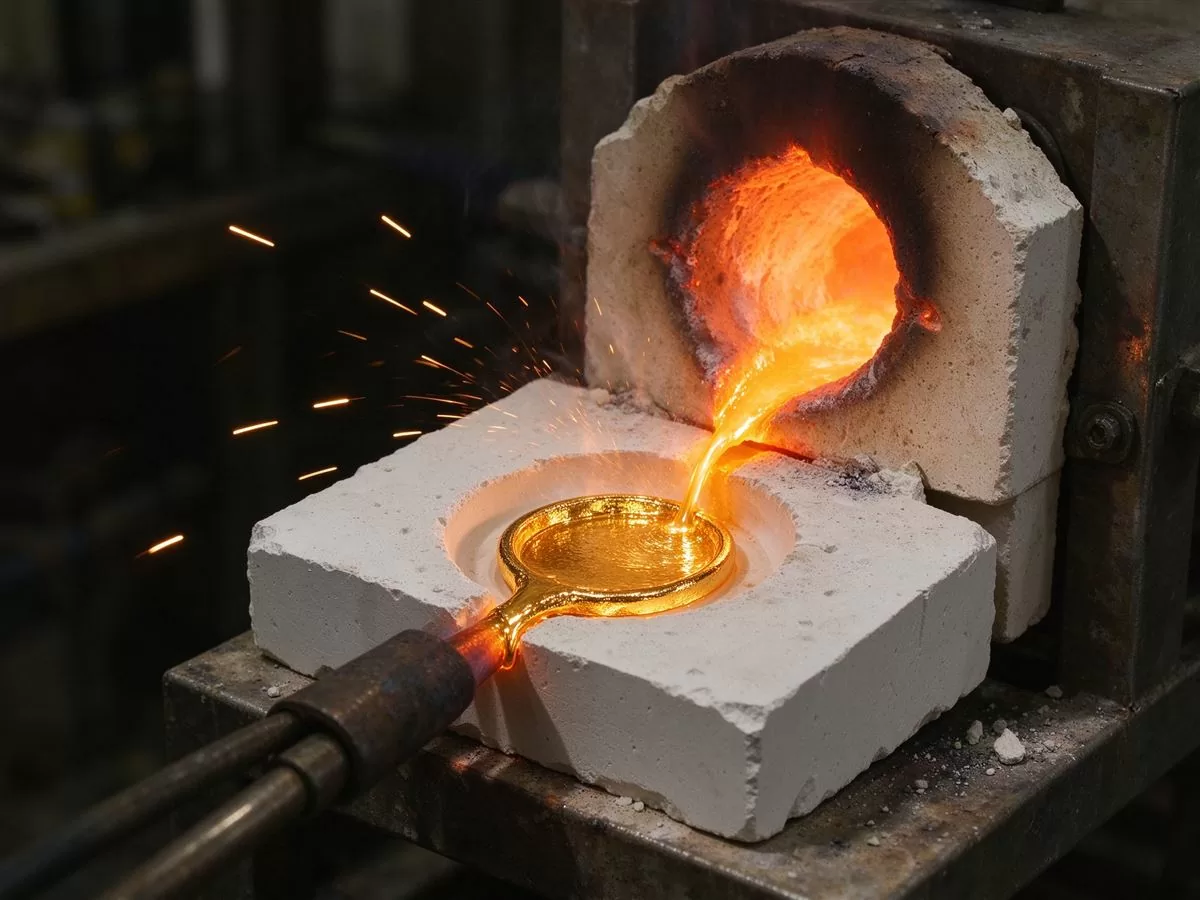
Once the wax is approved, it goes to the foundry. The wax is invested in a plaster mould, burned out, and the chosen metal is poured into the cavity. This is the lost-wax casting method that has been used for millennia; the modern difference is that the wax itself came from a CAD file. The lost-wax casting process produces a raw casting that is then cleaned, filed, and polished by hand. We cover the broader atelier flow in the sketch-to-setting process.
Why both steps matter for trade clients
For retail partners, the CAD-and-wax workflow is what makes bespoke viable at scale. The CAD render sells the design; the wax fitting prevents returns. We supply both to our white-label retailers, so your sales team can show a render on a Tuesday and a wax on a Saturday, without holding finished inventory. The FTC Jewelry Guides require that the final piece match the approved design, so keeping the CAD and the wax on file is also a paperwork step, not just a craft one.
What the client sees at each gate
There are three gates in the CAD-and-wax process: the sketch, the CAD render, and the wax fitting. The sketch is a pencil drawing sent within 48 hours. The CAD render is a 3D view sent within two working days of sketch approval. The wax fitting is an in-person or posted resin piece, usually ready within a week of CAD sign-off. The client signs off at each gate in writing, so there is no ambiguity about what is being cast. We cover the same gate structure in realistic lead times.
FAQ
Do I have to see the wax, or is the CAD enough?
For simple designs, the CAD render is enough. For bands over 5 mm, for rings with side stones, or for anything platinum, we recommend the wax fitting. The cost of the wax is small compared with the cost of recasting.
How long does CAD take?
Two to three working days from approved sketch. The first render is usually a single angle; we send rotations once the client signs off on the main view.
Can I change the design after the wax is approved?
Small changes, like a half-size width or a different finish, are easy. Large changes, like a different setting, mean a new wax and a new casting. We will tell you the cost of each change before you make it.
Is a CAD-printed ring less handmade?
No. The CAD and wax replace the hand-carved wax step, but the casting, filing, setting, and polishing are still done by hand. The result is the same metal piece; the design process is faster and more accurate.
Want to see your design in CAD and in wax before the metal is poured? Book a bespoke commission. We will send the first render in 48 hours, print a wax for you to try on, and only cast once you approve both. Trade retailers: our CAD-and-wax white-label pack includes the render template, the wax-fitting script, and the foundry lead-time sheet so your team can promise the same four-to-six-week timeline.