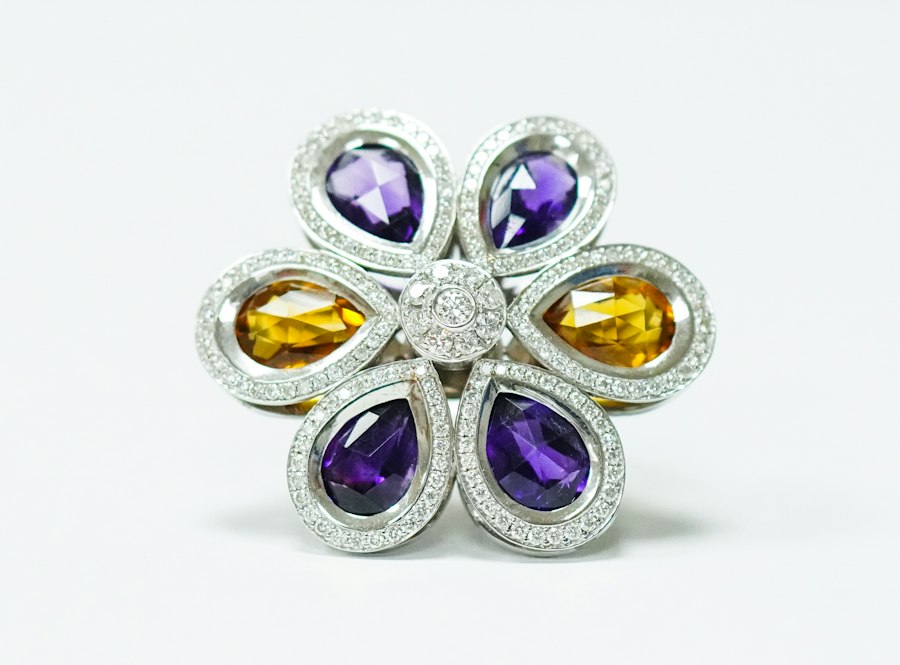
A single metal color is clean and safe. Two or three colors in the same ring is what separates a hand-designed piece from a catalog. Two-tone rings—usually a white gold or platinum setting with a yellow gold band, or a rose gold accent—catch the eye because the contrast pulls focus toward the stone. Tri-color work goes further, threading yellow, white, and rose together. It is one of the most-requested details we build, and one of the easiest to get wrong.
Why mix metals in the first place
The honest reason most clients come to us is jewelry they already own. A wedding band in rose gold, an engagement ring in platinum, everyday earrings in yellow gold—a two-tone ring lets the new piece sit comfortably beside everything else in a jewelry box. It is also a way to honor two family metals: your grandmother's yellow gold alongside your partner's white gold.
Designers use mixed metal another way: to direct attention. A white setting makes a diamond or moissanite look brighter; a warm gold band makes the hand look sun-kissed. Put them together and the stone pops without adding size.
The rule of a dominant color
The fastest way to make a two-tone ring look cheap is to split it evenly. Equal parts yellow, white, and rose reads as costume jewelry. The workable approach is dominance plus accent. Choose one metal that carries the ring—say, a platinum band—and use the second color as a narrow inlay, a hidden inner wall, or a bead around the prongs. The eye should land on the contrast, not see three equal stripes fighting for attention.
Tri-color works only when the third color is truly a whisper. We usually reserve rose for the inner comfort-fit wall, where it warms the skin tone but stays nearly invisible from the top.
Construction: how the colors meet
There are two honest ways to join metals. The first is soldering, where different alloy wires are fused together under heat into a single band. This is the traditional, durable method—the seam is permanent if done well, and the band wears evenly. The second is plating, where a thin layer of rhodium or gold is deposited over a base. Plating wears off in months and is not how a bespoke house should build a piece you intend to keep for life. We solder, always.
One detail to know: yellow and rose gold solder more predictably than platinum to gold, because their melting points are closer. If your design calls for platinum plus rose gold, we plan the joint carefully and often use a transitional layer to avoid stress cracks over years of resizing.
Pairing mixed metals with a setting
The most common two-tone pattern we build is a white setting under the stone and a colored band. The white metal strengthens the prongs and makes the center stone appear brighter; the colored band adds warmth on the hand. If you are still deciding on a center stone, our guide to choosing accent and side stones pairs naturally with this decision, since side-stone metal colors can echo the band.
A subtler version worth knowing about is the "hidden" two-tone ring: a plain platinum or white gold band from the outside, with a thin strip of rose gold along the inner wall that only you can see. It reads as a classic ring to everyone else and as a secret to the wearer. Couples often choose it when they love the idea of mixed metal but do not want the ring to feel busy. It is also one of the easiest ways to thread a personal color—a mother's ring gold, a bridesmaid's rose—into a piece without shouting about it.
Does it complicate care?
Barely. Mixed-metal rings need the same gentle cleaning routine as any fine jewelry: warm water, mild soap, a soft brush. The one caution is that plated accents would wear unevenly—which is exactly why we build with solid soldered metals instead. A well-made two-tone band will age uniformly, and a professional resize will keep the colors matched.
Sizing and resizing a mixed-metal band
One practical question comes up often: can a two-tone ring be resized later? Yes, but it matters where the solder joint sits. A skilled bench will place the join at the bottom of the band, where a future resize can be cut and re-soldered without disturbing the visible color pattern on top. This is another reason to commission mixed-metal work from a shop that fabricates rather than plates—a plated band cannot be resized cleanly, because the color will flake off at the cut. If your finger size may change after life events, building for a future resize from the start is a sensible precaution.
Who should choose mixed metal
If your existing jewelry already mixes colors, a mixed-metal ring is the pragmatic, beautiful choice. If you love the idea of a ring that looks "lived-in" before you wear it, the layered warmth of two tones does that. If you want a pure, monochromatic, modern statement, skip it. The goal is never to show off that you mixed metals—it is to let the contrast do quiet work that a single color simply cannot.