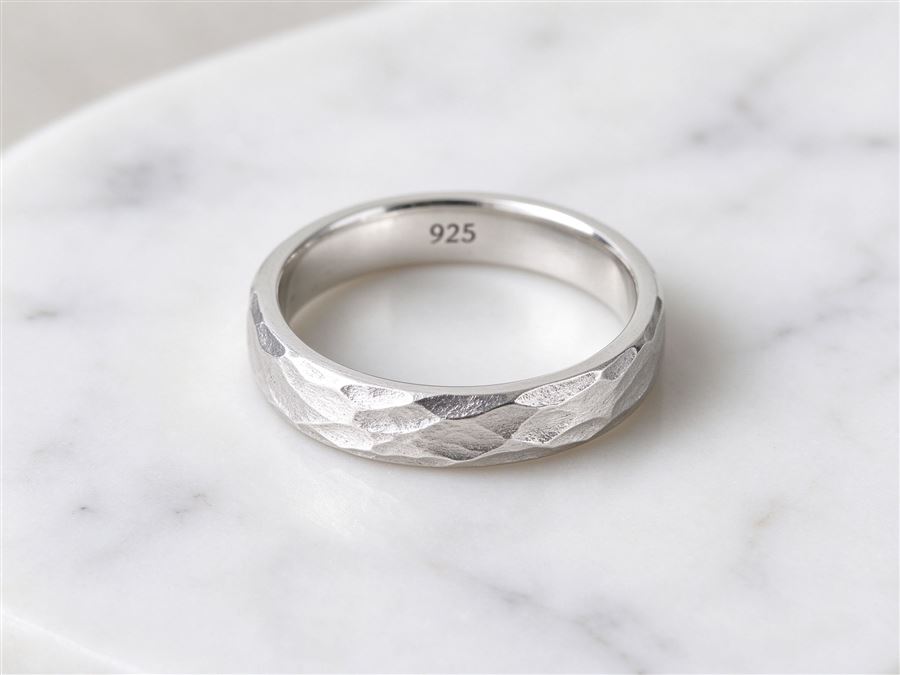
Ask someone designing a ring about carat, cut, and clarity and they will talk for an hour. Ask them about band width and you will get a blank look. Yet width is the variable that most changes how a ring actually looks on the hand. A 2mm band makes a stone look delicate and expensive. A 6mm band makes the same stone look grounded and architectural. Neither is wrong, but they are completely different pieces of jewelry, and the decision has to be made before the wax is carved, not after.
Start with the hand. Narrow fingers in the 3 to 5 range read beautifully on slim 1.6 to 2.5mm bands; anything wider crowds the finger and makes it look like the ring is wearing the person. Average fingers, roughly 6 to 8, carry 2.5 to 4mm with ease and this is where most of our engagement rings land. Wider fingers, 9 and up, can take 4 to 6mm and often look better on a wider band, because a thin shank on a broad finger looks lost and flimsy. This is a guideline, not a rule, but it is a far better starting point than picking a width off a catalog photo.
Width also changes how the ring feels. A narrow band concentrates pressure over a small area, which is why some slim rings dig in after a long day. A wider band spreads that pressure and is often more comfortable for all-day wear, even though it sounds counterintuitive. The tradeoff is that a wide band needs a slightly larger physical ring size to feel the same as a narrow one - a 6mm band at size 6 fits more snugly than a 2mm band at size 6. We account for this in our sizing, but it is worth knowing when you measure at home.
Then there is the pairing problem. If you plan to wear a wedding band alongside your engagement ring, the widths need to be relatives, not strangers. A 2mm engagement ring and a 6mm wedding band stacked will always look mismatched, no matter how beautiful each ring is on its own. The cleanest stacks use widths within about a millimeter of each other, or they deliberately step down - engagement ring at 3mm, wedding band at 1.8mm - in a way that looks intentional. This is exactly why we design the two rings together rather than treating the band as an afterthought; our guide to choosing a wedding band that complements your ring walks through the geometry in detail.
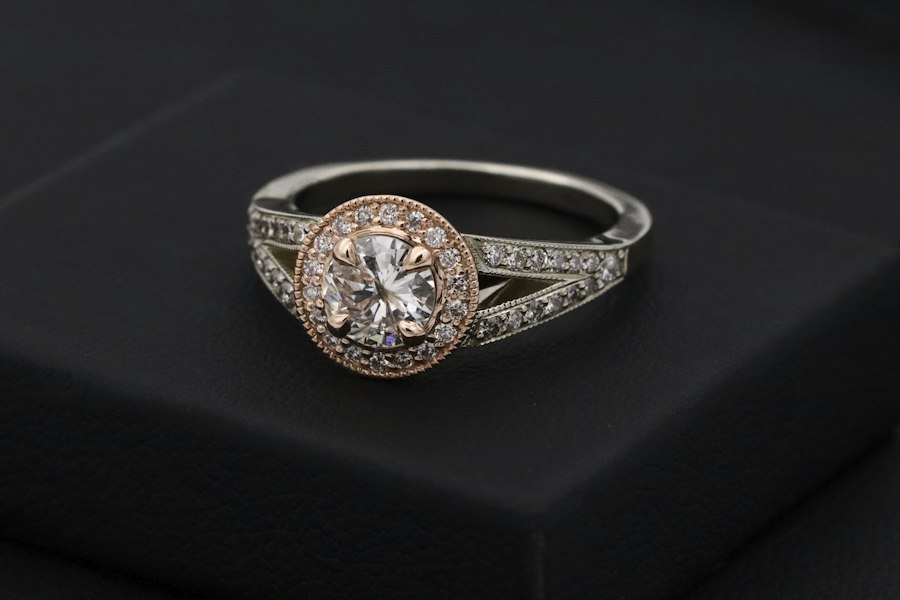
Width and setting style talk to each other. A pavé band needs enough width to hold the stones - you cannot pave a 1.6mm shank cleanly. A solitaire on a wide band reads modern and substantial, almost architectural, which is a look many clients now prefer over the traditional delicate prong setting. A channel-set band wants width too, because the channel walls need material to hold the stones. If you have your heart set on a particular setting, the width often gets chosen for you, and that is fine - but it should be a conscious choice.
Proportion also governs how the ring ages. A thin band wears down over decades because the gold slowly flows and thins under friction. A 2mm solitaire that is perfect at year three may need rebuilding at year thirty. A 4mm band will still have plenty of metal left at that point, and can be lightly cleaned and polished rather than reconstructed. If the ring is intended as an heirloom - the kind that gets reset onto a child's finger one day - erring slightly on the wider side is a quiet act of planning. Our piece on what resizing actually does goes deeper into how band thickness limits what a bench jeweler can later change.
The shoulder, not just the bottom of the band, contributes to the visual width. A ring can sit at 2mm under the finger and flare to 4mm at the shoulders where the head meets the shank. That flare is what makes a ring look substantial without the weight of a full wide band. It is one of the most useful tricks in custom design, and it is why a bespoke ring can feel lighter on the hand than an off-the-shelf one of the same visual presence. You cannot buy that in a store, because every mass-produced ring carries a uniform band.
When you come to a consultation, we bring steel gauge rings in several widths so you can actually try them on your own finger beside your existing rings. Width is one of those decisions that photographs poorly and becomes obvious the moment you feel it. Spend those ten seconds on the gauge. It is the cheapest design decision you will make, and the one that most quietly determines whether you love the ring in ten years.