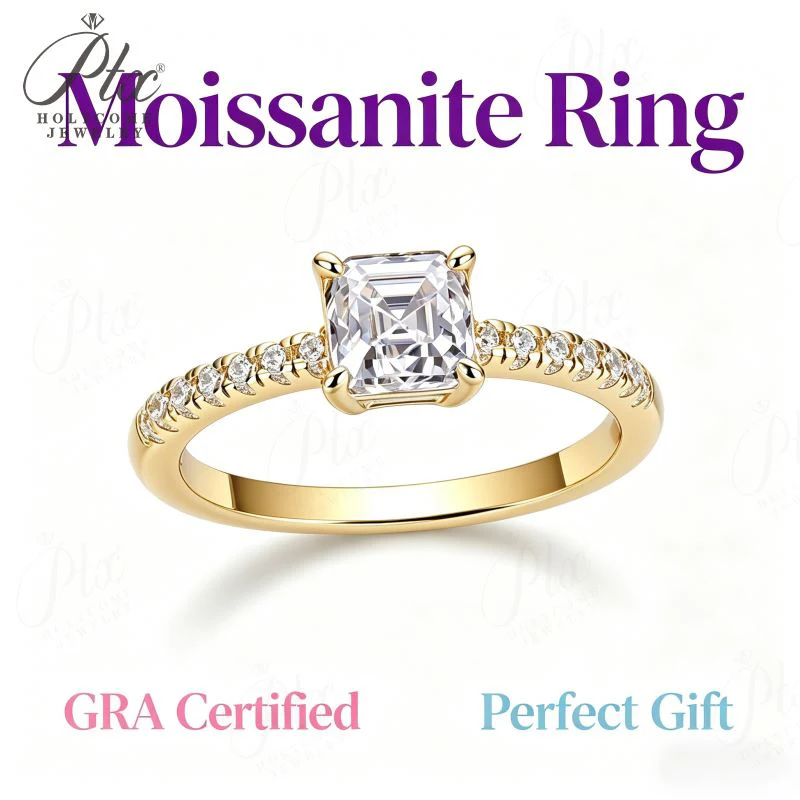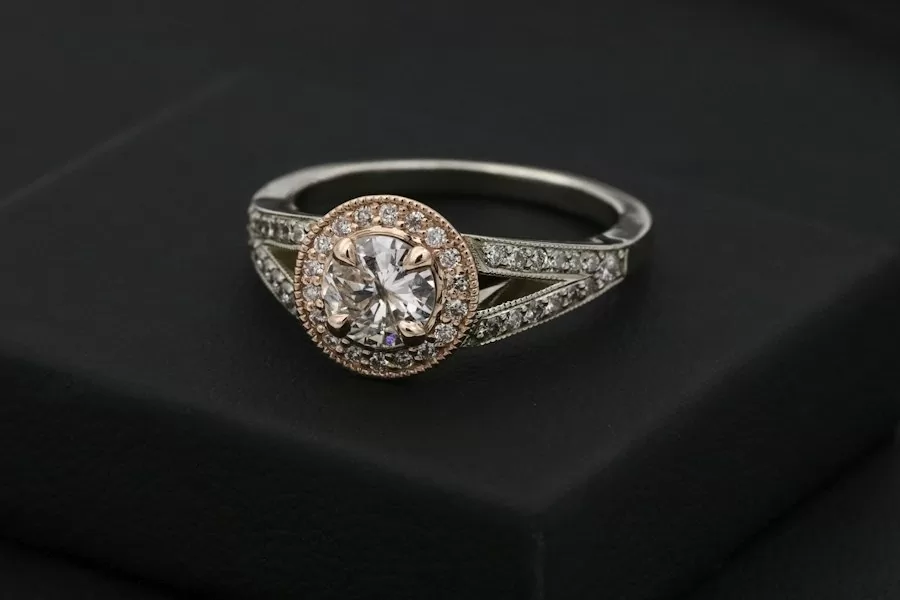
Walk into most jewelry consultations and the conversation goes straight to the center stone. Carat, cut, color. The shank — the band that wraps the finger — gets about thirty seconds: "Do you like it thin or thick?" That is a shame, because the shank is the part of the ring you actually feel. It decides whether the ring disappears on your hand or cuts into it at the end of a long day. We want to give the shank the attention it deserves.
 Width and profile work together. A flat 6mm band reads very differently from a comfort-fit 4mm, even before any stone is added.
IWhat we mean by width and profile
Two numbers govern how a shank feels, and they are independent.
- Width is how much metal sits across your finger, measured in millimeters. A slim band might be 1.8mm; a substantial one, 6mm or more. Most engagement rings land between 2mm and 3mm.
- Profile is the cross-section of the band. A flat band sits squarely on the finger. A comfort-fit band has a rounded inside wall that glides over knuckles. A cathedral or tapered shank widens at the bottom and narrows toward the setting.
Width and profile together are what people mean when they say a ring "feels right."
IIHow width changes the same stone
This is the part clients cannot predict until they try it. The same 1-carat center stone reads completely differently on a 2mm shank versus a 4mm shank. On a thin band, the stone looks larger and the ring looks delicate — almost fragile. On a wider band, the stone looks smaller in comparison, and the ring reads substantial, architectural. There is no wrong answer, but the visual effect is so strong that we always build CAD revisions at two widths before we cut metal.
IIIDurability follows width, roughly
Thinner bands bend. A 1.5mm shank on a ring worn daily will, over years, slowly warp out of round. It is not a flaw — it is physics. Wider shanks hold their shape far better. If you work with your hands, lift weights, garden, or simply hate taking rings off, we quietly push the shank toward 2.5mm minimum. If you want the dainty look, we can still give it to you, but we will tell you that it will need more frequent check-ups to stay true.
IVTapered versus straight shanks
One more decision clients rarely think to ask about: whether the shank is straight or tapered. A straight shank stays the same width all the way around the finger — bold, modern, and easy to resize later. A tapered shank narrows from the setting down to a slim band at the bottom of the finger, which reads delicate and lets the center stone dominate. Tapered shanks look lovely but are slightly more complex to resize, because the bottom of the band is narrower than the top. If you know your finger size will shift over the years, a straight shank gives you more flexibility. If you want the setting to be the whole statement, taper away.
VResizing, and why it matters later
The shank is also the part that gets cut open and closed again every time you resize. A thin, finely decorated shank loses detail at the resize point; a plain, sturdy shank resizes cleanly for decades. If you expect your finger size to shift — weight changes, pregnancy, age — we build a shank that can handle two or three resizings without thinning. We also flag, honestly, when a design with engraving or stones along the whole band cannot be resized at all without losing work. Choosing a shank width now is choosing how much repair room you give yourself later.
Finally, think about what sits next to the shank. If you wear a watch on the same wrist, or stack a wedding band against the engagement ring, the inside of the shank has to sit flush against those neighbors. A comfort-fit interior is elegant on its own, but it can create a small gap against a flat wedding band. We design the shank with those neighbors in mind before we commit, so the stack sits tight rather than rocking.
VIThe shank is where your ring ages
Over decades, the shank is the part that wears. Thin shanks thin out further at the bottom and eventually need a half-shank replacement. Heavier shanks develop a beautiful matte patina that clients often prefer to polish. When you commission a ring, the shank is not an afterthought — it is the spine. Get it right at the bench, and the rest of the design, no matter how ornate, has something honest to sit on. Bring the ring back every few years, and we will measure the shank for thinning before it becomes an emergency repair rather than a routine maintenance visit.
The definition of carat weight and how it is measured are set out in the Wikipedia entry on carat weight.
VIIFrequently Asked Questions
What ring sizes can you supply in bulk?
US sizes 5–12 including half sizes. Send a size breakdown with your order and we cast to that curve; comfort-fit inner bands reduce resize requests.
Can I order a mixed size run instead of one size?
Yes. Mixed runs are standard for wholesale: specify quantity per size and we pack and label by size at no extra labor cost.
What is the MOQ for custom ring designs?
50 pieces per design for existing molds; 100–300 pieces when a new mold or CAD model is required.
How should I price rings for retail margin?
Most partners use a 3–4x markup on FOB cost for sterling and 2.5–3x for moissanite solos, which keeps landed cost under 30% of retail.