The setting is the part of a ring people spend the least time choosing and the most time living with. A prong setting catches on sweaters. A bezel setting hides the stone's edge. Pavé adds sparkle but adds a lifetime of prong checks. The setting is not a detail; it decides how the ring behaves on a hand that washes, types, and grips. Understanding the main types before you design saves a regret that surfaces six months after the wedding.
Prong setting
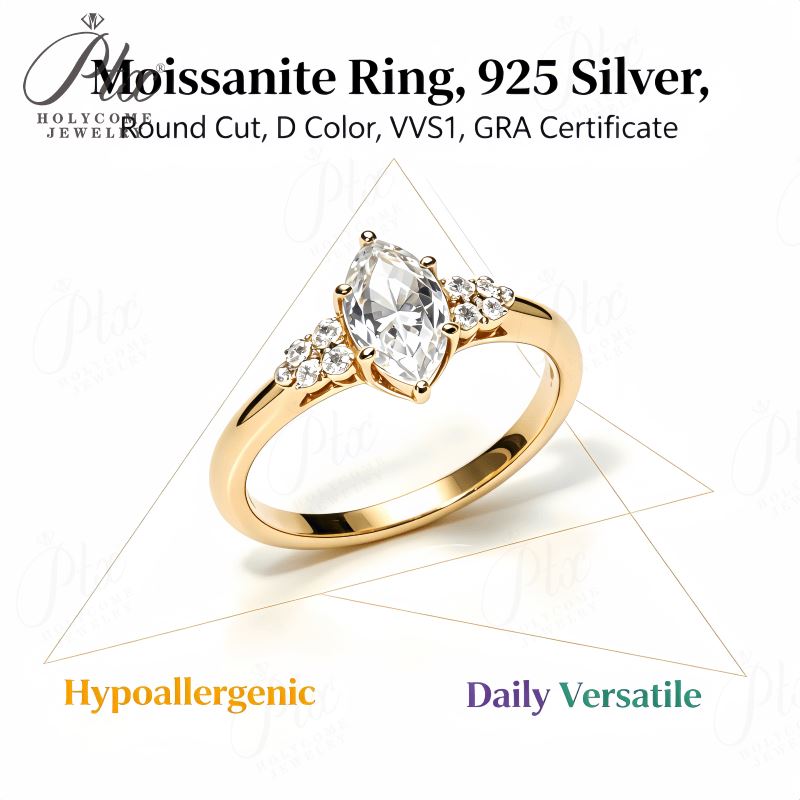
Prongs are the four or six little claws holding the stone up off the band. They let light in from all sides, which makes a stone sparkle, and they are the default for a solitaire. The tradeoff is that prongs catch on things and need an annual check. Four prongs show more of the stone; six prongs hold it more securely. A prong setting sits the stone higher, which looks dramatic but can catch on gloves. For a hands-on wearer, lower-profile prongs or a bezel wear better.
Bezel setting
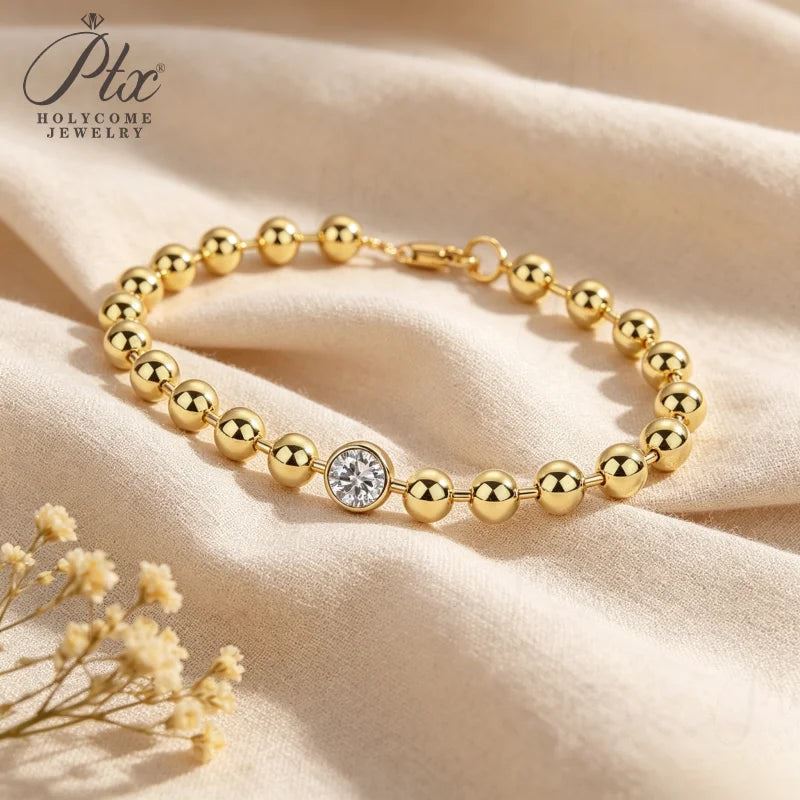
A bezel wraps a thin rim of metal around the stone's edge. It is the most protective setting—the stone cannot be knocked, and the rim does not catch on fabric. Bezel settings sit low and flat, which suits a working hand and a ring that will never be taken off. The tradeoff is slightly less sparkle, because the rim blocks some edge light. For a colored stone, a bezel also frames the color cleanly. Many modern engagement rings choose a bezel precisely because the wearer never plans to remove the ring.
Pavé and halo
Pavé means a row of tiny diamonds set into the band, held by minuscule beads. It adds sparkle at arm's length, but each tiny stone can loosen over years—plan a check every year. A halo is a ring of small diamonds around the center stone, which makes a smaller center read larger at a fraction of the per-carat cost. Both are popular, but they trade a little daily simplicity for a lot of visible glitter. If low maintenance matters, a plain solitaire beats either.
| Setting | Protection | Sparkle | Best for |
|---|---|---|---|
| Four prongs | Medium | High | Desk workers, classic look |
| Six prongs | Good | High | Secure solitaire |
| Bezel | Best | Medium | Hands-on wearers |
| Pavé band | Medium | High (at distance) | Sparkle over simplicity |
| Halo | Medium | High | Making a stone read larger |
Choosing for a life, not a photo
The setting that photographs best is not always the one that wears best. A high six-prong solitaire looks dramatic in an ad and catches on a kitchen towel. A bezel looks quieter and survives a decade of daily wear. Pick the setting that matches how the ring will actually live. If you are deciding, our custom process guides compare settings on real hands.
Prong count and metal
Four prongs show more of the stone and read more open; six prongs hold it more securely but cover a little of the edge. For a stone over about a carat, six prongs are the safer choice. The metal matters too: platinum prongs are stronger and wear slower than gold, which is why a platinum setting protects a center stone longer. White gold prongs are often rhodium-plated to match, which needs re-plating over the years. These small choices are invisible on a render but show up over a decade of wear, which is why the setting is worth deciding deliberately rather than defaulting to the catalog.
Changing the setting later
A setting is not permanent. A ring bought with a high prong setting can be reset into a bezel ten years later when the lifestyle changes, and the center stone stays. This is worth knowing if you are choosing a setting for a life that is still moving. Bespoke makes resets cheaper than they would be on a catalog ring, because we keep the CAD and the measurements. The setting is the behavior of the ring; the stone is the constant. Pick the setting for the life you have now, and know it can be changed when that life changes.
Setting to lifestyle
Match the setting to the life. A hands-on job, a habit of gardening, or active sports points to a bezel or a low setting; a desk job and no second thoughts allow a high prong. If the wearer works with their hands, the stone that catches on everything will spend its life in a drawer. We size the setting to the lifestyle, not to the picture on Pinterest. A ring that survives daily life gets worn daily, which is the entire point. Choose the setting for the hand that will wear it.
Quick rule of thumb when choosing:
- Active hands or manual work: a bezel or a low setting.
- Want the most sparkle: four or six prongs, high.
- Everyday wear with no fuss: a bezel.
- Budget tight: prong settings use less metal than bezels.
The right one disappears on the finger—until someone notices the stone. That is the whole job of a setting: to hold the stone without competing with it. Choose it for the hand that wears it, the life it leads, and the years it must survive. The setting can change later, but the stone is chosen once, so build around it honestly.