If you have owned a white gold ring for more than a year, you have noticed it. The ring you brought home from the jeweller was a bright, cool, almost platinum white. After a few months it looks a little warmer, a little yellower, especially on the edges where it bumps against things. Your first thought is that something is wrong with the ring. Nothing is wrong. You are simply seeing the actual color of the gold underneath the rhodium.
What rhodium actually is
White gold is not, naturally, white. It is yellow gold alloyed with white metals like palladium, silver, or nickel, which pulls the color toward gray. Even so, the result is usually a warm, champagne-ish off-white, not the bright metal people expect when they shop for an engagement ring. To get that mirror-bright cool white, the trade electroplates the finished ring with a thin layer of rhodium, a platinum-family metal that is naturally silvery white. The plating is measured in microns. It is thinner than a human hair.
Why it wears off
Because the layer is so thin, it wears where the ring contacts anything. The inside of the band rubs against your finger all day. The edges of the setting bump against desks, steering wheels, and counters. Soap, lotion, and chlorine all speed the process down. On a ring worn every day, expect the plating to start showing its age at about the six-month mark. On a ring you wear occasionally, it can look fresh for two years. The yellow you see is not dirt. It is the yellow-gold base alloy showing through where the rhodium has worn away.
When to bring it back
Most clients come in for a replating between the twelve- and eighteen-month mark, once the warm tone is visible enough that it bothers them. You do not have to wait until it is obvious. If you notice the inside of the band looking warmer, that is the earliest reliable sign, because that is where friction is highest. A replating takes about twenty minutes in our workshop, though the ring has to be cleaned and polished first, so we usually ask clients to leave it with us for a day. The cost is modest, and it is one of the cheapest ways to make a ring look brand new again.
What to do between replatings
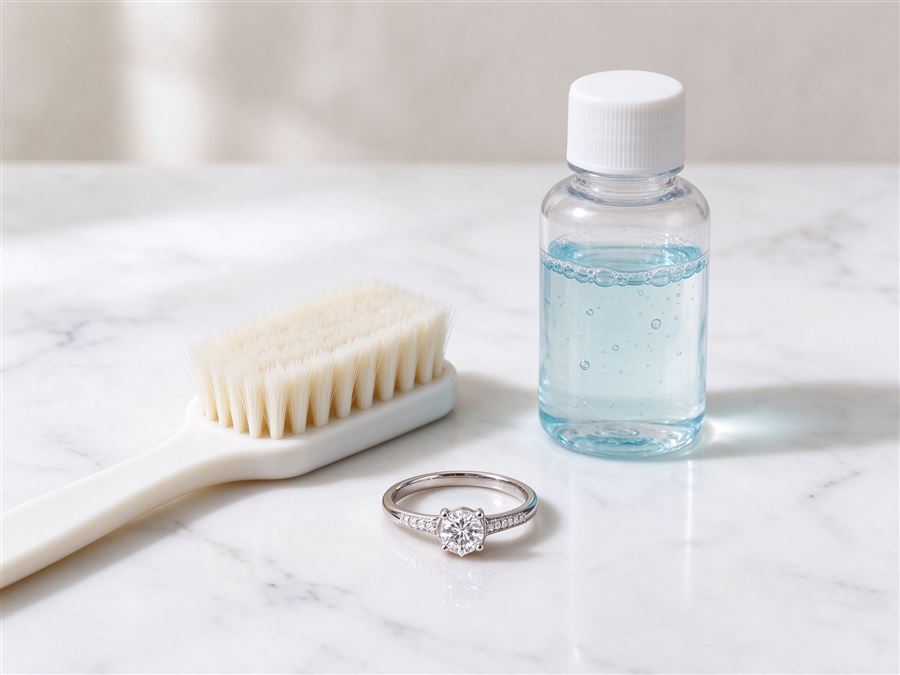
You cannot stop the plating from wearing, but you can slow it down. Take the ring off when you wash dishes, apply hand sanitizer, or work with your hands. Store it separately from other jewelry so it does not get scratched. Wipe it with a soft cloth at the end of the day. None of this is complicated, and it is the same advice we give in our guide to cleaning and storing your jewelry at home. If you are unsure whether your ring needs more than a fresh coat, our note on when to see a jeweler lays out the difference between cosmetic wear and real damage.
The alternative: platinum
Clients who come in for their third replating in as many years often ask whether they should have chosen platinum. The honest answer is that platinum does not need rhodium plating, because it is naturally white. It does, however, develop a matte patina over time rather than staying mirror-bright, and it is significantly more expensive up front. White gold with rhodium is the better value if you want that bright white look and do not mind a yearly touch-up. Platinum is the better choice if you want to set it and forget it. The metal conversation is the same one we walk through in our metal comparison guide.
The myth of DIY whitening
You will read online that you can restore white gold at home with a whitening toothpaste or a silver dip. Neither works, and both cause real damage. Toothpaste is mildly abrasive and will scratch the polished surface of your band. Silver dip is a chemical that strips tarnish from silver; on white gold it attacks the rhodium plating you are trying to save and can discolor the setting. The only reliable at-home step is a soft cloth and warm soapy water, used once a week. Anything more aggressive should go through a jeweler, because the cost of a scratched finish far outweighs the twenty minutes it takes to book a professional appointment.
The short version: a yellowing white gold ring is not a defect. It is the finish reaching the end of its natural life. A twenty-minute replating puts it back the way you remembered it, and that is enough.