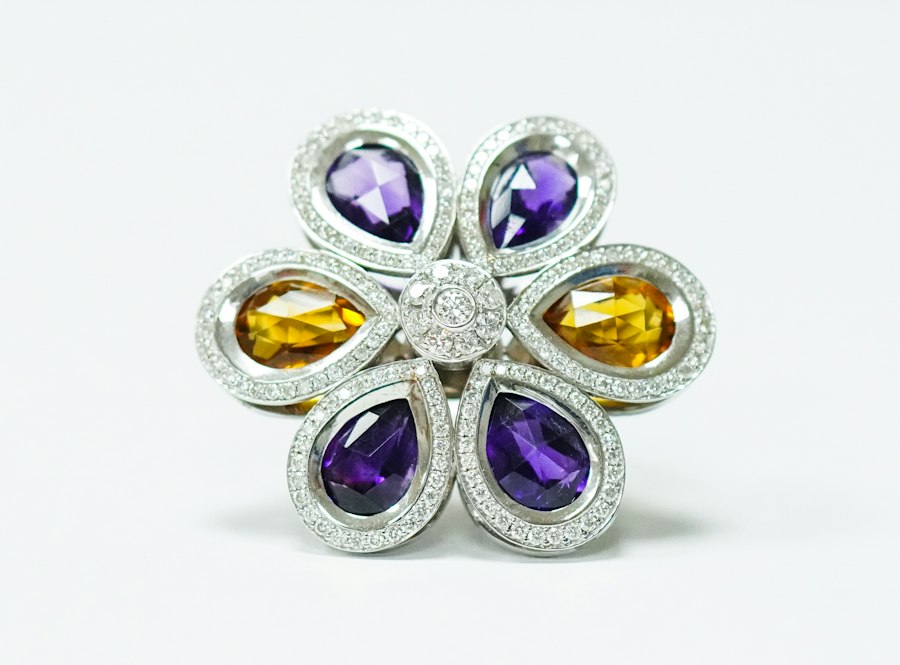
Deciding what to do with a wedding ring after a marriage ends is rarely just a jewelry question. It is an emotional one. Some people want the ring out of sight immediately; others cannot bear to part with the stone that family money bought or the craft that went into it. There is no single right answer, but there are several thoughtful paths that let you honor the past without continuing to wear it. At our atelier, we have remade more than a few wedding bands into pieces their owners now wear with pleasure, and the conversation always begins the same way: what do you want the next piece to mean?

Option one: keep the stones, release the setting
The most common choice is to keep the center stone and let the band go. A diamond, sapphire, or emerald carries no memory of the marriage itself—it is a mineral you now own. We can loosen the prongs, lift the stone, and return it to you in a small sealed packet, then design an entirely new setting around it: a right-hand ring, a pendant, a pair of earrings, or a pendant necklace. This is the path most often chosen when the stone has sentimental or monetary value you do not want to replace. The old gold does not go to waste either; it can be refined and credited toward the new piece. For context, read how we approach resetting a diamond into a new ring—the process is identical, whatever the story behind the stone.
Option two: melt the gold into something new
If the band itself is the part that carries the memory, we can melt the old gold and cast it into a fresh form. A wide comfort-fit wedding band can become a slim signet ring, a bangle, a pair of cufflinks, or the chain on a pendant. The metal retains its karat and its value; only the shape changes. Some clients ask us to keep a small section of the original band as a hidden detail inside the new piece—a quiet line of continuity they do not have to explain to anyone. We cover the economics of this in our note on what happens to old gold when you redesign.
Option three: keep it as-is, for now
There is no deadline. A ring you are not ready to remake can sit in a drawer or a safe for a year, five years, longer. We see clients who bring a box of jewelry they could not decide on for a decade, then redesign all of it in a single afternoon once they are ready. If you are unsure, do not rush to sell or scrap it. Stones lose value the moment they leave a retail case, and the gold will still be there whenever you want it.
Option four: give it away, reset as a gift
A surprising number of our clients choose to turn an old wedding ring into a gift for a daughter, a mother, or themselves. A center stone reset into a solitaire pendant becomes a piece a child can wear without any of the emotional weight attached. This works especially well when the stone itself is fine quality and the setting simply dated or damaged. We have turned engagement rings into mother's rings, anniversary pendants, and graduation gifts—objects that pass forward rather than ending.
What to expect in the redesign conversation
When you come in, bring the ring and any other pieces you are considering. We will inspect the setting, grade the stone under magnification, test the gold, and give you honest feedback on whether the stone is worth resetting or whether a fresh center stone makes more financial sense. We will not pressure you. Most redesigns take three to six weeks, and the cost is usually a fraction of buying a comparable new piece, because the stone and often the metal are already yours. If the original ring has significant wear or damage, we will also tell you whether restoring the original is more sensible than remaking it.
Designing for the next chapter
The pieces we most enjoy making after a divorce are the ones that are unmistakably about the wearer—coordinates that matter, a handwritten date, a shape drawn from a favorite object. A ring that no longer has to match anyone else's idea of romance can become genuinely yours. Some clients choose a low, practical setting for a busy life; others choose something bold and colorful as a deliberate break from a quiet, traditional past. Both are valid, and both are ours to build.
If you are sitting on a ring you do not know what to do with, that uncertainty is a perfectly good reason to book a consultation. You are not committing to a redesign by walking in. You are just finding out what the stones and the metal are worth, and what they could become. From there, the decision is yours—and it can wait until you are ready.