Walk past any display of fine gemstones and the diamonds look confident. The pearls look soft, almost shy. That softness is the whole point — and it is also why pearls need a different kind of care. Unlike a sapphire or a gold band, a pearl is organic: it was grown by a living creature, and it reacts to the world around it. Treat it like a hard stone and it will dull. Treat it gently and it can glow for generations.
What pearls actually are
A pearl is built in layers of nacre, a mother-of-pearl substance secreted inside a mollusk. That nacre is what gives the pearl its luster — the soft glow that seems to come from inside the bead. Nacre is also thin and slightly soluble. It can be scratched by harder jewelry, etched by acids, clouded by perfume and hairspray, and dried out by heat. None of this means pearls are delicate to the point of fear. It means they have rules, and the rules are simple.
The order you get dressed matters
This is the single most effective habit. Pearls should be the last thing you put on and the first thing you take off. Perfume, hairspray, lotion, and makeup all carry alcohol, oils, and chemicals that cloud nacre over time. Spray your hair, spritz your fragrance, put on your foundation — then clasp the pearls. Undressing in reverse keeps the beads away from everything that ages them.
Cleaning them the right way
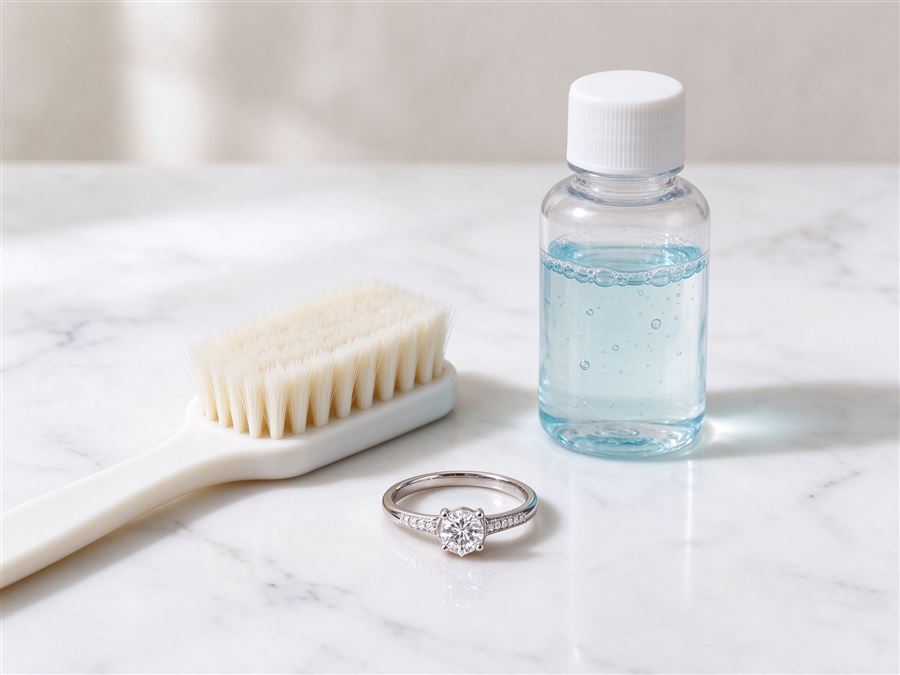
Forget the ultrasonic cleaner. Pearls hate it. The safe routine is simple: after wearing, wipe each bead gently with a soft, dry or barely damp cloth to remove skin oils and sweat. A dedicated pearl cloth, or a clean cotton flannel, is perfect. If they really need more, use lukewarm water with a single drop of very mild soap, wipe quickly, and dry immediately on a soft towel. Never soak them — water weakens the silk string. And never use jewelry dips, toothpaste, or baking soda; those are for hard stones and metals, and they will strip nacre.
For contrast, our guide to at-home jewelry cleaning covers the ultrasonic-friendly pieces. Pearls are the exception to almost every rule there, which is why they need their own.
If a pearl has lost some glow, resist the urge to buff it. There is no home polish that brings luster back — once the nacre thins, it thins. What you can do is stop further damage: cut back on perfume near the neck, store them properly, and let a professional restring and inspect the clasp annually. A pearl that has gone dull after decades of wear can sometimes be lightly re-polished by an expert, but that is a bench job, not a kitchen one.
Storing them
Pearls should not rattle around in a jewelry box with your rings and bracelets. Hard metal and diamonds scratch nacre the moment the box closes. Keep pearls in their own soft pouch or a separate compartment, laid flat rather than hung. Because they dry out, do not seal them in an airtight plastic bag forever; a soft cloth pouch lets them breathe. And keep them away from radiators, direct sun on a windowsill, and the dry air near a heater.
The string needs replacing
A pearl necklace is strung on silk, usually knotted between each bead so one broken strand does not scatter the whole strand across the floor. Silk weakens with wear, sweat, and time. As a rule of thumb, restring a frequently worn necklace every year or two, and never wait until you see the thread darken or fray. Knotting between beads is not decorative — it is safety. If you are commissioning a custom pendant necklace that includes pearls, ask for individually knotted beads from the start.
Wearing them through life
Pearls are not just formal-event jewelry. A single pearl on a fine gold chain, small pearl studs, or a shortened pearl strand under a shirt collar all work beautifully for everyday. Just keep them away from the gym, the pool (chlorine is harsh), and the kitchen counter while you cook. Sweat and chlorine are the two silent enemies. If you live in a hard-water area, give the beads an extra wipe after showering to remove mineral residue that builds up on the silk.
Why the care is worth it
A well-cared-for pearl necklace is one of the few pieces of jewelry that genuinely passes from mother to daughter and looks better for the love. The luster does not come back once it is gone, which is exactly why the small habits — the cloth, the order of dressing, the restringing — matter so much. Treat them as the organic gems they are, and they will glow on someone in your family fifty years from now.