Your mother was probably told never to wear gold and silver in the same outfit. For a few decades in the middle of the last century, that rule was treated as a law of nature. It has not aged well. Walk through any city now and the most stylish hands on the street are stacking yellow gold next to white gold, rose gold next to platinum, with no apology. The rule is gone, but the instinct behind it was real: mixed metals can look accidental. Here is how to make them look deliberate.
Why the old rule existed
The rule came from a time when most people owned one good piece of jewelry and it was either gold or silver. Mixing them read as a mistake, the same way wearing two different socks reads as a mistake. It was never about the metals themselves. It was about signaling whether you had gotten dressed on purpose. Now that most of us own pieces in more than one metal, the rule has nothing left to police. The real question is how to make a mixed stack look composed rather than chaotic.
Rule one: give one metal the majority
The easiest way to mix metals without looking off balance is to let one color win. If your engagement ring is white gold and your watch is steel, build the rest of the stack around that cool tone and add one warm piece as an accent, not three. A single yellow gold band next to three white metal bands looks like a choice. Two yellow, two white, and a rose gold on top looks like a jewelry box exploded. The ratio we see work most often is about three to one.
Rule two: repeat the accent on purpose
If you are wearing a yellow gold band on your right hand, echo that warm tone somewhere else in the outfit so the eye reads it as intentional. A small gold hoop earring, a gold watch hand, a gold buckle on your shoe. You do not have to do this consciously. You will notice yourself doing it once you start looking. The point is that the warm metal on your hand should feel like part of a system, not a stray.
Rule three: use texture to separate the colors
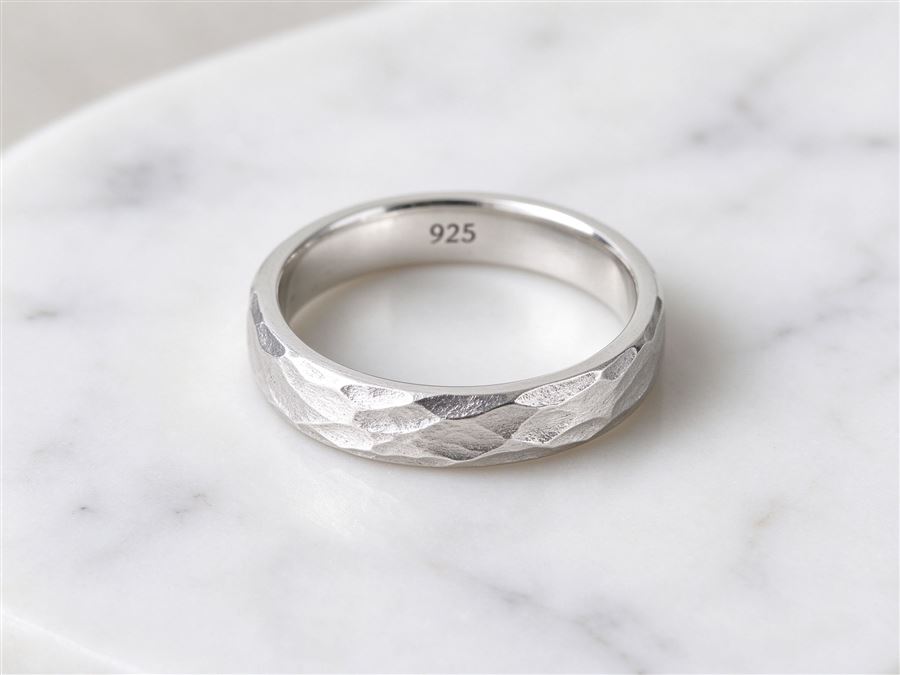
When two different metals sit directly against each other in a stack, the contrast can be loud. One trick is to put a textured band between them so the eye has a place to rest. A brushed matte gold ring between a polished white gold engagement ring and a thin silver band reads as three pieces that belong together. The texture breaks up the color contrast. This is the same reason we recommend a matte or brushed finish on everyday bands: it quiets the metal.
Rule four: do not overthink the wedding set
One of the most common questions we get is whether a yellow gold wedding band can sit next to a white gold engagement ring. The answer is yes, and more of our clients are choosing exactly that. It is a way to give two people different metal preferences in the same marriage without either of them compromising. If you are building a wedding set, our guide to matching a band to your ring covers both matching and intentional contrast.
Where to start if you own nothing
If you are starting a stack from zero and want it to flex, build the foundation in one metal, then add a single mixed piece a season at a time. A white gold engagement ring, a thin plain gold band, a silver signet. Let your taste decide the ratio over a couple of years. Our guide to stackable everyday rings walks through which widths and profiles play well together, regardless of metal color.
Extending the logic to necklaces and earrings
Once you are comfortable mixing metals on your hands, the same rules apply upward. A silver pendant on a gold chain is one of the easiest mixed-metal looks to pull off, because the chain and the pendant read as two layers rather than a single mismatched piece. Earrings are even simpler: a gold hoop in one ear and a silver stud in the other is now a deliberate, fashionable look rather than a mistake. The point across all of it is that your jewelry should look like it was collected over time, not bought in one box from a single counter. A mix of metals is the visual evidence of that.
The bottom line is that mixed metals are no longer a mistake. They look off only when they look accidental. Give one color the majority, repeat the accent somewhere else, and use texture to separate the contrast, and the stack reads as yours. It takes a season to feel natural, and after that you will not go back to a single-metal hand.