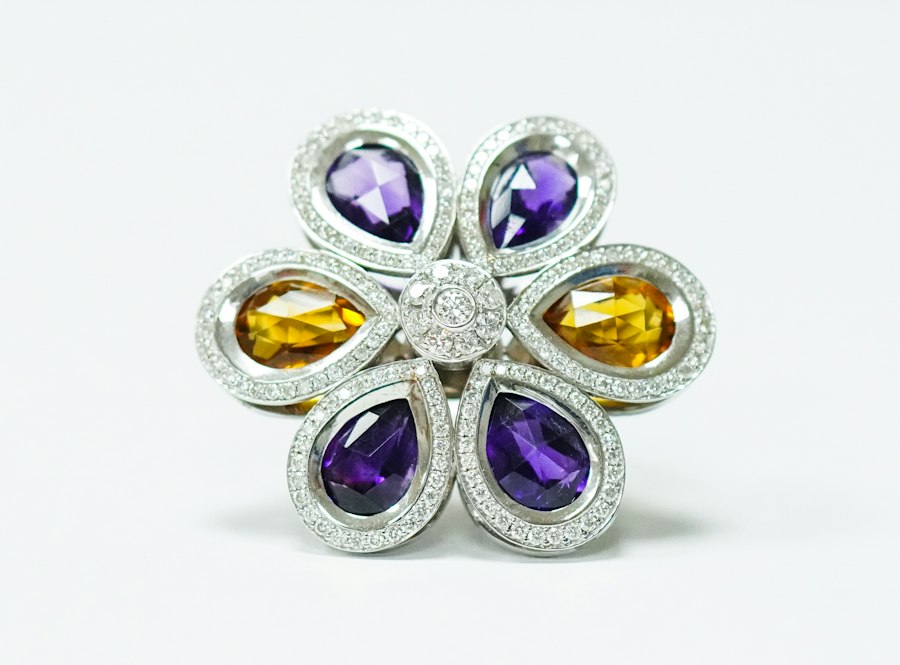
Walk into any mall jewelry store and the family birthstone pendant stares back at you: a cluster of colored stones arranged like a tiny bouquet, hung from a thin chain, and worn twice before it lands in a jewelry box. The idea is sound. The execution is usually cheap. A bespoke commission is the chance to do it right, and to end up with something you reach for every morning.
Family birthstone jewelry works because it carries a roster of people in one object. A mother wears her children's months. A grandmother wears grandchildren. A couple blends their birthstones into a single band. The challenge is composition, not sentiment.
Decide the roster before you pick stones
Write down whose stones you want and in what order. A horizontal row on a ring band reads cleanest when there are three to five stones. Beyond five, a ring starts to feel crowded and a pendant or bracelet becomes the better canvas. Some clients include a pet, a parent, a lost loved one, or a stone that represents a marriage month rather than a birth month. There are no rules. But deciding the roster first stops the design from drifting.
Color balance beats the official chart
The traditional birthstone list is a useful starting point, not a law. A January garnet and a February amethyst can sit happily next to each other; an emerald beside a ruby can vibrate. At the bench, we balance by eye rather than by list. If two stones clash, we swap one for a sibling gem—peridot for emerald, blue topaz for aquamarine—that keeps the meaning while calming the palette.
Size matters too. Equal-sized stones in a row look orderly but can feel stiff. A common trick is to give one stone visual weight—usually the wearer's own, or the couple's—and let the others recede slightly. That hierarchy is what keeps the piece looking intentional rather than like a rainbow.
Pick a setting that lies flat against the skin
Small colored stones demand low, protective settings. Bezel settings wrap a thin rim of metal around each stone and survive knocks far better than prongs, which can catch on sweaters. A row of flush-set or bezel-set stones across a wide band is one of the most durable family rings we build, and it stacks cleanly against a wedding band. For pendants, a single framed arrangement on a flat plate reads modern; a floating cluster reads sentimental. Both work, but choose one and commit.
Metal and finish make it look expensive
This is where bespoke separates itself. The same stones in thin plated gold look like costume jewelry. In solid 14k or 18k, with a brushed or satin finish and clean inside edges, they look like heirlooms. We often steer clients away from mirror polish on multistone pieces, because it shows every fingerprint and scratch. A soft matte finish hides wear and lets the stones be the color in the room. Our guide to matte, polished or brush finishes goes deeper if you are deciding.
Avoiding the costume look
The biggest risk with family birthstone work is over-decoration. Engraved names under every stone, charms dangling off a bar, colored enamel between settings—each addition pulls the piece toward souvenir territory. The most admired commissions are usually the quietest: a clean row, a considered metal, and maybe one line of engraved dates on the inside. If you want to reference the center-stone logic, treat the largest or most meaningful birthstone as the anchor and let the rest recede.
Gift or self-purchase?
Birthstone commissions make extraordinary gifts for mothers, but they also make extraordinary self-commission pieces. A woman designing her own family ring rarely chooses the sentimental version the store would push; she chooses something architectural she is proud to wear to work. Either way, the piece should be sized to the hand that will actually wear it, not to the hand you imagine in an advertisement.
Ordering and sizing a piece you cannot try on
Because birthstone commissions are often bought as gifts, the finger size is usually a guess. We build the ring, but we leave the inside wall clean so a later resize does not cut through engraving. If you are buying for a mother whose size you do not know, a pendant or bracelet is the lower-risk choice, and it wears every bit as well as a ring. Bracelets, in particular, are forgiving: a thin bangle on a wrist adjusts easily, and the stones sit where they can be seen throughout the day. Our guide to measuring ring size at home is worth sending over if you want to try before you order.
Done well, a family birthstone piece does not announce itself as jewelry about family. It simply looks like fine jewelry that happens to contain the people you love. That is the whole trick.