Custom Bespoke Bracelets & Bangles | Tennis, Chain & Cuff — HOLYCOME
Bracelets are the most mechanically active piece of fine jewelry. They open and close every day, twist under sleeves, bang against desks and keyboards, and carry the weight of charms, gemstones, or engraved plates. Every bespoke bracelet or bangle must survive thousands of clasp cycles, resist kinking under daily torsion, and sit comfortably on a wrist that changes diameter with temperature and activity. At HOLYCOME, we have been producing custom bracelets and bangles for over 12 years — from delicate diamond tennis bracelets to heavy cuff bangles, from charm bracelets to ID plates, and from bridal bangles to men's link bracelets. This guide covers our bespoke bracelet design process, clasp and construction standards, chain and bangle engineering, and what to expect when commissioning a custom bracelet collection.
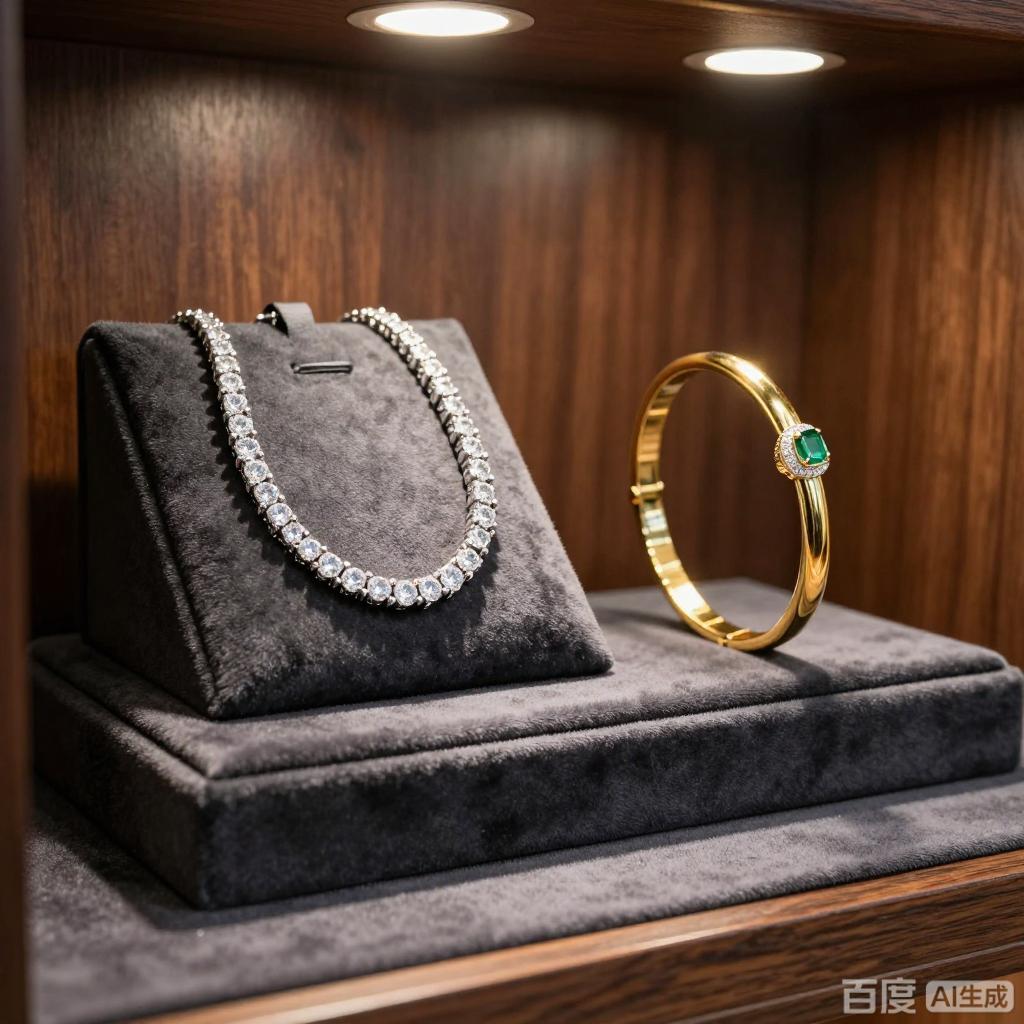
Why Bracelets Require Specialized Engineering
Bracelets fail more often than rings or necklaces, for predictable reasons. A tennis bracelet clasp that opens under torque; a bangle hinge that loosens after a year of daily wear; a chain link bracelet that catches sleeve threads; a charm bracelet whose jump rings open and lose charms; a cuff that loses its spring and slips off. We design every bespoke bracelet around five core mechanical principles.
Wrist fit and oval shaping. Real wrists are not circles — they are ovals, narrower across the top than the side-to-side. Bangles and cuffs that are made perfectly round rotate on the wrist, wear unevenly, and feel bulky. We shape all closed bangles to an oval profile matched to the wearer's or target market's wrist measurements. Chain bracelets are sized with enough slack to slide slightly (not tight, not swinging).
Clasp reliability. Bracelet clasps are subjected to far more torque than necklace clasps because wrists move constantly and bang against surfaces. Every clasp we specify is rated for at least 2x the bracelet's weight, and high-value tennis bracelets always include dual safety mechanisms (figure-8 plus safety chain).
Hinge durability for bangles. Hinged bangles open and close daily. We specify hinge pin material (14K gold for 18K bangles, stainless steel for silver bangles) and tube wall thickness (minimum 0.7 mm) to resist deformation. Every hinge is cycle-tested 50 times before a piece leaves QC.
Link integrity for chain bracelets. Chain bracelets experience torsion from wrist rotation that necklaces do not. Links must be soldered closed (not just pressed) on all structural connections. We swedge and solder every link on bracelet chains to prevent accidental opening.
Comfort against skin and clothing. Bracelets are in constant contact with the inner wrist — one of the most sensitive skin areas. All inner surfaces are polished to a mirror finish with no sharp edges, and stone settings sit flush with the bracelet surface so they do not catch on sleeves or scratch desk surfaces.
Our Bespoke Bracelet Design Process
Stage 1: Brief and Wrist Profile (Day 1-4)
We collect style references, target price point, intended wear (daily, occasion, bridal, men's everyday), and wrist size specifications. For bespoke one-offs we ask for a wrist circumference measurement plus a note on preferred fit (snug, comfortable, loose). For production collections we work with standard sizing: women's 7 inches (with 0.5-inch adjuster), men's 8 inches (with 0.5-inch adjuster), and children's sizes on request. Bracelet style determines the engineering approach — a diamond tennis bracelet needs completely different construction from a heavy men's curb-link bracelet.
Stage 2: CAD Modeling (Day 4-9)
Bracelets are modeled in RhinoGold with specific attention to hinge placement (for bangles), clasp integration (must sit flush with bracelet profile, not protrude), stone spacing (even across the full wrist circumference, including the underside where fewer stones are set), and internal oval shaping. Tennis bracelets are modeled with flexible link construction (each link is an independently set segment connected by pins, not a rigid band) so they drape around the wrist without kinking. See our custom design overview.
Stage 3: Silver Prototype (Day 9-16)
A wearable silver prototype is strongly recommended for all new bracelet designs. Bracelets cannot be judged from renderings — you need to put it on a real wrist, type with it, put on a jacket, and see how it moves. We produce prototypes in sterling silver with CZ stones (where applicable), fitted with the actual clasp and hinge style specified. For hinge and clasp testing we recommend wearing the prototype for 3-5 days before approving.
Stage 4: Stone Sourcing (Day 9-16, Parallel)
For diamond and gemstone tennis bracelets, stones are graded in matched sets with very tight color/clarity consistency (within one GIA grade). Tennis bracelets have no focal point stone, so any color or clarity variation is immediately visible as a "hole" in the sparkle line. Stones are arranged by color from clasp to clasp with the finest stones at the 12 o'clock (top of wrist) position, per industry standard. All diamonds are conflict-free per the Kimberley Process and accurately described per the FTC Jewelry Guides.
Stage 5: Production (Day 16-30)
Chain bracelet components are either produced in-house (curb, cable, Figaro links) or sourced from our audited chain specialist. Cast bangles and cuffs are investment-cast from carved wax or CAD-printed resin patterns. Tennis bracelet links are individually cast, set with stones, and assembled on stainless steel or white gold pins. Hinged bangles are assembled with hinge pins and safety clasps; cuffs are formed and tempered for spring. All structural link connections are soldered closed; no jump rings on load-bearing connections. Polishing focuses on inner-wrist surfaces first. White gold pieces receive rhodium plating; silver pieces receive anti-tarnish e-coating.
Stage 6: Mechanical QC and Delivery (Day 30-35)
Bracelet-specific QC includes: 50-cycle clasp test, hinge 50 open/close cycle (hinged bangles), pull-force test (bracelet must support 4x its weight before link failure), oval fit verification against a wrist mandrel, stone securement check (each stone tapped with a probe), finish verification, and hallmarking. Tennis bracelets receive an additional flexibility test — laid flat and bent to 90 degrees to verify no link binds. Lead time is 4-5 weeks for bespoke one-offs; 15-25 days at MOQ for production runs. For pricing, see our pricing guide.
Bracelet Style Comparison
| Style | Construction | Clasp Type | Best For | MOQ (Production) |
|---|---|---|---|---|
| Tennis bracelet | Flexible segmented links on pins | Box clasp + figure-8 + safety chain | Diamonds/gemstones, bridal, fine jewelry | 20 pieces gold / 50 silver |
| Curb/cable chain bracelet | Soldered chain links | Lobster clasp | Everyday wear, men's, charm-ready | 50 pieces |
| Bangle (solid/hinged) | Cast tube/half-round, hinge + clasp | Box clasp with figure-8 safety | Bridal sets, Indian/Asian bridal, stackable | 30 pieces |
| Cuff (open) | Forged/cast open band, tempered spring | Slip-on (no clasp) | Statement, Western-inspired, men's | 30 pieces |
| Charm bracelet | Chain with soldered charm rings | Lobster or toggle | Personalized, keepsake, gift | 50 pieces |
| ID/plate bracelet | Chain with engraved plate | Lobster or box clasp | Men's, children's, medical ID | 50 pieces |
| Link bracelet (men's) | Heavy cast/forged links | Box clasp with side safety | Men's everyday, heirloom | 30 pieces |
Clasp Options for Bespoke Bracelets
Bracelet clasps must perform under wrist torque — a harder job than necklace clasps. We recommend clasps based on bracelet value and style.
- Lobster clasp: Standard for chain bracelets and charm bracelets. Easy to operate one-handed, reliable, available in every alloy. We specify the clasp size to match chain gauge — a 5mm lobster clasp for a 3mm chain, not a 3mm clasp that looks dainty but fails.
- Box clasp with figure-8 safety: Premium clasp for tennis bracelets and bangles. A tongue clicks into a box, and a figure-8 safety folds over the clasp for redundancy. This is the industry standard for diamond tennis bracelets — never rely on a single box clasp for high-value pieces.
- Box clasp with double safety (plus safety chain): For tennis bracelets over 3 carats total or high-value pieces. A thin chain between both bracelet ends acts as a third layer of defense if both primary clasp and figure-8 fail.
- Toggle clasp: Bar-and-ring clasp worn at the top of the wrist as a design element. Excellent for charm bracelets and statement pieces but not recommended for high-value tennis bracelets (can open if caught).
- Magnetic clasp: For clients with limited dexterity. We use safety-lock magnetic clasps (twist to release, pull-force does not open) rated for 3x bracelet weight.
- No clasp (cuff/slip-on bangle): Cuffs rely on spring tension in the open band; slip-on bangles are sized to fit over the hand. Cuff opening must be 1.2-1.5 inches to fit over the wrist bone without over-bending.
Real-World Project: 14K Gold Diamond Tennis Bracelet Collection
A Canadian fine jewelry brand commissioned a bespoke 80-piece diamond tennis bracelet collection in late 2024: four diamond sizes (1.0mm, 1.5mm, 2.0mm, 2.5mm) each in two lengths (7" women's, 8" men's), all in 14K white gold, retailing CAD $1,200-$4,800. Delivery was needed in 7 weeks for holiday season launch.
Week 1: Design review and CAD. The client specified classic four-prong settings with a continuous diamond line. We recommended invisible channel connections between links (instead of visible gaps) for a smoother diamond line, and a box clasp with figure-8 safety plus safety chain as standard across all sizes — non-negotiable for diamond tennis bracelets. The 1.0mm size was the most technically challenging: small links with tiny pins requiring precise hand assembly. CAD approved day 7.
Weeks 2-3: Silver prototypes for one size (2.0mm, 7") for wear testing. The client's team wore the prototype for four days; feedback was that the safety chain was slightly too short, limiting wrist movement. We lengthened it by 4mm for full production. Diamonds were sourced in eight matched sets (four sizes × two lengths), all G-H color VS-SI clarity, conflict-free with GIA certification for parcels.
Weeks 4-7: Production of 80 pieces. Individual link casting and setting was the most labor-intensive stage — the 1.0mm size required 52 diamonds per bracelet, hand-set under 10x magnification, 4,160 stones across the size run. Links were assembled on white gold pins with precise clearance to allow flex without binding. QC rejected seven bracelets: two with a single slightly loose stone, two where the safety chain was too short (prototype feedback was missed on those two — reworked), one where the box clasp tongue was too soft and did not click firmly, one with minor rhodium plating unevenness, and one bracelet that did not flex evenly at one link. All were reworked. The order shipped day 47, two days ahead of deadline. The collection sold 58 units in the holiday season and became a permanent SKU line. For timeline details, see consultation to delivery.
Common Bracelet Design Pitfalls
Over 12 years of production, these issues appear repeatedly when bracelet design is not specialized.
Single-safety clasps on diamond tennis bracelets. A single box clasp without figure-8 or safety chain is a lawsuit waiting to happen. If the tongue weakens over time, the bracelet can open and fall off without the wearer noticing. We require dual safety on all tennis bracelets over $500 retail value.
Round bangles on oval wrists. Perfectly round bangles rotate constantly and wear the decoration on the wrong side. Oval shaping requires slightly more material but makes the bangle feel like it belongs on the wrist.
Unsoldered charm rings. Jump rings on charm bracelets that are not soldered closed will eventually open and lose charms. Every charm attachment loop is soldered in our production — pressed jump rings are never used for load-bearing connections on bracelets.
Cuffs tempered too hard or too soft. Cuffs must be tempered for the right spring: too soft and they deform when taken on and off, eventually losing tension and slipping off; too hard and they risk cracking at the shoulders during opening. We heat-treat every cuff to alloy-specific spring temper.
Ignoring wrist bone profile. The ulnar styloid (the bump on the pinky side of the wrist) affects how a bracelet sits. Bracelets that must sit perfectly centered (ID plates, engraved pieces) are shaped to clear this bone or positioned deliberately to avoid it.
Sharp edges on link interiors. Bracelets slide on the wrist and links rotate. Links that are not fully deburred on interior edges catch arm hair and scratch skin — a complaint that appears only after wear, never on initial inspection. We tumble and hand-finish every link interior.
Frequently Asked Questions
What is the MOQ for bespoke bracelet production?
Private-label MOQ: 20 pieces per SKU for gold tennis bracelets and bangles; 30 pieces per SKU for gold chain and cuff styles; 50 pieces per SKU for silver fashion bracelets; 100 pieces per SKU for charm bracelets with multiple attachable charms. One-off bespoke bracelets have no MOQ.
Can you size bracelets to non-standard wrist sizes?
Yes. We produce custom lengths from 5 inches (small women's/children's) to 9.5 inches (large men's) with no extra tooling cost. For production collections we recommend including an adjustable 0.5-1 inch extension chain on clasp-style bracelets, which covers roughly 80% of wearers without individual sizing.
Do you offer engraved bracelets and ID plates?
Yes. Hand engraving (by our master engraver), machine engraving (CNC for script and block fonts), and laser engraving (for precise text and logos) are available. ID bracelets, medical alert bracelets, and commemorative engraved bangles are a regular part of our production. Engraving adds 2-5 days depending on complexity.
Can you repair or replicate heirloom bracelets?
Yes. We replicate vintage and heirloom bracelets through 3D scanning of the original (when possible) or careful measurement and photography. Hinge repair, clasp replacement, stone replacement, and re-engraving are all services we offer for existing pieces. We always advise clients on structural integrity before recommending repair vs. replication.
Are your bracelets hallmarked?
Yes. All gold and platinum bracelets are hallmarked with the correct karat stamp and our maker's mark. Silver pieces are stamped 925. For UK and EU clients we can apply full assay office hallmarks (Sheffield, London, or Birmingham assay) at additional cost and 1-week additional lead time. Our hallmarking meets FTC and international standards.
Commission Your Bespoke Bracelet
A great bespoke bracelet is one you forget you're wearing — it moves with you, closes securely every time, and holds its appearance after years of daily motion. That level of invisible quality comes from careful mechanical engineering, not just beautiful design. HOLYCOME's 12+ years of custom bracelet production, our rigorous clasp and hinge testing, and our full mechanical QC on every piece give you the confidence to commission bespoke bracelets that perform as beautifully as they look. Start a consultation through our contact page with your sketches, inspirations, or design brief, and we will respond with a feasibility assessment and quote within 48 hours. Explore our other custom categories including rings, earrings, and necklaces, or browse our advice journal.