Clients arrive wanting to talk carat first. It is the only number on a diamond that everyone recognizes. In practice, the center stone that makes a ring look right is chosen for its cut and shape before anyone weighs it, and the setting is chosen to amplify whichever stone you picked. Get the order wrong and you pay more for less sparkle. The stone is the heart of the ring, but the setting is what lets it beat.
Shape drives the setting, not the other way around
The shape decides the entire silhouette of the ring. A round brilliant demands a balanced solitaire. An oval reads longer on the finger and pairs with a tapered band. A pear needs the point oriented deliberately and a setting that protects a sharp tip. An emerald cut shows inclusions far more than a round, so clarity matters more for it. Choose shape by what suits the hand—longer fingers carry elongated shapes well, shorter fingers favor rounds and ovals—then design the head around the stone’s exact millimeter measurements. A 1ct round and a 1ct oval are not the same size on a shank, and the CAD needs real numbers, not approximations.
The four Cs, reordered for real life
The standard order is cut, color, clarity, carat. For a bespoke ring I would rank them slightly differently:
- Cut. This is brightness. A poorly cut stone leaks light from the side and looks dull in a restaurant. On a solitaire you see the top of the stone all day. Prioritize excellent or ideal cut.
- Shape and measurements. The setting must match exact width, depth, and girdle thickness. Buy the stone with those numbers in hand.
- Color. In white gold or platinum, stick to G–I for near-colorless. In yellow or rose gold, J–L looks warmer and nobody notices.
- Clarity. VS1–VS2 is the sweet spot: eye-clean, no detail visible at arm’s length. Lower grades are fine if the inclusion hides under a prong.
- Carat. Last. Once the above is settled, spend the remaining budget on size rather than trading cut for weight.
Certification and fluorescence
Ask for a grading certificate from a recognized lab—GIA is the standard, AGS also trusted—and match the certificate’s plot to the stone. The certificate is what your insurer and any future buyer will rely on. Fluorescence is a minor detail people overthink: a medium blue fluorescence can make a slightly yellow stone look whiter in daylight and is harmless; a very strong blue can occasionally look oily under fluorescent light. It is not a reason to reject a stone, just a fact to note.
Lab-grown vs natural
For the same visual size, lab-grown diamonds cost a fraction—a 1.5ct lab stone often lands around $1,500–$2,500 where a comparable natural sits $8,000+. That difference lets you step up a full half carat or choose platinum instead of gold. The tradeoff is resale: lab diamonds hold little secondary value, and they are not graded the same way by every insurer. For an engagement ring worn daily, that trade is worth it for most people. For a heirloom stone you expect to pass down, natural still has a sentimental and market argument. Sapphires, particularly in teal or muted blue, are a durable, cheaper alternative that reads as unusual without trying.
| Stone | Typical price (1ct, good cut) | Best setting style |
|---|---|---|
| Round natural diamond | $3,500–$6,000 | Solitaire, pavé |
| Round lab-grown | $900–$1,800 | Any |
| Oval / pear | $2,500–$4,500 natural | Tapered or split shank |
| Sapphire (blue or teal) | $800–$3,000 | Bezel or halo |
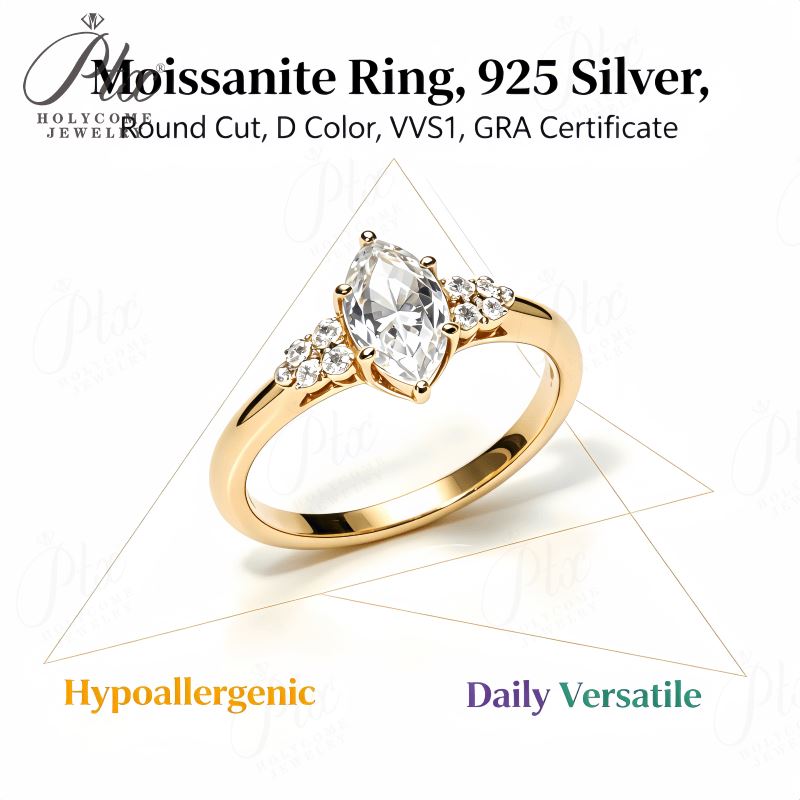
| Morganite / moissanite | $300–$1,200 | Vintage halo |
Let the setting make the stone look bigger
This is the bespoke advantage. A 0.9ct round in a well-proportioned solitaire reads like a 1.1ct. A slim 1.8mm band makes the center stone dominate. A halo adds visible size at a fraction of the per-carat cost. A bezel that hides the girdle slightly keeps the top face looking full. None of this works if you bought the stone before the design. Choose the target look, design the setting, then source the stone whose millimeter data fits.
Side stones and accents: the detail that ages best
Pavé side diamonds add sparkle at arm’s length, but they also add a lifetime of prong checks—every tiny pavé stone can loosen. If low maintenance matters, choose a setting with fewer, more secure accents, or skip them entirely and let the band carry a satin or hammered finish instead. Hidden accents—a single birthstone tucked under the gallery where only the wearer knows it is there—are the detail clients most often tell us they love years later, and they cost almost nothing. Decide accents for meaning and upkeep, not for sparkle count.
When you are ready to source, our custom process guides cover what measurements to ask for. The stone is the heart of the ring—but the setting is what lets it beat, and the two should be chosen together.