Choosing Accent Stones and Side Stones: Beyond the Center Moissanite
The center stone gets all the attention, but the small stones around it change everything. A solitaire is quiet. A three-stone ring is romantic. A pavé band is glamorous. A halo is larger than life. Accent stones are not decoration, they are a design choice that changes how the ring reads. Here is how to choose the small stones that surround the center moissanite.
The Roles Accent Stones Play
The Halo
A halo is a ring of small stones around the center. It makes the center look larger, adds sparkle from every angle, and gives the ring a vintage or glamorous feel. A halo also adds maintenance, because the small stones have their own prongs that need checking. Halos work best on solitaires that want more presence.
The Three-Stone Setting
Two side stones flank the center, one on each side. The classic meaning is past, present, and future. The side stones are usually about half the size of the center. Three-stone rings are romantic and slightly more formal than solitaires. They pair well with a plain wedding band.
The Pavé Band
Small stones set into the band itself, held by tiny beads. Pavé adds sparkle along the finger and makes the ring feel continuous. It is the setting style you see on most modern engagement rings. The trade-off is that pavé is harder to clean and harder to resize, because the stones run down the shank.
The Hidden Halo
A ring of small stones underneath the center stone, visible from the side but not from the top. It is a secret detail, a flash of sparkle when the ring catches the light. It is the choice for people who want a clean solitaire from the front but a surprise from the angle.
What the Accent Stones Are Made Of
At HOLYCOME, accent stones are usually small moissanites, not diamonds. This keeps the cost down, keeps the grading consistent, and matches the center stone's fire. Small moissanite accents look identical to small diamond accents to the naked eye, and they cost a fraction.
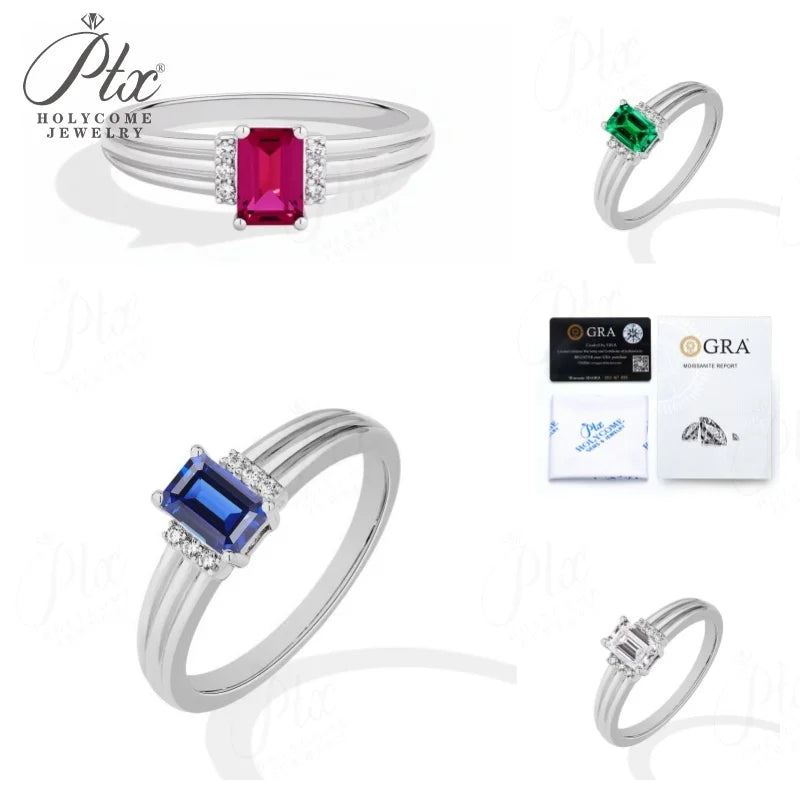
For buyers who want a pop of colour, we can set small sapphires, rubies, or emeralds as accents. A blue sapphire on either side of a colourless moissanite is a classic combination. A ruby on the inside of the band is a private detail.
How Many Is Too Many?
More stones means more sparkle, but it also means more visual noise. A one-carat center in a halo with pavé down the band is a lot of ring. On a slender finger it can look crowded. The rule of thumb is this: if the center stone is under 1.5 carats, a halo is enough. If the center is over 1.5 carats, keep the band plain. The larger the center, the quieter the setting should be.
Metal and Accent Colour
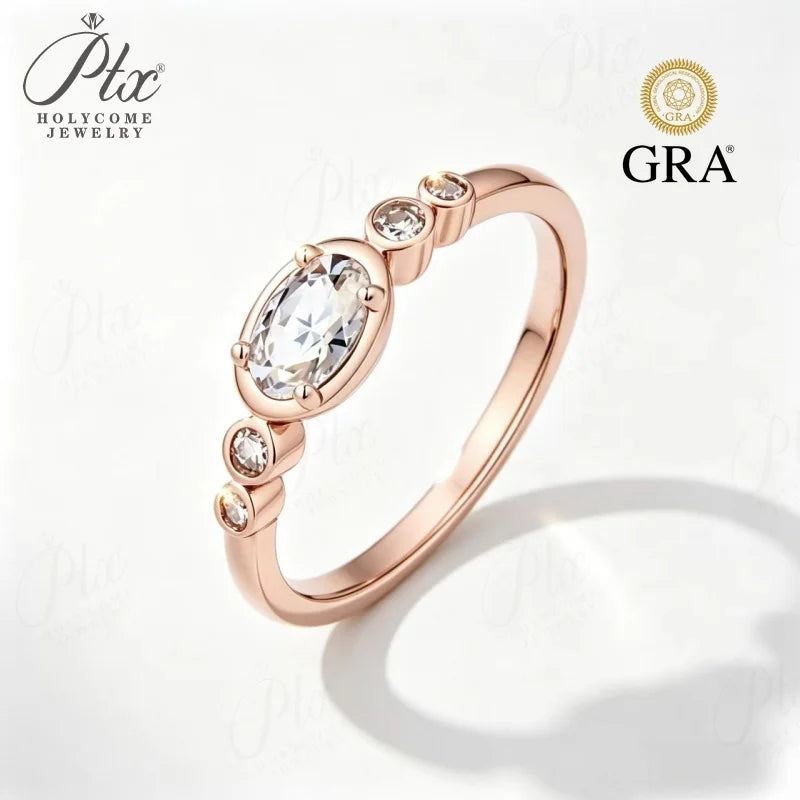
White gold or platinum makes colourless accents look bright. Yellow gold makes warm accents look cozy. Rose gold pairs with champagne or pink moissanite accents. If you are adding coloured stones, match the metal to the stone. A blue sapphire in yellow gold looks classic. A blue sapphire in white gold looks modern.
Maintenance of Accent Stones
Small accent stones have small prongs or small beads. They catch on fabrics, they loosen over time, and they need checking. A ring with pavé should be inspected by a jeweller once a year, not once every two years. If an accent stone falls out, it is a small repair, but it is a repair you can avoid by catching it early.
For people who want zero maintenance, a plain solitaire with no accents is the answer. It is also the cheapest, the easiest to resize, and the most timeless.
Stacking With a Wedding Band
If the engagement ring has a pavé band, the wedding band needs to be shaped to sit against it. A straight wedding band will leave a gap. We design the wedding band to curve around the pavé, so the two sit flush. This is another reason to design the set together, not buy them separately.
The Roles Accent Stones Play
A halo is a ring of small stones around the center. It makes the center look larger and adds sparkle from every angle. A three-stone setting has two side stones flanking the center, usually about half the size. Pavé sets small stones into the band itself. A hidden halo puts stones underneath the center, visible from the side but not the top. Each choice changes how the ring reads.
What the Accent Stones Are Made Of
At HOLYCOME, accent stones are usually small moissanites, not diamonds. This keeps the cost down, keeps the grading consistent, and matches the center stone's fire. Small moissanite accents look identical to small diamond accents to the naked eye. For buyers who want a pop of colour, we can set small sapphires, rubies, or emeralds as accents.
How Many Is Too Many
More stones means more sparkle, but it also means more visual noise. If the center stone is under 1.5 carats, a halo is enough. If the center is over 1.5 carats, keep the band plain. The larger the center, the quieter the setting should be. A one-carat center in a halo with pavé down the band is a lot of ring on a slender finger.
Maintenance of Accent Stones
Small accent stones have small prongs or small beads. They catch on fabrics, they loosen over time, and they need checking. A ring with pavé should be inspected by a jeweller once a year. For people who want zero maintenance, a plain solitaire with no accents is the answer. It is also the cheapest, the easiest to resize, and the most timeless.
The Roles Accent Stones Play
A halo is a ring of small stones around the center. It makes the center look larger and adds sparkle from every angle. A three-stone setting has two side stones flanking the center, usually about half the size. Pavé sets small stones into the band itself. A hidden halo puts stones underneath the center, visible from the side but not the top. Each choice changes how the ring reads.
What the Accent Stones Are Made Of
At HOLYCOME, accent stones are usually small moissanites, not diamonds. This keeps the cost down, keeps the grading consistent, and matches the center stone's fire. Small moissanite accents look identical to small diamond accents to the naked eye. For buyers who want a pop of colour, we can set small sapphires, rubies, or emeralds as accents.
How Many Is Too Many
More stones means more sparkle, but it also means more visual noise. If the center stone is under 1.5 carats, a halo is enough. If the center is over 1.5 carats, keep the band plain. The larger the center, the quieter the setting should be.
Maintenance and Stacking
Small accent stones have small prongs or small beads. They catch on fabrics, they loosen over time, and they need checking. A ring with pavé should be inspected by a jeweller once a year. If the engagement ring has a pavé band, the wedding band needs to be shaped to sit against it. We design the set together so the two sit flush.
The Bottom Line
Accent stones are a design choice, not a default. A halo adds presence. A three-stone adds meaning. Pavé adds glamour. Hidden halos add a secret. Choose the style that matches her wardrobe, and remember that more stones means more maintenance. At HOLYCOME we set small moissanite accents as standard, with coloured stone options for buyers who want a personal pop.