Choosing a Ring for an Active Lifestyle: Gym, Hiking, and Everyday Wear
Some people take their ring off before they cook. Others never take it off, and it goes to the gym, the trail, the surf, and the office. If the ring is going to live on a hand that climbs, lifts, types, and gardens, the design choices are different. A high-set halo that looks beautiful at a dinner party is the wrong ring for a trail runner. Here is what an active hand actually needs.
The Problem With High Settings
A high setting lifts the stone off the finger, which looks elegant but catches on everything. Gym ropes, bike handlebars, backpack straps, door handles. Every catch is a moment the prongs take a hit. For an active person, a low setting is the practical choice. The stone sits close to the band, nothing catches, and the ring survives.
A bezel setting, where the metal wraps around the edge of the stone, is the most active-friendly setting of all. There are no prongs to catch, nothing to bend, and the stone is fully protected. Bezels look modern and understated, and they are the default choice for people who work with their hands.
Skip the Pavé
Small pavé stones in the band look beautiful, but they have tiny beads that loosen with impact. On a gym-going hand, pavé stones will need checking more often. For active wear, a plain band is the most robust. No small stones to fall out, no pavé holes to trap dirt, nothing to catch on a weight bar.
The Metal Choice for Active Hands
Choose 14k gold over 18k or platinum. The harder alloy survives knocks better. Platinum is softer and will show more wear on an active hand. 14k white gold is fine, but remember the rhodium plating will wear faster on a hand that washes often. Yellow 14k is the most low-maintenance, because it does not need plating.
Avoid tungsten and cobalt carbide rings for active wear. They look durable, but they are brittle and can shatter on impact. Gold bends, which is a warning. Tungsten breaks, which is a surprise.
The Band Width
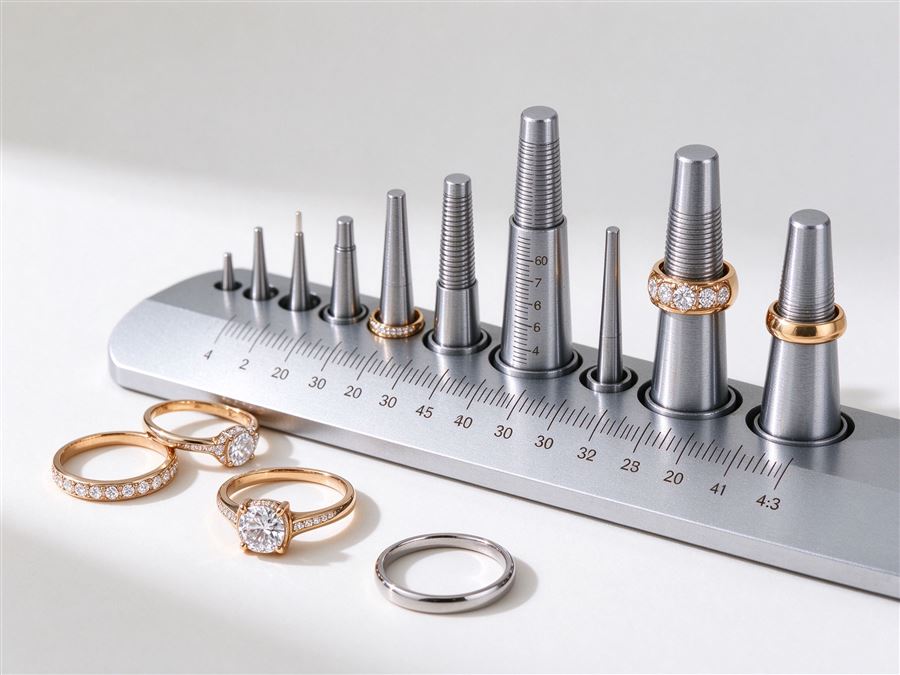
An active hand benefits from a slightly wider band. A three-millimetre band sits steadier than a one-and-a-half-millimetre band, and it is less likely to spin. It also distributes wear across more metal. On a woman's hand, a two to three millimetre band is the sweet spot for active wear. On a man's hand, four to six millimetres.
The Ring You Take Off
Even the most robust ring should come off for certain activities. Weightlifting, rock climbing, and contact sports are hard on any ring. The knuckle can bend under a bar, and a ring on a finger that swells during a lift can get stuck. Keep a small jewelry pouch in your gym bag, and the ring goes in the pouch, not on the bench.
For hiking, swimming, and cycling, a low-set solitaire can stay on. For lifting and climbing, take it off.
Travel and the Active Ring
An active lifestyle often means travel. The ring that survives a trail also needs to survive airport security, hotel safes, and foreign showers. A simple solitaire is easier to care for on the road than a pavé halo, because there are no small stones to lose and fewer places for dirt to hide.
The Clean Routine
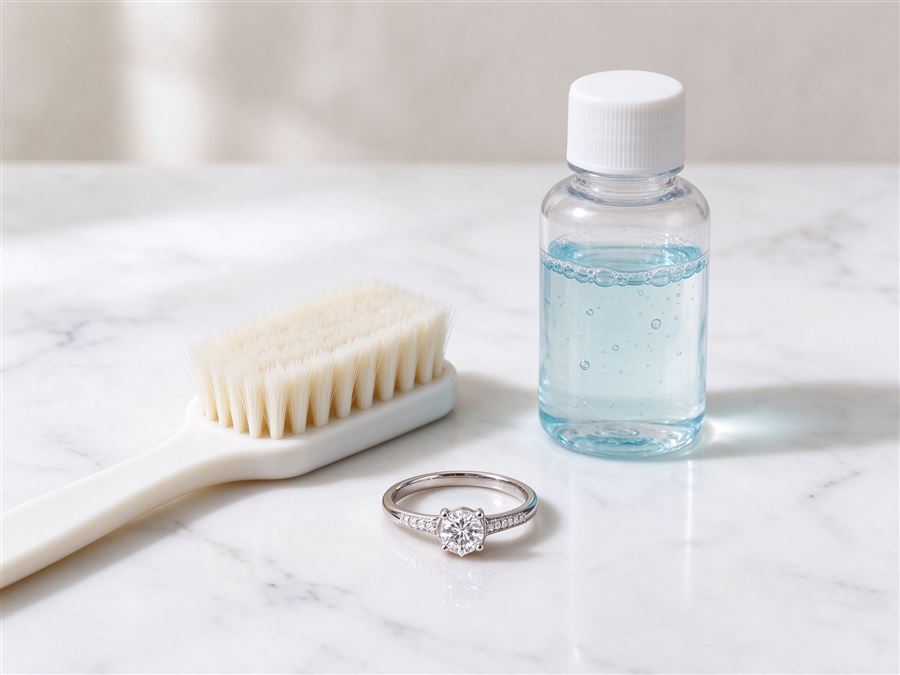
An active hand sweats. Sweat, sunscreen, gym chalk, and trail dust all build up on the ring. The bi-weekly warm-soap clean is more like a weekly clean for an active ring. A ring that gets washed every week stays brighter than a ring that gets cleaned once a month.
The Ring That Works at the Office Too
The best active ring is the one that also looks right in a meeting. A low-set bezel in 14k gold is understated enough for an office, robust enough for a gym, and elegant enough for a dinner. It does not have to be a sports ring. It just has to be a setting that does not apologize for being worn.
The Problem With High Settings
A high setting lifts the stone off the finger, which looks elegant but catches on everything. Gym ropes, bike handlebars, backpack straps, door handles. For an active person, a low setting is the practical choice. The stone sits close to the band, nothing catches, and the ring survives. A bezel setting, where the metal wraps around the edge of the stone, is the most active-friendly setting of all.
Skip the Pavé
Small pavé stones in the band look beautiful, but they have tiny beads that loosen with impact. On a gym-going hand, pavé stones will need checking more often. For active wear, a plain band is the most robust. No small stones to fall out, no pavé holes to trap dirt, nothing to catch on a weight bar.
The Metal Choice
Choose 14k gold over 18k or platinum. The harder alloy survives knocks better. Platinum is softer and will show more wear on an active hand. Avoid tungsten and carbide rings: they look durable, but they are brittle and can shatter on impact. Gold bends, which is a warning. Tungsten breaks, which is a surprise.
The Ring You Take Off
Even the most robust ring should come off for certain activities. Weightlifting, rock climbing, and contact sports are hard on any ring. The knuckle can bend under a bar, and a ring on a finger that swells during a lift can get stuck. Keep a small jewelry pouch in your gym bag. For hiking, swimming, and cycling, a low-set solitaire can stay on.
The Problem With High Settings
A high setting lifts the stone off the finger, which looks elegant but catches on everything. Gym ropes, bike handlebars, backpack straps, door handles. For an active person, a low setting is the practical choice. The stone sits close to the band, nothing catches, and the ring survives. A bezel setting, where the metal wraps around the edge of the stone, is the most active-friendly setting of all.
Skip the Pavé
Small pavé stones in the band look beautiful, but they have tiny beads that loosen with impact. On a gym-going hand, pavé stones will need checking more often. For active wear, a plain band is the most robust. No small stones to fall out, no pavé holes to trap dirt, nothing to catch on a weight bar.
The Metal Choice
Choose 14k gold over 18k or platinum. The harder alloy survives knocks better. Platinum is softer and will show more wear on an active hand. Avoid tungsten and carbide rings: they look durable, but they are brittle and can shatter on impact. Gold bends, which is a warning. Tungsten breaks, which is a surprise.
The Ring You Take Off
Even the most robust ring should come off for certain activities. Weightlifting, rock climbing, and contact sports are hard on any ring. The knuckle can bend under a bar, and a ring on a finger that swells during a lift can get stuck. Keep a small jewelry pouch in your gym bag. For hiking, swimming, and cycling, a low-set solitaire can stay on. A ring designed for an active hand is not a compromise on beauty, it is a different design choice.
The Bottom Line
Low setting, plain band, 14k gold, no pavé. Take it off for lifting and climbing. Clean it weekly. A ring designed for an active hand is not a compromise on beauty, it is a different design choice. At HOLYCOME we build low-profile bezels and plain solitaires specifically for people who will not take the ring off.